Mountain Dragon

Mountain Dragon

Rankinia diemensis

Silhouette: Michael Scroggie · PhyloPic

LCLeast ConcernNTVUENCR Endemic
Daily sighting probability ~20% · Possible
at Kosciuszko National Park

In 3 days ~40% in a week ~70%

10 Verified sightings at Kosciuszko National Park From 2019 to 2026
579 In all 6 parks
February Best month
☀️ Diurnal When it's spotted

About the Mountain Dragon

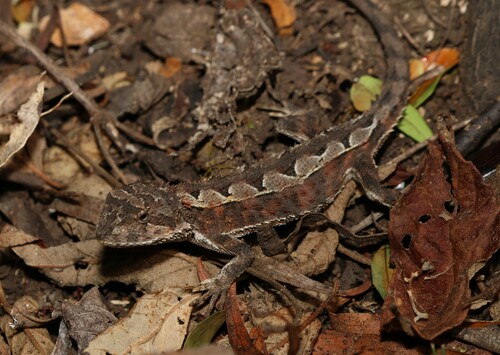
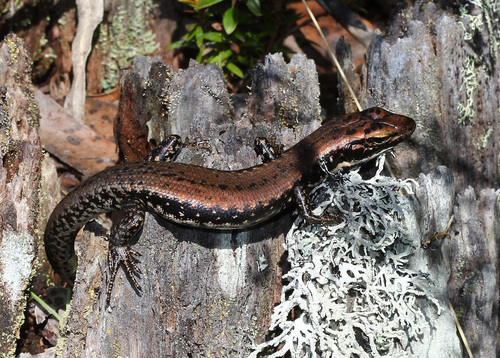
Rankinia is a genus of small agamid reptiles. As currently delineated, it is monotypic, containing only Rankinia diemensis (Gray, 1841), also known as the mountain heath dragon or mountain dragon. It is endemic to Australia.

It occurs in the uplands of New South Wales and Victoria, as well as in Tasmania, where it is the only native agamid. Mountain dragons are found in dry woodlands and heaths with access to open areas for sunning themselves. They are oviparous and feed on ants and other small invertebrates.

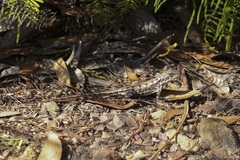
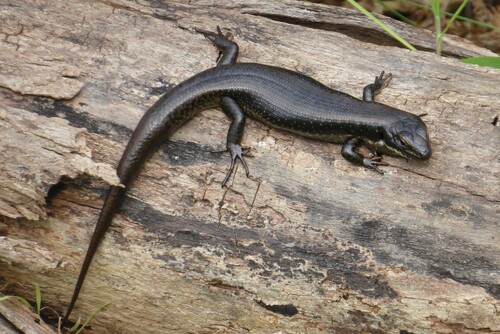
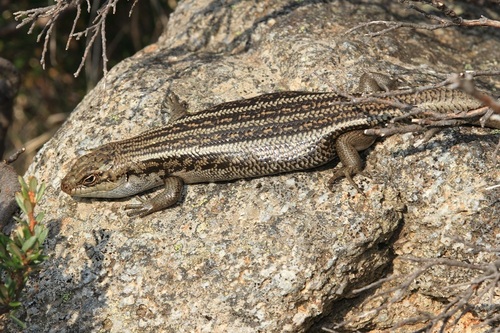
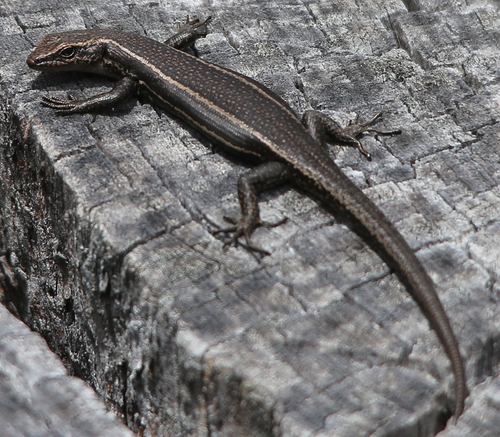
They do not climb very high, relying instead on camouflage to evade predators. Their overall colour is grey to reddish brown, with two rows of lighter-coloured paravertebral stripes or blotches running down their backs. These stripes are deeply scalloped, so they appear like two series of blotches. They can have cream-coloured bellies. Individuals can grow up to 20 cm in length, although the average length is somewhat smaller, with females typically growing larger than males. The average snout to base of tail length is 7.5 centimeters, but can be up to 9. They have a row of enlarged spinose (spikey) scales on each side of the tail... Wikipedia →

Global Distribution

Parks Where Found

# Park Country Daily sighting probability
1 Blue Mountains National Park 🇦🇺 Australia
~50%
2 Freycinet National Park 🇦🇺 Australia
~50%
3 Grampians National Park 🇦🇺 Australia
~20%
4 Royal National Park 🇦🇺 Australia
~20%
5 Kosciuszko National Park 🇦🇺 Australia
~20%
6 Great Otway National Park 🇦🇺 Australia
~10%

Zoos & Centres Where Found

# Zoo / Centre Country
1 National Zoo & Aquarium 🇦🇺 Australia In captivity
2 Bonorong Wildlife Sanctuary 🇦🇺 Australia In captivity

Closest Relatives at Kosciuszko National Park

Before you go

What are the chances of seeing a Mountain Dragon in Kosciuszko National Park?

Possible

About 20% of wildlife watchers report a Mountain Dragon sighting in Kosciuszko National Park on a given day, based on 10 verified sightings from GBIF citizen-science data from 2019 to 2026. It is the 16th most-seen of the 20 reptiles we can rate there. Over three days the chance rises to about 40%, and over a week to about 70%, if each day is a fresh chance.

When is the best time to see a Mountain Dragon in Kosciuszko National Park?

February and December

In those months about 30% of wildlife watchers report a Mountain Dragon in Kosciuszko National Park on a given day, against under 5% in April to November, the lowest months.

What time of day is best to see a Mountain Dragon?

Between noon and 3 pm

Across all the parks we cover, that three-hour window holds the most Mountain Dragon sightings with a recorded time, and nearly all of them come between 6 am and 6 pm: it is a daytime animal.

Which relatives of the Mountain Dragon live in Kosciuszko National Park?

Same family: Agamidae

The closest relatives of the Mountain Dragon that you can see in Kosciuszko National Park (family Agamidae, Dragons) are Australian Water Dragon (about 30%) and Jacky Lashtail (about 20%), with each one's daily chance of a sighting.

Where does the Mountain Dragon sighting chance come from?

GBIF citizen-science records

It is estimated from how often the Mountain Dragon is recorded against all the reptiles logged in Kosciuszko National Park (10 verified sightings from 2019 to 2026), calibrated against known sighting rates. Figures are rounded to the nearest 10% because citizen-science data supports honest approximations, not decimals, and months with records from fewer than five people show "—". How it works.

← Back to Kosciuszko National Park