Common Glider

Common Glider

Tramea loewii

Daily sighting probability ~20% · Possible
at Litchfield National Park

In 3 days ~40% in a week ~70%

6 Verified sightings at Litchfield National Park From 2019 to 2026
87 In all 6 parks
March Best month
☀️ Diurnal When it's spotted

About the Common Glider

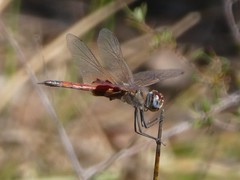
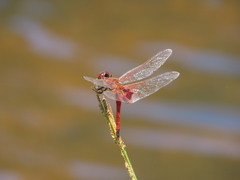
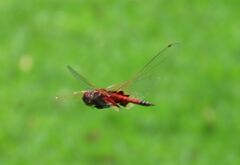
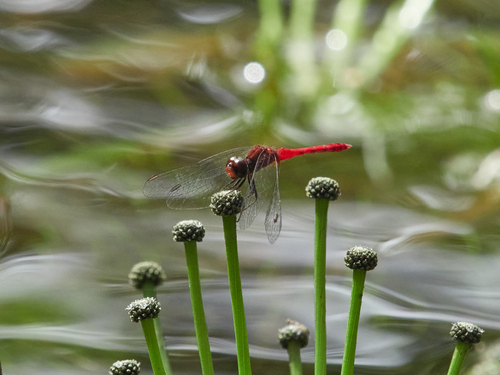
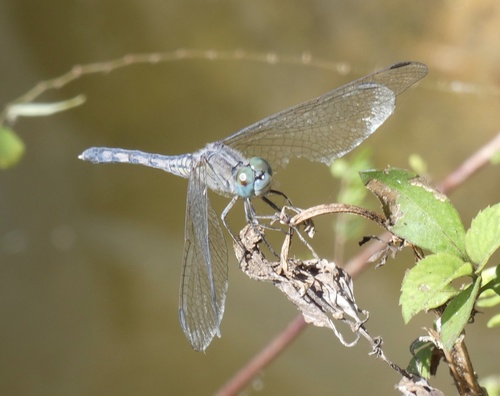
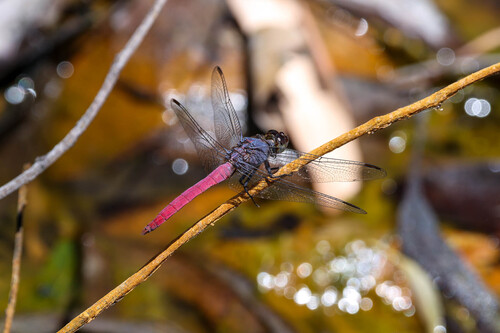
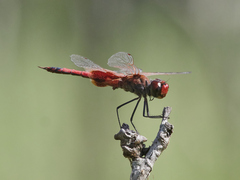
Tramea loewii, commonly known as the common glider, is a species of dragonfly in the family Libellulidae. It occurs from Indonesia and New Guinea through Australia and the western Pacific to New Caledonia. The species is recently self-introduced to New Zealand.

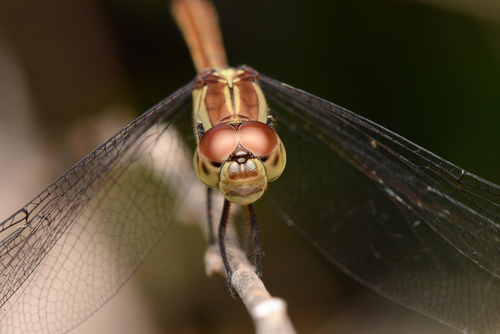
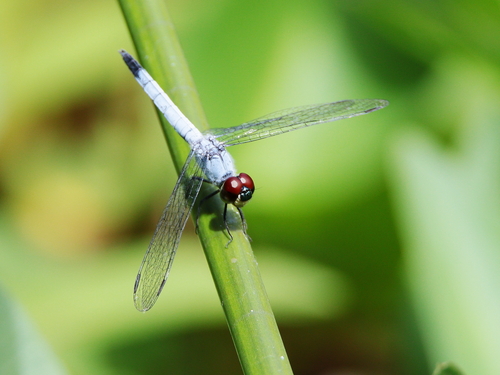
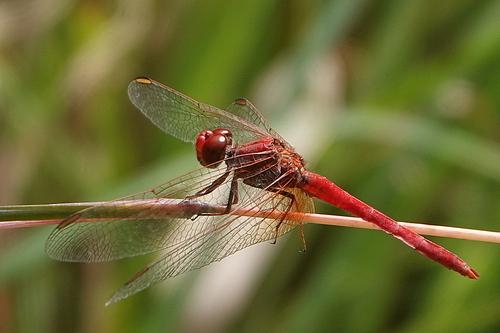
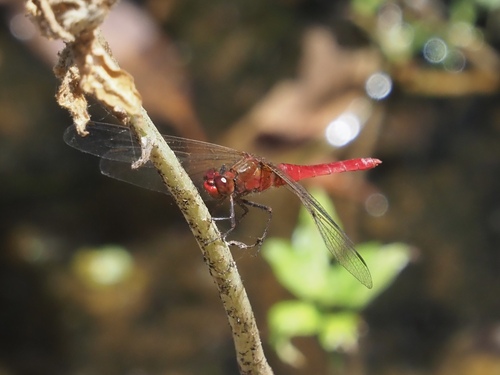
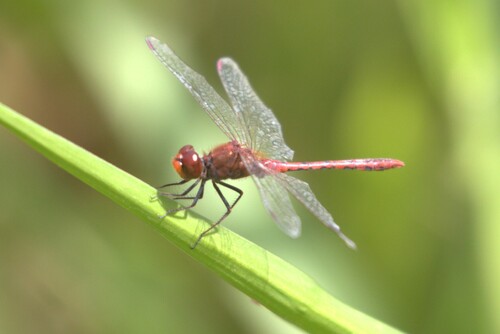
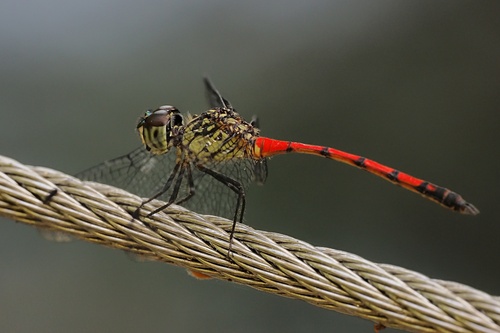
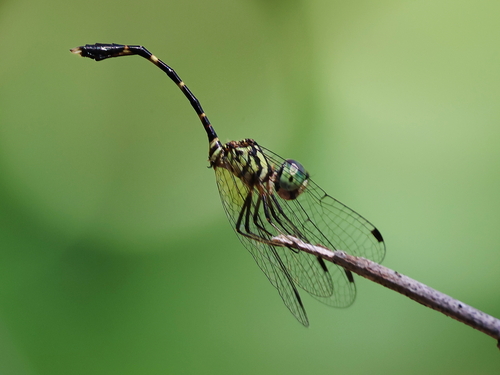
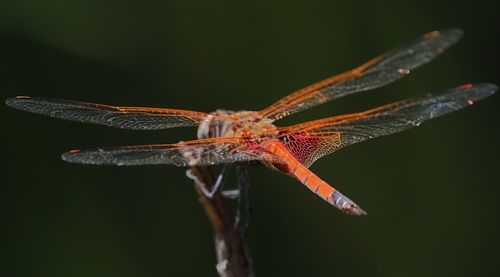
Tramea loewii is a medium to large dragonfly with dark patches at the base of the hindwings, a striped thorax, and a red abdomen in males. In 1866, Brauer published the description of Tramea loewii using the manuscript name proposed by Kaup. Brauer noted that Kaup had already assigned names to many specimens sent to him for study, and that he generally retained those names unless they were already occupied.

In 1942, Lieftinck reviewed Indo-Australian populations of Tramea loewii and described the Australian form as Tramea loewii tillyardi. He regarded the Australian populations as closely related to specimens from Ceram and western New Guinea, differing mainly in thoracic colouration and minor differences in the male genitalia.

Tramea tillyardi is now treated as a synonym of Tramea loewii. Tramea loewii is a medium to large dragonfly with a wingspan of about 85 mm and a body length of... Wikipedia →
Global Distribution

Parks Where Found

# Park Country Daily sighting probability
1 Kakadu National Park 🇦🇺 Australia
~30%
2 Nitmiluk National Park 🇦🇺 Australia
~20%
3 Litchfield National Park 🇦🇺 Australia
~20%
4 Lamington National Park 🇦🇺 Australia
~10%
5 Royal National Park 🇦🇺 Australia
~10%
6 Daintree National Park 🇦🇺 Australia
~10%

Cities Where Found

# City Country Daily sighting probability
1 Brisbane 🇦🇺 Australia
~10%
2 Sydney 🇦🇺 Australia
~10%

Before you go

What are the chances of seeing a Common Glider in Litchfield National Park?

Possible

About 20% of wildlife watchers report a Common Glider sighting in Litchfield National Park on a given day, based on 6 verified sightings from GBIF citizen-science data from 2019 to 2026. It is the 29th most-seen of the 43 insects we can rate there. Over three days the chance rises to about 40%, and over a week to about 70%, if each day is a fresh chance.

When is the best time to see a Common Glider in Litchfield National Park?

March

In that month about 40% of wildlife watchers report a Common Glider in Litchfield National Park on a given day, against under 5% in January–February, May–June and August–November, the lowest months. That is one of Litchfield National Park's wettest months, with about 200 mm of rain against almost none in July.

What time of day is best to see a Common Glider?

Between 10 am and 1 pm

Across all the parks we cover, that three-hour window holds the most Common Glider sightings with a recorded time, and about 9 in 10 of them come between 6 am and 6 pm: it is a daytime animal.

Is Litchfield National Park the best place to see a Common Glider?

3rd of 6

Of the 6 parks where we can rate Common Glider sightings, Litchfield National Park ranks 3rd at about 20%. The best odds are in Kakadu National Park (Australia, about 30%) and Nitmiluk National Park (Australia, about 20%).

Which relatives of the Common Glider live in Litchfield National Park?

Same family: Libellulidae

The closest relatives of the Common Glider that you can see in Litchfield National Park (family Libellulidae, Skimmers) are Painted Grasshawk (about 70%), Pygmy Percher (about 40%) and Chalky Percher (about 40%), with each one's daily chance of a sighting.

Where does the Common Glider sighting chance come from?

GBIF citizen-science records

It is estimated from how often the Common Glider is recorded against all the insects logged in Litchfield National Park (6 verified sightings from 2019 to 2026), calibrated against known sighting rates. Figures are rounded to the nearest 10% because citizen-science data supports honest approximations, not decimals, and months with records from fewer than five people show "—". How it works.

← Back to Litchfield National Park