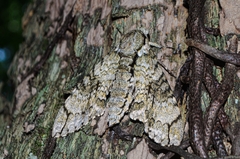
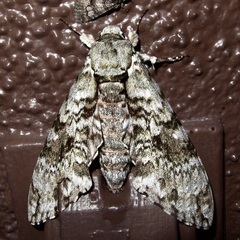
Florestan Sphinx

Florestan Sphinx

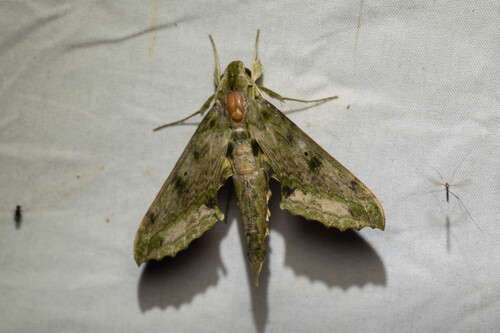
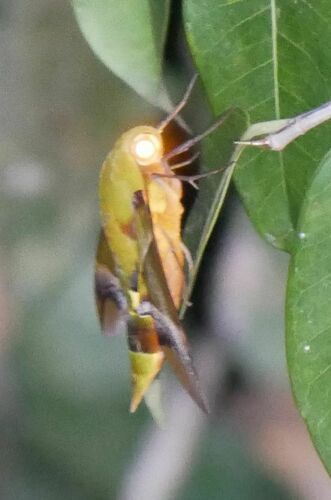
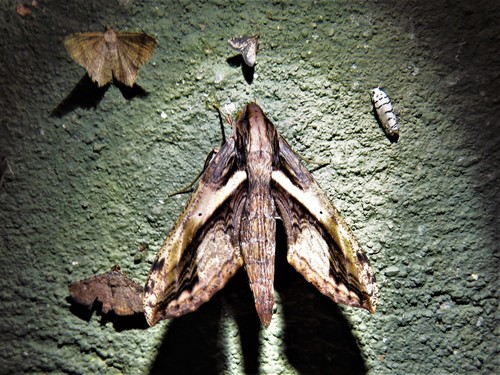
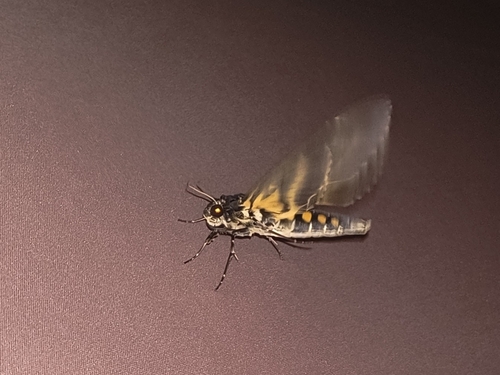
Manduca florestan

Daily sighting probability ~10% · With luck
at Manu National Park

In 3 days ~20% in a week ~40%

6 Verified sightings at Manu National Park From 2019 to 2026
109 In all 11 parks
July Best month
☀️🌙 Day & Night When it's spotted

About the Florestan Sphinx

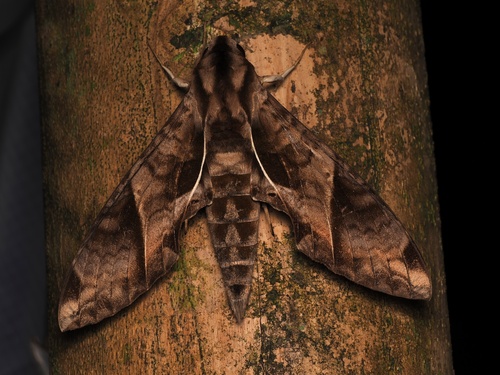
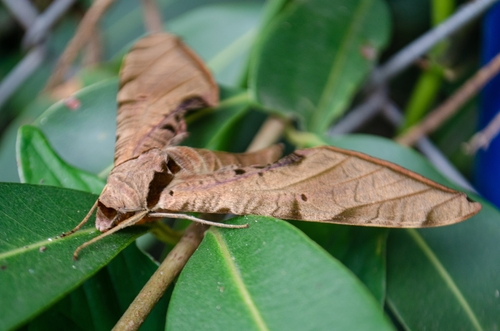
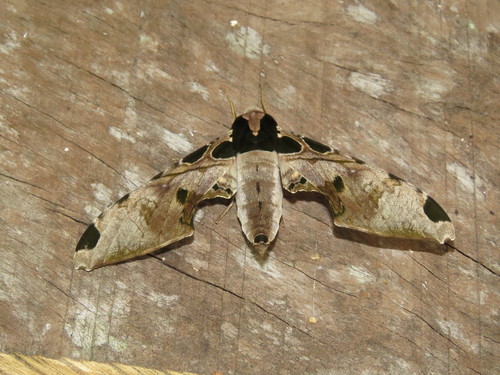
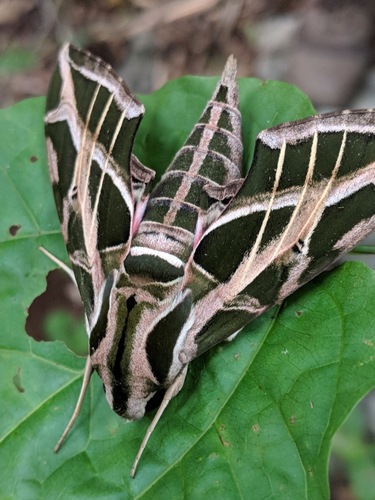
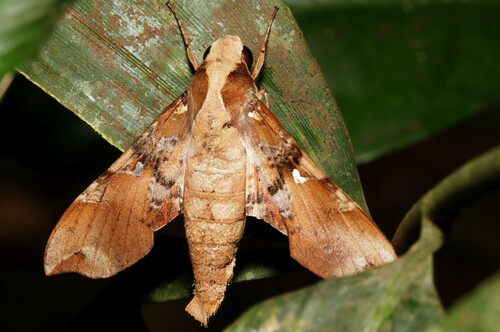
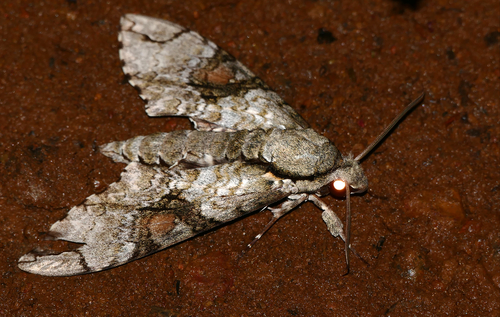
Manduca florestan, the Florestan sphinx, is a moth of the family Sphingidae. The species was first described by Caspar Stoll in 1782. It is found from the mountains of southern Arizona, New Mexico, and the lower Rio Grande Valley of southern Texas through Mexico, Belize, Guatemala, Nicaragua, Costa Rica and the rest of Central America south into South America at least to Paraguay, Bolivia, Venezuela, Argentina, Brazil and Suriname.

The wingspan is 99–110 mm. There is one generation with adults on wing from late June to early August in the United States. In Bolivia, adults have been reported in March and again from October to December, while adults are on wing year round in Costa Rica. They feed on the nectar of various flowers, including Plumeria rubra in Costa Rica.

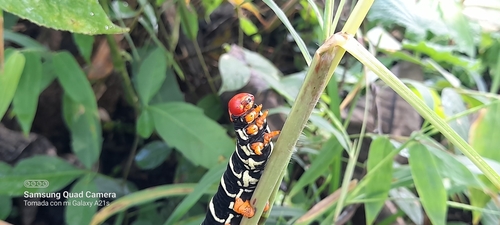
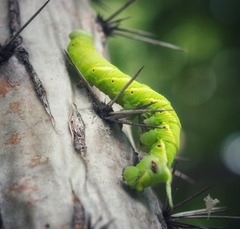
The larvae feed on Tecoma and Citharexylum species, Stachytarpheta frantzii, Callicarpa acuminata, Aegiphylla martinicensis, Citharexylum costaricensis, Tabebuia ochracea, Callichlamys latifolia, Cydista heterophylla, Cydista diversifolia, Crescentia alata, Macfadyena unguis-cati, Cordia panamensis, Cordia alliodora and Chionentis panamensis. In Brazil, larvae have been... Wikipedia →
Global Distribution

Parks Where Found

# Park Country Daily sighting probability
1 Brownsberg Nature Park 🇸🇷 Suriname
~40%
2 Palo Verde National Park 🇨🇷 Costa Rica
~20%
3 Calakmul Biosphere Reserve 🇲🇽 Mexico
~10%
4 Corcovado National Park 🇨🇷 Costa Rica
~10%
5 Soberanía National Park 🇵🇦 Panama
~10%
6 Cumbres de Monterrey National Park 🇲🇽 Mexico
~10%
7 Braulio Carrillo National Park 🇨🇷 Costa Rica
~10%
8 Manu National Park 🇵🇪 Peru
~10%
9 Tapantí-Macizo de la Muerte National Park 🇨🇷 Costa Rica
~10%
10 Monteverde Cloud Forest Reserve 🇨🇷 Costa Rica
<5%
11 La Amistad International Park (Panama) 🇵🇦 Panama
<5%

Cities Where Found

# City Country Daily sighting probability
1 Guadalajara 🇲🇽 México
<5%

Before you go

What are the chances of seeing a Florestan Sphinx in Manu National Park?

With luck

About 10% of wildlife watchers report a Florestan Sphinx sighting in Manu National Park on a given day, based on 6 verified sightings from GBIF citizen-science data from 2019 to 2026. It is the 246th most-seen of the 366 insects we can rate there. Over three days the chance rises to about 20%, and over a week to about 40%, if each day is a fresh chance.

When is the best time to see a Florestan Sphinx in Manu National Park?

July

In that month about 20% of wildlife watchers report a Florestan Sphinx in Manu National Park on a given day, against under 5% in March, May–June, August–September and November–January, the lowest months. That is one of Manu National Park's driest months, with about 70 mm of rain against 290 mm in February.

What time of day is best to see a Florestan Sphinx?

Between 7 and 10 pm

Across all the parks we cover, that three-hour window holds the most Florestan Sphinx sightings with a recorded time, and about 6 in 10 of them come between 6 pm and 6 am: it is seen both by day and at night.

Which relatives of the Florestan Sphinx live in Manu National Park?

Same family: Sphingidae

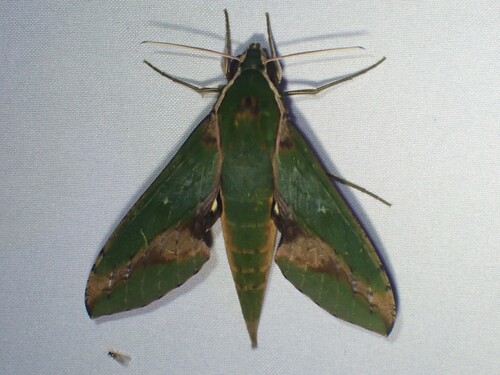
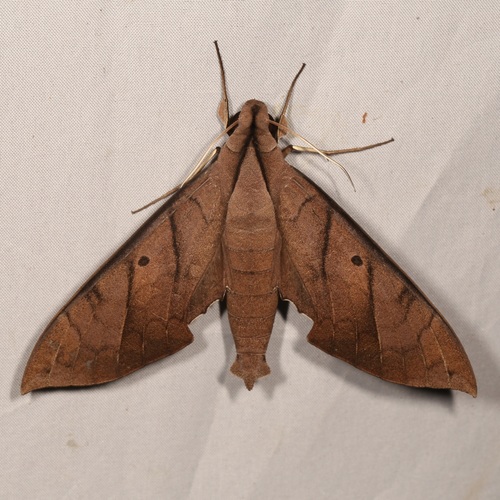
The closest relatives of the Florestan Sphinx that you can see in Manu National Park (family Sphingidae, Sphinx Moths) are Leafy Sphinx (about 10%), Darceta Sphinx (about 10%) and Xylophanes undata (about 10%), with each one's daily chance of a sighting.

Where does the Florestan Sphinx sighting chance come from?

GBIF citizen-science records

It is estimated from how often the Florestan Sphinx is recorded against all the insects logged in Manu National Park (6 verified sightings from 2019 to 2026), calibrated against known sighting rates. Figures are rounded to the nearest 10% because citizen-science data supports honest approximations, not decimals, and months with records from fewer than five people show "—". How it works.

← Back to Manu National Park