
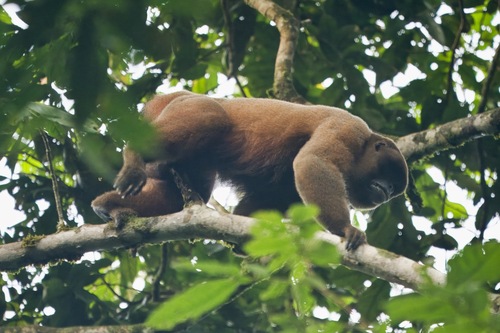
Shock-headed Capuchin

Shock-headed Capuchin

Cebus cuscinus

Silhouette: Sarah Werning · PhyloPic

LCNTNear ThreatenedVUENCR
Daily sighting probability ~20% · Possible
at Manu National Park

In 3 days ~40% in a week ~70%

25 Verified sightings at Manu National Park From 2019 to 2026
25 In 1 park
July Best month
☀️🌙 Day & Night When it's spotted

About the Shock-headed Capuchin

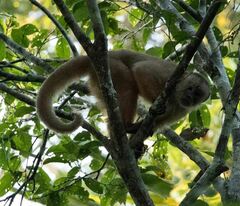
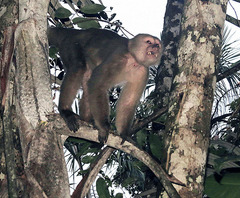
The shock-headed capuchin (Cebus cuscinus) is a species of gracile capuchin monkey from Bolivia and Peru. It was previously classified as a subspecies of the Humboldt's white-fronted capuchin (C. albifrons), but in 2013 Mittermeier and Rylands elevated it to a separate species, following genetic studies by Boubli et al. in 2012 and Lynch Alfaro et al. in 2010.

The shock-headed capuchin lives in lowland and seasonally inundated forests of the upper Amazon Basin, as well as montane forests of the western Andes Mountains up to elevations of 1,800 m (5,900 ft). Males have a head and body length of about 40 cm (16 in) with a tail length of about 44 cm (17 in). Females have a head and body length between 39 and 46 cm (15 and 18 in) with a tail length between 39 and 47.5 cm (15.4 and 18.7 in). Wikipedia →

Global Distribution

Parks Where Found

# Park Country Daily sighting probability
1 Manu National Park 🇵🇪 Peru
~20%

More parks will be added in future updates.

Zoos & Centres Where Found

# Zoo / Centre Country
1 Zoologico Mundo Andino - Tipon 🇵🇪 Peru In captivity

Before you go

What are the chances of seeing a Shock-headed Capuchin in Manu National Park?

Possible

About 20% of wildlife watchers report a Shock-headed Capuchin sighting in Manu National Park on a given day, based on 25 verified sightings from GBIF citizen-science data from 2019 to 2026. It is the 15th most-seen of the 42 mammals we can rate there. Over three days the chance rises to about 40%, and over a week to about 70%, if each day is a fresh chance.

When is the best time to see a Shock-headed Capuchin in Manu National Park?

January and July

In those months about 30% of wildlife watchers report a Shock-headed Capuchin in Manu National Park on a given day, against under 5% in April–May and September, the lowest months.

What time of day is best to see a Shock-headed Capuchin?

Between 2 and 5 pm

Across all the parks we cover, that three-hour window holds the most Shock-headed Capuchin sightings with a recorded time, and about 7 in 10 of them come between 6 am and 6 pm: it is seen both by day and at night.

Where else can you see a Shock-headed Capuchin?

Only Manu National Park, in our data

Manu National Park is the only park on Wallace's Line with enough records to rate Shock-headed Capuchin sightings: about 20% of wildlife watchers there report one on a given day.

Which relatives of the Shock-headed Capuchin live in Manu National Park?

Same family: Cebidae

The closest relatives of the Shock-headed Capuchin that you can see in Manu National Park (family Cebidae, Cebid Monkeys) are Black-capped Squirrel Monkey (about 50%) and Brown Capuchin (about 50%), with each one's daily chance of a sighting.

Where does the Shock-headed Capuchin sighting chance come from?

GBIF citizen-science records

It is estimated from how often the Shock-headed Capuchin is recorded against all the mammals logged in Manu National Park (25 verified sightings from 2019 to 2026), calibrated against known sighting rates. Figures are rounded to the nearest 10% because citizen-science data supports honest approximations, not decimals, and months with records from fewer than five people show "—". How it works.

← Back to Manu National Park