

Completed
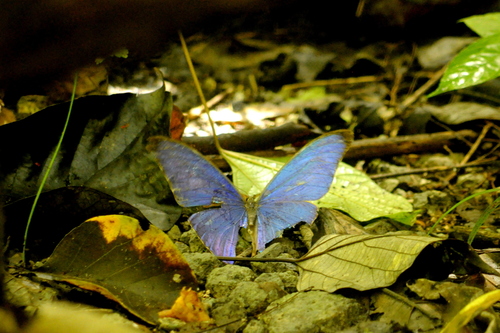
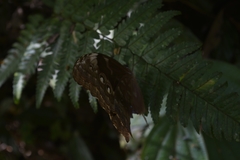
Amathonte Morpho
Morpho amathonte
- KingdomAnimalia (Animals)
- PhylumArthropoda (Arthropods)
- ClassInsecta (Insects)
- OrderLepidoptera (Butterflies and Moths)
- FamilyNymphalidae (Brush-footed Butterflies)
- GenusMorpho (Morphos)
- SpeciesMorpho amathonte (Amathonte Morpho)
In 3 days ~30% in a week ~60%
8 Verified sightings at Gandoca-Manzanillo Wildlife Refuge From 2019 to 2026
162 In all 7 parks
January Best month
☀️ Diurnal When it's spotted
About the Amathonte Morpho
Morpho amathonte is a Neotropical butterfly belonging to the subfamily Morphinae of the family Nymphalidae. It is considered, by some authors, to be a subspecies of Morpho menelaus. The genus Morpho is palatable but some species (such as M. amathonte) are strong fliers; birds – even species which are specialized for catching butterflies on the wing – find it hard to catch them. The conspicuous blue coloration shared by most Morpho species may be a case of Müllerian mimicry, or may be 'pursuit aposematism'.
Morpho amathonte has a wingspan of about 100–150 millimetres (3.9–5.9 in). The total number of days for which it takes this species to grow into an adult is about 120 days. During this time, the butterfly is an egg for 14 days, then remains as larvae for 83 days, and then remains a pupa for about 19 days. The females prefer to breed on isolated trees in intact forests, despite the fact that the hostplant is a familiar and plentiful tree in secondary woods. This species shows an evident sexual dimorphism which differentiates males from females. The basic color in males is bright metallic blue, sometimes bluish. In the females the upper surfaces of the wings are partially... Wikipedia →
Recent sightings of Amathonte Morpho in Gandoca-Manzanillo Wildlife Refuge
LIVEiNaturalistGlobal Distribution
Parks Where Found
| # | Park | Country | Daily sighting probability |
|---|---|---|---|
| 1 | Piedras Blancas National Park | 🇨🇷 Costa Rica | |
| 2 | Corcovado National Park | 🇨🇷 Costa Rica | |
| 3 | Manuel Antonio National Park | 🇨🇷 Costa Rica | |
| 4 | Soberanía National Park | 🇵🇦 Panama | |
| 5 | Gandoca-Manzanillo Wildlife Refuge | 🇨🇷 Costa Rica | |
| 6 | Carara National Park | 🇨🇷 Costa Rica | |
| 7 | Braulio Carrillo National Park | 🇨🇷 Costa Rica |
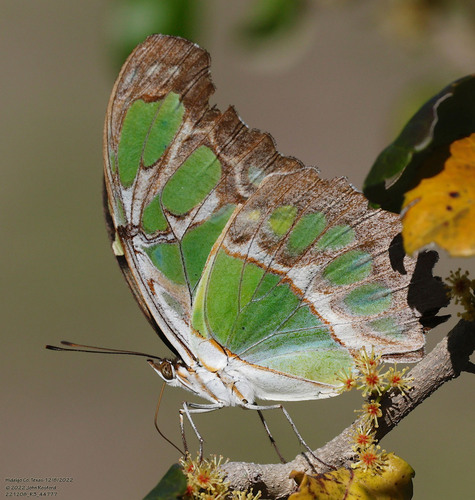
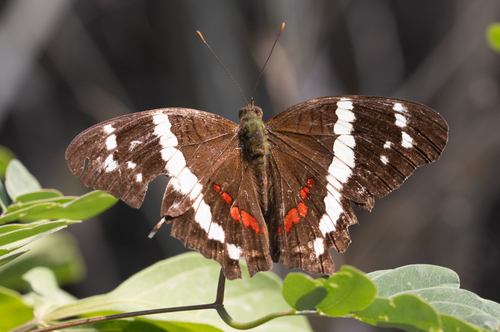
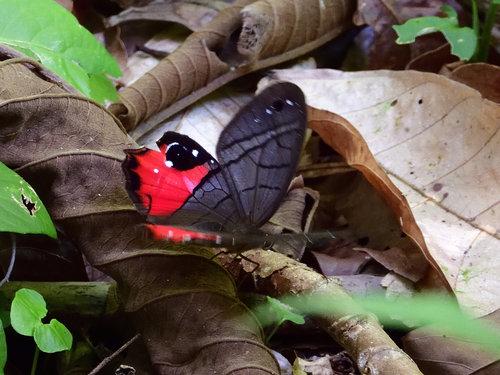
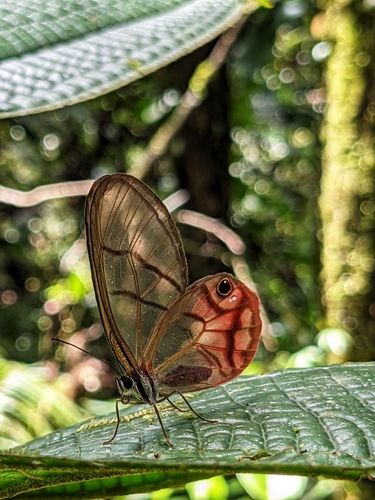
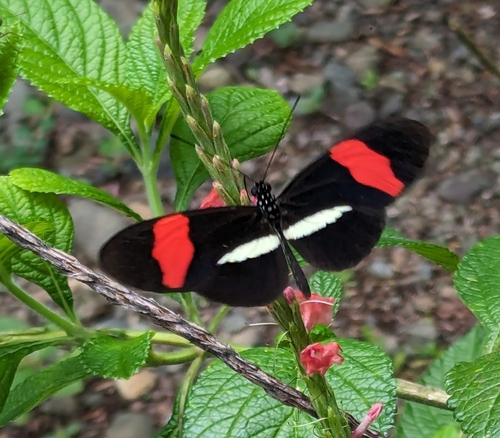
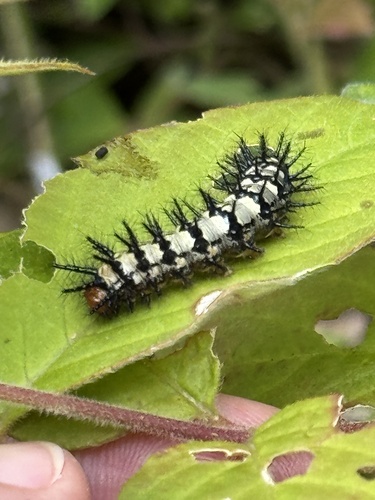
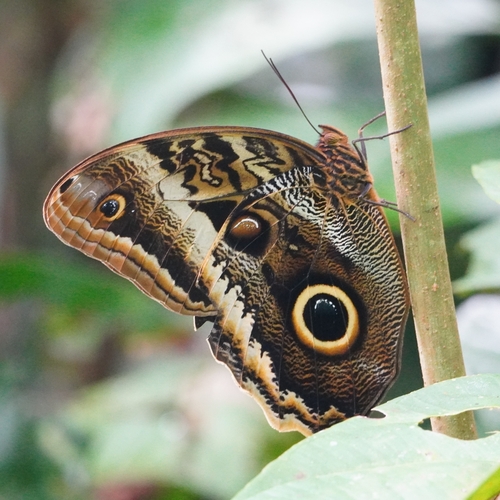
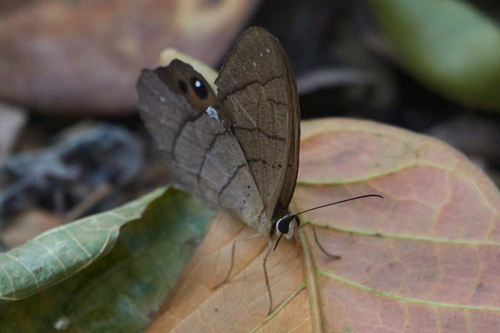
Closest Relatives at Gandoca-Manzanillo Wildlife Refuge


Before you go
What are the chances of seeing an Amathonte Morpho in Gandoca-Manzanillo Wildlife Refuge?
With luck
About 10% of wildlife watchers report an Amathonte Morpho sighting in Gandoca-Manzanillo Wildlife Refuge on a given day, based on 8 verified sightings from GBIF citizen-science data from 2019 to 2026. It is the 33rd most-seen of the 72 insects we can rate there. Over three days the chance rises to about 30%, and over a week to about 60%, if each day is a fresh chance.
When is the best time to see an Amathonte Morpho in Gandoca-Manzanillo Wildlife Refuge?
January
In that month about 30% of wildlife watchers report an Amathonte Morpho in Gandoca-Manzanillo Wildlife Refuge on a given day, against under 5% in April–August and November–December, the lowest months.
What time of day is best to see an Amathonte Morpho?
Between 8 and 11 am
Across all the parks we cover, that three-hour window holds the most Amathonte Morpho sightings with a recorded time, and about 9 in 10 of them come between 6 am and 6 pm: it is a daytime animal.
Is Gandoca-Manzanillo Wildlife Refuge the best place to see an Amathonte Morpho?
5th of 7
Of the 7 parks where we can rate Amathonte Morpho sightings, Gandoca-Manzanillo Wildlife Refuge ranks 5th at about 10%. The best odds are in Piedras Blancas National Park (Costa Rica, about 20%), Corcovado National Park (Costa Rica, about 20%) and Manuel Antonio National Park (Costa Rica, about 20%).
Where does the Amathonte Morpho sighting chance come from?
GBIF citizen-science records
It is estimated from how often the Amathonte Morpho is recorded against all the insects logged in Gandoca-Manzanillo Wildlife Refuge (8 verified sightings from 2019 to 2026), calibrated against known sighting rates. Figures are rounded to the nearest 10% because citizen-science data supports honest approximations, not decimals, and months with records from fewer than five people show "—". How it works.
