
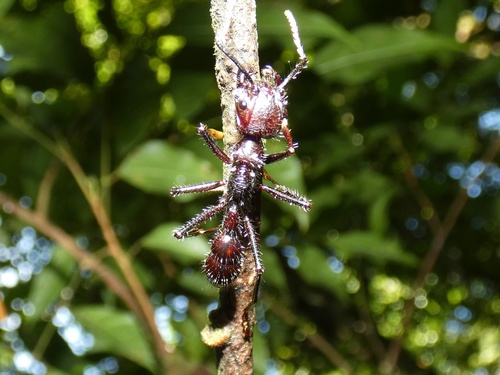
Elephant Beetle

Elephant Beetle

Megasoma elephas

Daily sighting probability ~10% · With luck
at Gandoca-Manzanillo Wildlife Refuge

In 3 days ~30% in a week ~50%

5 Verified sightings at Gandoca-Manzanillo Wildlife Refuge From 2019 to 2026
112 In all 9 parks
May Best month
☀️🌙 Day & Night When it's spotted

About the Elephant Beetle

The elephant beetle (Megasoma elephas) is a member of the family Scarabaeidae and the subfamily Dynastinae. Elephant beetles are Neotropical rhinoceros beetles. Elephant beetles are black in color and covered with a coat of fine microscopic hairs. The hairs grow particularly thick on the beetle's elytra, and give its body a yellowish color. Males have two horns protruding from the head and another from the prothorax. The longest head horn gives the beetle its common name, since it resembles an elephant’s trunk. Females have no horns. The horns are used for defense, and in competition among males for food and mates.

In size, elephant beetles typically range between 7 and 12 cm (2.75–4.75 in), with the largest male specimen known measuring 13.7 cm, including the horn. Elephant beetles are located in southern Mexico, Central America, and in South American rainforests.

The female elephant... Wikipedia →

Global Distribution

Parks Where Found

# Park Country Daily sighting probability
1 Bastimentos Island National Marine Park 🇵🇦 Panama
~20%
2 Marino Ballena National Park 🇨🇷 Costa Rica
~10%
3 Tortuguero National Park 🇨🇷 Costa Rica
~10%
4 Piedras Blancas National Park 🇨🇷 Costa Rica
~10%
5 Cahuita National Park 🇨🇷 Costa Rica
~10%
6 Soberanía National Park 🇵🇦 Panama
~10%
7 Gandoca-Manzanillo Wildlife Refuge 🇨🇷 Costa Rica
~10%
8 La Amistad International Park (Panama) 🇵🇦 Panama
~10%
9 Arenal Volcano National Park 🇨🇷 Costa Rica
~10%

Cities Where Found

# City Country Daily sighting probability
1 Panama City 🇵🇦 Panama
<5%

Before you go

What are the chances of seeing an Elephant Beetle in Gandoca-Manzanillo Wildlife Refuge?

With luck

About 10% of wildlife watchers report an Elephant Beetle sighting in Gandoca-Manzanillo Wildlife Refuge on a given day, based on 5 verified sightings from GBIF citizen-science data from 2019 to 2026. It is the 58th most-seen of the 72 insects we can rate there. Over three days the chance rises to about 30%, and over a week to about 50%, if each day is a fresh chance.

When is the best time to see an Elephant Beetle in Gandoca-Manzanillo Wildlife Refuge?

April and May

In those months about 30% of wildlife watchers report an Elephant Beetle in Gandoca-Manzanillo Wildlife Refuge on a given day, against under 5% in June–July and September–March, the lowest months.

What time of day is best to see an Elephant Beetle?

Between 8 and 11 pm

Across all the parks we cover, that three-hour window holds the most Elephant Beetle sightings with a recorded time, and about 6 in 10 of them come between 6 am and 6 pm: it is seen both by day and at night.

Which relatives of the Elephant Beetle live in Gandoca-Manzanillo Wildlife Refuge?

Same order: Coleoptera

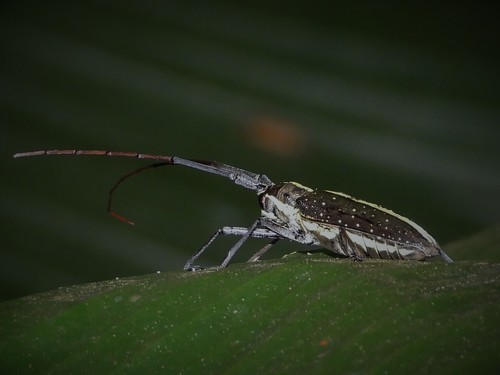
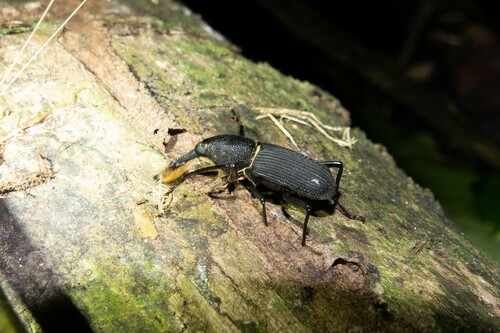
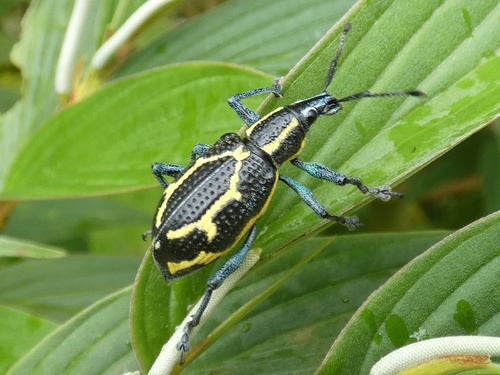
The closest relatives of the Elephant Beetle that you can see in Gandoca-Manzanillo Wildlife Refuge (order Coleoptera, Beetles) are Taeniotes scalatus (about 20%), Exophthalmus jekelianus (about 10%) and Bearded Weevil (about 10%), with each one's daily chance of a sighting.

Where does the Elephant Beetle sighting chance come from?

GBIF citizen-science records

It is estimated from how often the Elephant Beetle is recorded against all the insects logged in Gandoca-Manzanillo Wildlife Refuge (5 verified sightings from 2019 to 2026), calibrated against known sighting rates. Figures are rounded to the nearest 10% because citizen-science data supports honest approximations, not decimals, and months with records from fewer than five people show "—". How it works.

← Back to Gandoca-Manzanillo Wildlife Refuge