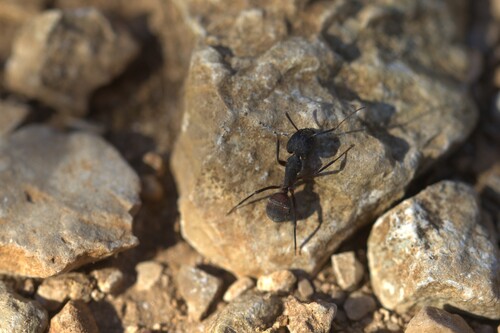
Calocoris nemoralis

Calocoris nemoralis

Calocoris nemoralis

Daily sighting probability ~20% · Possible
at Monfragüe National Park

In 3 days ~40% in a week ~70%

14 Verified sightings at Monfragüe National Park From 2019 to 2026
47 In all 3 parks
April Best month
☀️ Diurnal When it's spotted

About the Calocoris nemoralis

Calocoris nemoralis is a species of true bugs belonging to the family Miridae or jumping tree bugs, subfamily Mirinae. Forms within this species include: Calocoris nemoralis f. bimaculata Calocoris nemoralis f. hexastigma

Calocoris nemoralis f. hispanica Gmel. Calocoris nemoralis f. picea Cyr. Calocoris nemoralis f. nigrovittata Costa Calocoris nemoralis f. erytrocephala Mancini Calocoris nemoralis f. vittata This species can be found in most of Southern Europe (Cyprus, European Turkey, France, Germany, Greece, Italy, Malta. Portugal and Spain).

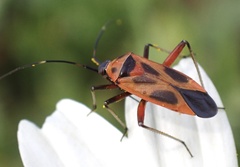
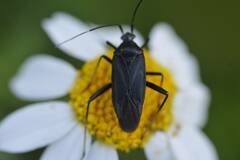
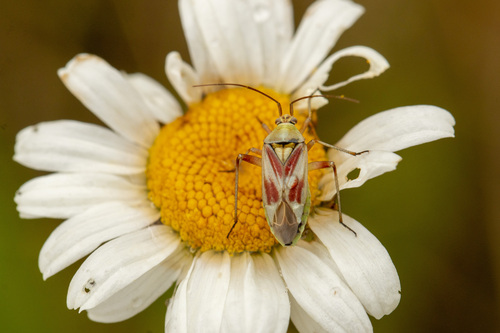
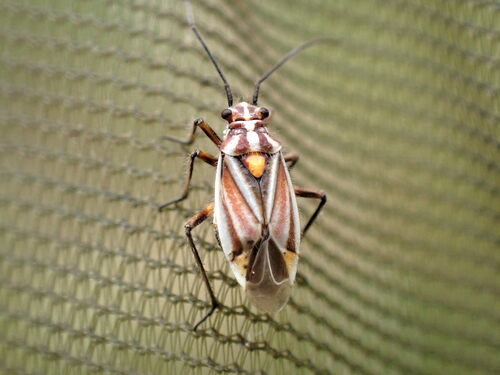
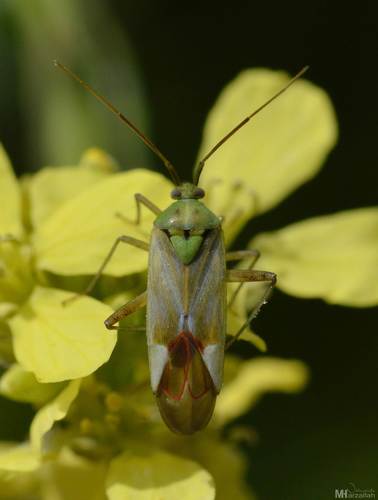
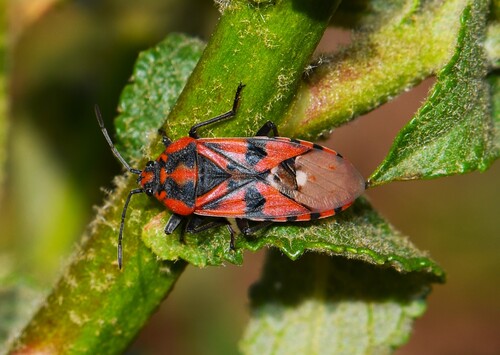
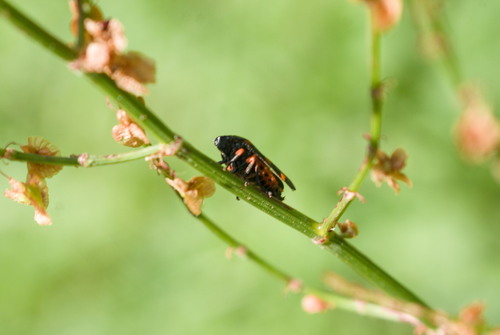
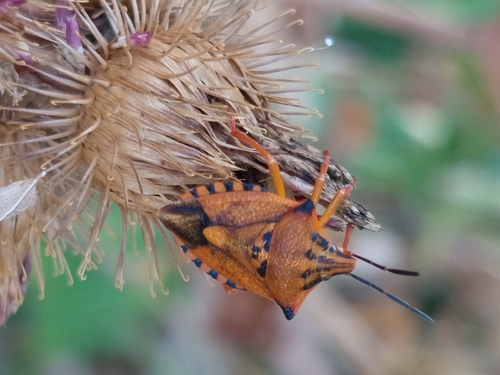
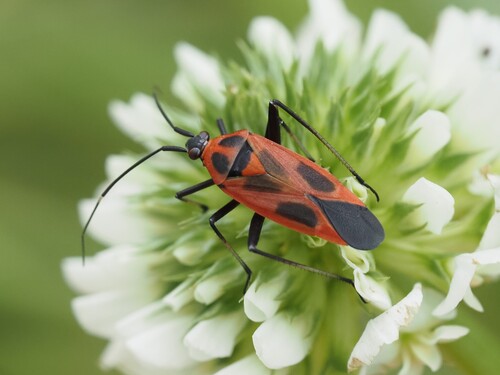
Calocoris nemoralis can reach a length of 8.5–9 millimetres (0.33–0.35 in) in males, of 8.2–9.5 millimetres (0.32–0.37 in) in females. Bodies af these bugs are elongated. The head is black, very rarely clear. The dorsal surface is covered with dense black hairs. The membrane is black. Legs are black, femurs and tibiae are often partly red or yellow.

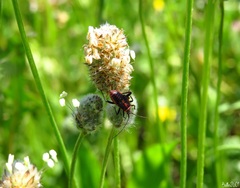
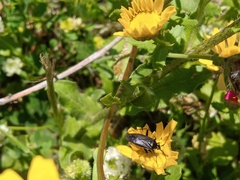
Calocoris nemoralis is usually red coloured with black dots. This species presents many forms, with an enormous variability in colors, that may be white, black, gray, yellowish, greenish or blood red, with and without black spots.

Adults... Wikipedia →
Global Distribution

Parks Where Found

# Park Country Daily sighting probability
1 Monfragüe National Park 🇪🇸 Spain
~20%
2 Pyrénées National Park 🇫🇷 France
~10%
3 Sierra de Guadarrama National Park 🇪🇸 Spain
<5%

Cities Where Found

# City Country Daily sighting probability
1 Athens 🇬🇷 Greece
~10%
2 Algiers 🇩🇿 Algeria
~10%
3 Tel Aviv 🇮🇱 Israel
~10%
4 Rome 🇮🇹 Italy
~10%
5 Madrid 🇪🇸 Spain
<5%
6 Lisbon 🇵🇹 Portugal
<5%

Before you go

What are the chances of seeing a Calocoris nemoralis in Monfragüe National Park?

Possible

About 20% of wildlife watchers report a Calocoris nemoralis sighting in Monfragüe National Park on a given day, based on 14 verified sightings from GBIF citizen-science data from 2019 to 2026. It is the 37th most-seen of the 84 insects we can rate there. Over three days the chance rises to about 40%, and over a week to about 70%, if each day is a fresh chance.

When is the best time to see a Calocoris nemoralis in Monfragüe National Park?

April

In that month about 30% of wildlife watchers report a Calocoris nemoralis in Monfragüe National Park on a given day, against under 5% in June to March, the lowest months. That is one of Monfragüe National Park's wettest months, with about 70 mm of rain against almost none in July.

What time of day is best to see a Calocoris nemoralis?

Between 3 and 6 pm

Across all the parks we cover, that three-hour window holds the most Calocoris nemoralis sightings with a recorded time, and about 9 in 10 of them come between 6 am and 6 pm: it is a daytime animal.

Is Monfragüe National Park the best place to see a Calocoris nemoralis?

Yes

Of the 3 parks where we can rate Calocoris nemoralis sightings, Monfragüe National Park has the highest daily chance: about 20%. Next come Pyrénées National Park (France, about 10%) and Sierra de Guadarrama National Park (Spain, under 5%).

Where does the Calocoris nemoralis sighting chance come from?

GBIF citizen-science records

It is estimated from how often the Calocoris nemoralis is recorded against all the insects logged in Monfragüe National Park (14 verified sightings from 2019 to 2026), calibrated against known sighting rates. Figures are rounded to the nearest 10% because citizen-science data supports honest approximations, not decimals, and months with records from fewer than five people show "—". How it works.

← Back to Monfragüe National Park