Nepal House Martin

Nepal House Martin

Delichon nipalense

Silhouette: Andy Wilson · PhyloPic

LCLeast ConcernNTVUENCR
Daily sighting probability <5% · Rare
at Namdapha National Park

In 3 days ~10% in a week ~30%

49 Verified sightings at Namdapha National Park From 2019 to 2026
227 In all 6 parks
December Best month
☀️ Diurnal When it's spotted

About the Nepal House Martin

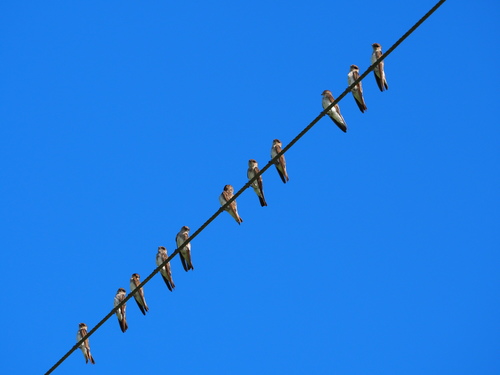
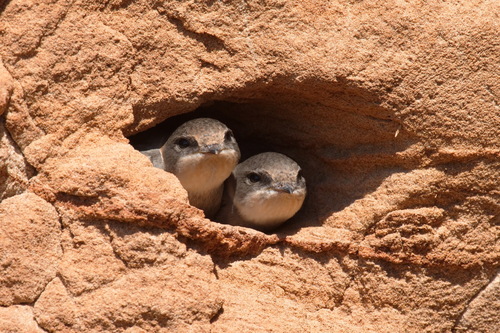
The Nepal house martin (Delichon nipalense) is a non-migratory passerine of the swallow family Hirundinidae. Its two subspecies breed in the Himalayas from northwestern India through Nepal to Myanmar, northern Vietnam, and just into China. It occurs in river valleys and rugged wooded mountain ridges at heights between 1,000–4,000 m (3,300–13,100 ft) altitude, where it nests in colonies beneath overhangs on vertical cliffs, laying three or four white eggs in an enclosed mud nest.

This martin has blue-black upperparts with a contrasting white rump, and white underparts. It resembles its close relatives, the Asian house martin and common house martin, but unlike those species it has a black throat and black undertail. It feeds in flocks with other swallows, catching flies and other insects in flight. It is subject to predation and parasites, but its status within its limited range appears secure.

The Nepal house martin was first described by British entomologist Frederic Moore in 1854, and placed in a new genus Delichon created by Moore and American naturalist Thomas Horsfield. The specimen or its description was attributed by Moore to Brian Houghton Hodgson and early literature... Wikipedia →

Sounds

Call0:17

Bhutan · 2005

© David Farrow · XC19781 · CC BY-NC-SA 3.0

Call0:18

Bhutan · 2012

© Mike Nelson · XC115341 · CC BY-NC-SA 3.0

Call1:02

India · 2006

© Mathias Ritschard · XC21920 · CC BY-NC-ND 2.5

Global Distribution

Parks Where Found

# Park Country Daily sighting probability
1 Langtang National Park 🇳🇵 Nepal
~20%
2 Royal Manas National Park 🇧🇹 Bhutan
~10%
3 Namdapha National Park 🇮🇳 India
<5%
4 Manas National Park 🇮🇳 India
<5%
5 Chitwan National Park 🇳🇵 Nepal
<5%
6 Jim Corbett National Park 🇮🇳 India
<5%

Cities Where Found

# City Country Daily sighting probability
1 Kathmandu 🇳🇵 Nepal
<5%

Before you go

What are the chances of seeing a Nepal House Martin in Namdapha National Park?

Rare

Under 5% of wildlife watchers report a Nepal House Martin sighting in Namdapha National Park on a given day, based on 49 verified sightings from GBIF citizen-science data from 2019 to 2026. It is the 175th most-seen of the 298 birds we can rate there. Over three days the chance rises to about 10%, and over a week to about 30%, if each day is a fresh chance.

When is the best time to see a Nepal House Martin in Namdapha National Park?

December to February

In those months about 10% of wildlife watchers report a Nepal House Martin in Namdapha National Park on a given day, against under 5% in March–May and October–November, the lowest months. Those are among Namdapha National Park's driest months, with about 60 mm of rain a month against 660 mm in July. June to September have too few records to rate.

What time of day is best to see a Nepal House Martin?

Between 8 and 11 am

Across all the parks we cover, that three-hour window holds the most Nepal House Martin sightings with a recorded time, and about 9 in 10 of them come between 6 am and 6 pm: it is a daytime animal.

Is Namdapha National Park the best place to see a Nepal House Martin?

3rd of 6

Of the 6 parks where we can rate Nepal House Martin sightings, Namdapha National Park ranks 3rd at under 5%. The best odds are in Langtang National Park (Nepal, about 20%) and Royal Manas National Park (Bhutan, about 10%).

Where does the Nepal House Martin sighting chance come from?

GBIF citizen-science records

It is estimated from how often the Nepal House Martin is recorded against all the birds logged in Namdapha National Park (49 verified sightings from 2019 to 2026), calibrated against known sighting rates. Figures are rounded to the nearest 10% because citizen-science data supports honest approximations, not decimals, and months with records from fewer than five people show "—". How it works.

← Back to Namdapha National Park