Heath Fritillary

Heath Fritillary

Melitaea athalia

Daily sighting probability ~10% · With luck
at Picos de Europa National Park

In 3 days ~30% in a week ~60%

7 Verified sightings at Picos de Europa National Park From 2019 to 2026
376 In all 10 parks
July Best month
☀️ Diurnal When it's spotted

About the Heath Fritillary

The heath fritillary (Melitaea athalia) is a species of butterfly in the family Nymphalidae. It is found throughout the Palaearctic from western Europe to Japan, in heathland, grassland, and in coppiced woodland. Its association with coppiced woodland earned it the name "woodman's follower" in parts of the UK. It is considered a threatened species in the UK and Germany, but not Europe-wide or globally.

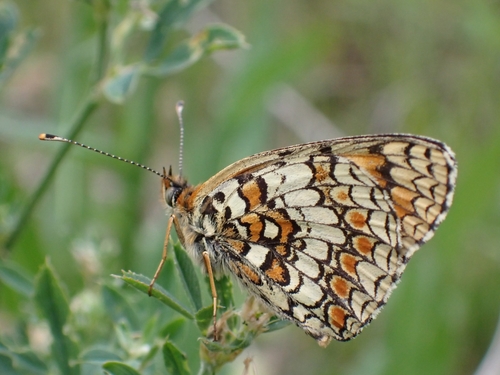
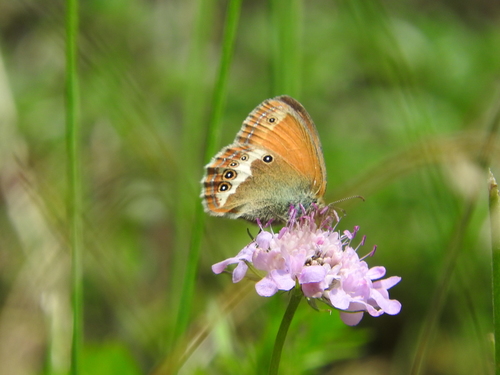
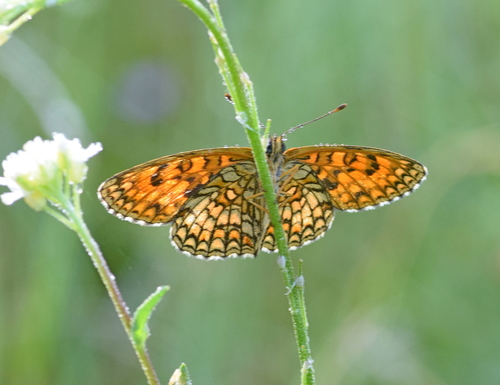
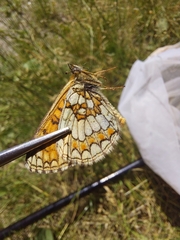
Heath fritillaries have a wingspan of 39–47 mm. The upperside is predominantly dark brown and orange brown, with the orange-brown spots delineated by dark brown (along and across the wing veins); there is a white fringe to the wings through which the dark brown extends. The upperside of the body is a similar dark brown to the colour on the wing, and the base of both wings is dark brown. The underside shows bands of red and (off-)white, again with each vein dark brown and each colour delineated by dark brown. The pattern of white spots at the base of the hindwing (visible at rest) is diagnostic for identification.

These wing patterns are very similar to the appearance of Melitaea cinxia. However, the dark brown bands on underside of the wings are more distinct in the... Wikipedia →
Global Distribution

Parks Where Found

# Park Country Daily sighting probability
1 Mercantour National Park 🇫🇷 France
~30%
2 Biebrza National Park 🇵🇱 Poland
~30%
3 Cévennes National Park 🇫🇷 France
~20%
4 Triglav National Park 🇸🇮 Slovenia
~20%
5 Bavarian Forest National Park 🇩🇪 Germany
~10%
6 Picos de Europa National Park 🇪🇸 Spain
~10%
7 Białowieża National Park 🇵🇱 Poland
~10%
8 Hohe Tauern National Park 🇦🇹 Austria
~10%
9 Tatra National Park 🇸🇰 Slovakia
~10%
10 Pyrénées National Park 🇫🇷 France
~10%

Cities Where Found

# City Country Daily sighting probability
1 Berlin 🇩🇪 Germany
<5%

Before you go

What are the chances of seeing a Heath Fritillary in Picos de Europa National Park?

With luck

About 10% of wildlife watchers report a Heath Fritillary sighting in Picos de Europa National Park on a given day, based on 7 verified sightings from GBIF citizen-science data from 2019 to 2026. It is the 85th most-seen of the 118 insects we can rate there. Over three days the chance rises to about 30%, and over a week to about 60%, if each day is a fresh chance.

When is the best time to see a Heath Fritillary in Picos de Europa National Park?

June and July

In those months about 20% of wildlife watchers report a Heath Fritillary in Picos de Europa National Park on a given day, against under 5% in August to May, the lowest months.

What time of day is best to see a Heath Fritillary?

Between noon and 3 pm

Across all the parks we cover, that three-hour window holds the most Heath Fritillary sightings with a recorded time, and about 9 in 10 of them come between 6 am and 6 pm: it is a daytime animal.

Is Picos de Europa National Park the best place to see a Heath Fritillary?

6th of 10

Of the 10 parks where we can rate Heath Fritillary sightings, Picos de Europa National Park ranks 6th at about 10%. The best odds are in Mercantour National Park (France, about 30%), Biebrza National Park (Poland, about 30%) and Cévennes National Park (France, about 20%).

Which relatives of the Heath Fritillary live in Picos de Europa National Park?

Same genus: Melitaea

The closest relatives of the Heath Fritillary that you can see in Picos de Europa National Park (genus Melitaea) are Knapweed Fritillary (about 20%) and Glanville Fritillary (about 10%), with each one's daily chance of a sighting.

Where does the Heath Fritillary sighting chance come from?

GBIF citizen-science records

It is estimated from how often the Heath Fritillary is recorded against all the insects logged in Picos de Europa National Park (7 verified sightings from 2019 to 2026), calibrated against known sighting rates. Figures are rounded to the nearest 10% because citizen-science data supports honest approximations, not decimals, and months with records from fewer than five people show "—". How it works.

← Back to Picos de Europa National Park