Little Friarbird

Little Friarbird

Philemon citreogularis

Silhouette: Ferran Sayol · PhyloPic

LCLeast ConcernNTVUENCR
Daily sighting probability ~10% · With luck
at Pilliga National Park

In 3 days ~30% in a week ~60%

8 Verified sightings at Pilliga National Park From 2019 to 2026
661 In all 9 parks
September Best month
☀️ Diurnal When it's spotted

About the Little Friarbird

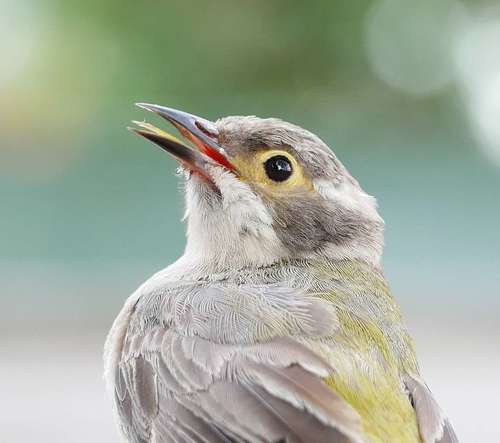
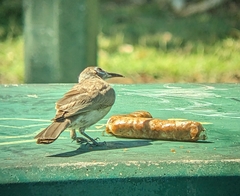
The little friarbird (Philemon citreogularis), also known as the little leatherhead or yellow-throated friarbird, is the smallest of the friarbirds within the Philemon genus. It is found throughout northern and eastern Australia as well as southern Papua New Guinea. It lives a very prominent life, whereby it can easily be seen chasing other honeyeaters, and also it is very vocal. However, the little friarbird is usually spotted high up in trees, rarely being seen on the ground.

The little friarbird ranges from 25–30 centimetres (9.8–11.8 in) in length. The average size tends to be 27 centimetres (11 in) with an average weight of 67 grams (2.4 oz). Although males and females tend to be very similar in appearance, males are larger.

The little friarbird can be easily distinguished from other friarbirds by the absence of a casque (a prominent ridge or bump present on the beak). Another key recognisable feature is the bare blue skin present under the eye which widens over the cheek. (The bare blue skin can vary from grey to black in tone.) Dark feathers are present both above and below the blue skin. The top of the head and body are a dark grey-brown with a dull white fringe...

Wikipedia →

Sounds

Call1:00

Australia · 2025

© Peter Boesman · XC1066561 · CC BY-NC-ND 4.0

Song0:07

Australia · 2024

© Lhacky · XC955979 · CC BY-NC-SA 4.0

Dawn song1:08

Australia · 2022

© James Lambert · XC761166 · CC BY-NC-ND 4.0

Global Distribution

Parks Where Found

# Park Country Daily sighting probability
1 Nitmiluk National Park 🇦🇺 Australia
~30%
2 Litchfield National Park 🇦🇺 Australia
~20%
3 Kakadu National Park 🇦🇺 Australia
~20%
4 Pilliga National Park 🇦🇺 Australia
~10%
5 Noosa National Park 🇦🇺 Australia
~10%
6 Hattah-Kulkyne National Park 🇦🇺 Australia
<5%
7 Springbrook National Park 🇦🇺 Australia
<5%
8 Daintree National Park 🇦🇺 Australia
<5%
9 Lamington National Park 🇦🇺 Australia
<5%

Cities Where Found

# City Country Daily sighting probability
1 Brisbane 🇦🇺 Australia
~20%

Before you go

What are the chances of seeing a Little Friarbird in Pilliga National Park?

With luck

About 10% of wildlife watchers report a Little Friarbird sighting in Pilliga National Park on a given day, based on 8 verified sightings from GBIF citizen-science data from 2019 to 2026. It is the 31st most-seen of the 58 birds we can rate there. Over three days the chance rises to about 30%, and over a week to about 60%, if each day is a fresh chance.

When is the best time to see a Little Friarbird in Pilliga National Park?

September

In that month about 20% of wildlife watchers report a Little Friarbird in Pilliga National Park on a given day, against about 10% in February, June–August and November–December, the lowest months. January, March–May and October have too few records to rate.

What time of day is best to see a Little Friarbird?

Between 8 and 11 am

Across all the parks we cover, that three-hour window holds the most Little Friarbird sightings with a recorded time, and about 9 in 10 of them come between 6 am and 6 pm: it is a daytime animal.

Is Pilliga National Park the best place to see a Little Friarbird?

4th of 9

Of the 9 parks where we can rate Little Friarbird sightings, Pilliga National Park ranks 4th at about 10%. The best odds are in Nitmiluk National Park (Australia, about 30%), Litchfield National Park (Australia, about 20%) and Kakadu National Park (Australia, about 20%).

Where does the Little Friarbird sighting chance come from?

GBIF citizen-science records

It is estimated from how often the Little Friarbird is recorded against all the birds logged in Pilliga National Park (8 verified sightings from 2019 to 2026), calibrated against known sighting rates. Figures are rounded to the nearest 10% because citizen-science data supports honest approximations, not decimals, and months with records from fewer than five people show "—". How it works.

← Back to Pilliga National Park