

Completed
Eastern Tiger Swallowtail
Papilio glaucus
- KingdomAnimalia (Animals)
- PhylumArthropoda (Arthropods)
- ClassInsecta (Insects)
- OrderLepidoptera (Butterflies and Moths)
- FamilyPapilionidae (Swallowtails and Parnassians)
- GenusPapilio (Common Swallowtails)
- SpeciesPapilio glaucus (Eastern Tiger Swallowtail)
In 3 days ~50% in a week ~80%
37 Verified sightings at Point Pelee National Park From 2019 to 2026
1,751 In all 7 parks
June Best month
☀️ Diurnal When it's spotted
About the Eastern Tiger Swallowtail
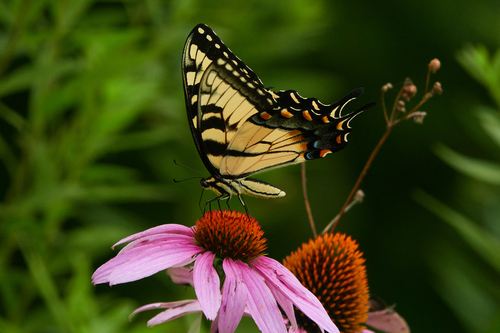
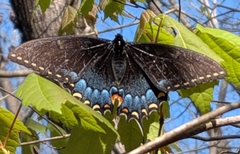
Papilio glaucus, the eastern tiger swallowtail, is a species of butterfly native to eastern North America. It is one of the most familiar butterflies in the eastern United States, ranging north to southern Ontario, Canada, and is common in many different habitats. It flies from spring until fall, during which it produces two to three broods. Adults feed on the nectar of many species of flowers, mostly from those of the families Apocynaceae, Asteraceae, and Fabaceae. P. glaucus has a wingspan measuring 7.9 to 14 cm (3.1 to 5.5 in). The male is yellow with four black "tiger stripes" on each forewing. Females may be either yellow or black, making the females dimorphic. The yellow morph has similar coloring to the male, but with a conspicuous band of blue spots along the hindwing; the dark morph is almost completely black.
The green eggs are laid singly on plants of the families Magnoliaceae and Rosaceae. Young caterpillars are brown and white; older ones are green with two black, yellow, and blue eyespots on the thorax. The caterpillar will turn brown prior to pupating. It will reach a length of 5.5 centimetres (2.2 in). The chrysalis varies from a whitish color to dark brown. Hibernation occurs in this stage in locations with cold winter months.
The eastern tiger swallowtail is the state butterfly of Alabama (as well as state mascot), Delaware, Georgia, North Carolina and South Carolina, and is the state insect of Virginia. Wikipedia →
Recent sightings of Eastern Tiger Swallowtail in Point Pelee National Park
LIVEiNaturalistGlobal Distribution
Parks Where Found
| # | Park | Country | Daily sighting probability |
|---|---|---|---|
| 1 | Great Smoky Mountains National Park | 🇺🇸 United States | |
| 2 | Shenandoah National Park | 🇺🇸 United States | |
| 3 | Congaree National Park | 🇺🇸 United States | |
| 4 | Point Pelee National Park | 🇨🇦 Canada | |
| 5 | Big Cypress National Preserve | 🇺🇸 United States | |
| 6 | Merritt Island National Wildlife Refuge | 🇺🇸 United States | |
| 7 | Cumbres de Monterrey National Park | 🇲🇽 Mexico |
Cities Where Found
| # | City | Country | Daily sighting probability |
|---|---|---|---|
| 1 | Washington | 🇺🇸 United States | |
| 2 | Philadelphia | 🇺🇸 United States | |
| 3 | Baltimore | 🇺🇸 United States | |
| 4 | Detroit | 🇺🇸 United States | |
| 5 | Minneapolis [Saint Paul] | 🇺🇸 United States | |
| 6 | New York City | 🇺🇸 United States | |
| 7 | Chicago | 🇺🇸 United States | |
| 8 | Austin | 🇺🇸 United States | |
| 9 | Dallas | 🇺🇸 United States | |
| 10 | Toronto | 🇨🇦 Canada |
Closest Relatives at Point Pelee National Park






Before you go
What are the chances of seeing an Eastern Tiger Swallowtail in Point Pelee National Park?
Possible
About 20% of wildlife watchers report an Eastern Tiger Swallowtail sighting in Point Pelee National Park on a given day, based on 37 verified sightings from GBIF citizen-science data from 2019 to 2026. It is the 21st most-seen of the 196 insects we can rate there. Over three days the chance rises to about 50%, and over a week to about 80%, if each day is a fresh chance.
When is the best time to see an Eastern Tiger Swallowtail in Point Pelee National Park?
June
In that month about 40% of wildlife watchers report an Eastern Tiger Swallowtail in Point Pelee National Park on a given day, against under 5% in September to April, the lowest months.
What time of day is best to see an Eastern Tiger Swallowtail?
Between 11 am and 2 pm
Across all the parks we cover, that three-hour window holds the most Eastern Tiger Swallowtail sightings with a recorded time, and about 9 in 10 of them come between 6 am and 6 pm: it is a daytime animal.
Is Point Pelee National Park the best place to see an Eastern Tiger Swallowtail?
4th of 7
Of the 7 parks where we can rate Eastern Tiger Swallowtail sightings, Point Pelee National Park ranks 4th at about 20%. The best odds are in Great Smoky Mountains National Park (United States, about 50%), Shenandoah National Park (United States, about 50%) and Congaree National Park (United States, about 30%). All parks ranked.
Which relatives of the Eastern Tiger Swallowtail live in Point Pelee National Park?
Same genus: Papilio
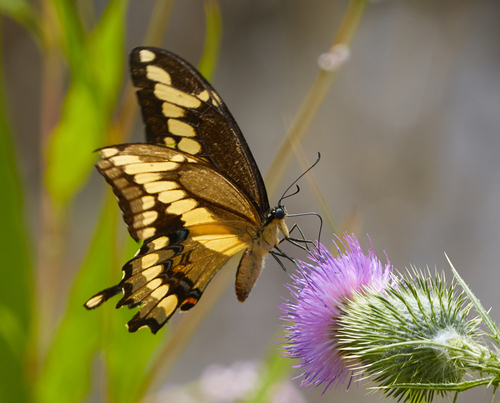
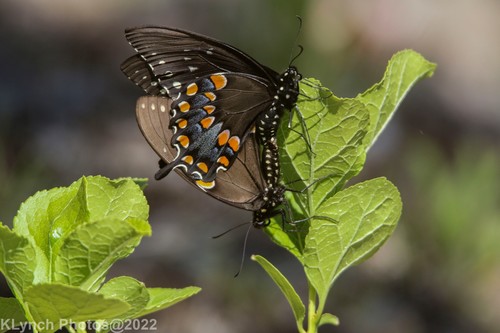
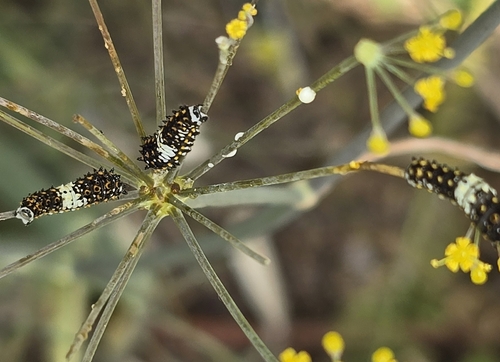
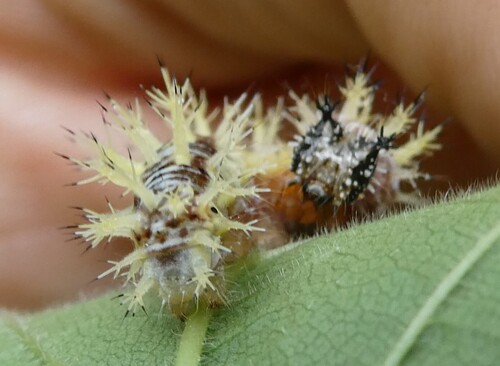
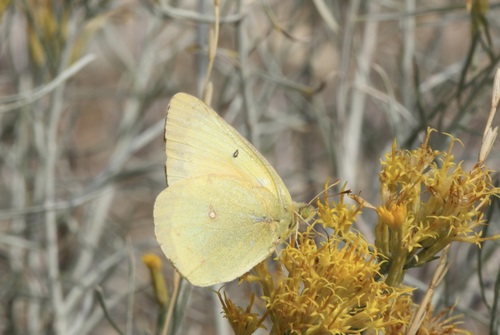
The closest relatives of the Eastern Tiger Swallowtail that you can see in Point Pelee National Park (genus Papilio, Common Swallowtails) are Eastern Giant Swallowtail (about 30%), Spicebush Swallowtail (about 30%) and Black Swallowtail (about 10%), with each one's daily chance of a sighting.
Where does the Eastern Tiger Swallowtail sighting chance come from?
GBIF citizen-science records
It is estimated from how often the Eastern Tiger Swallowtail is recorded against all the insects logged in Point Pelee National Park (37 verified sightings from 2019 to 2026), calibrated against known sighting rates. Figures are rounded to the nearest 10% because citizen-science data supports honest approximations, not decimals, and months with records from fewer than five people show "—". How it works.
