

24-Spot Ladybird

24-Spot Ladybird

Subcoccinella vigintiquatuorpunctata

Daily sighting probability ~10% · With luck
at Pyrénées National Park

In 3 days ~20% in a week ~30%

18 Verified sightings at Pyrénées National Park From 2019 to 2026
66 In all 5 parks
February Best month
☀️ Diurnal When it's spotted

About the 24-Spot Ladybird

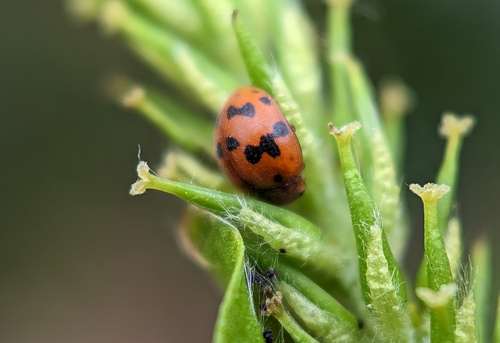
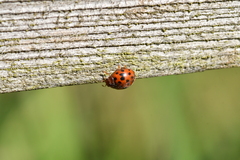
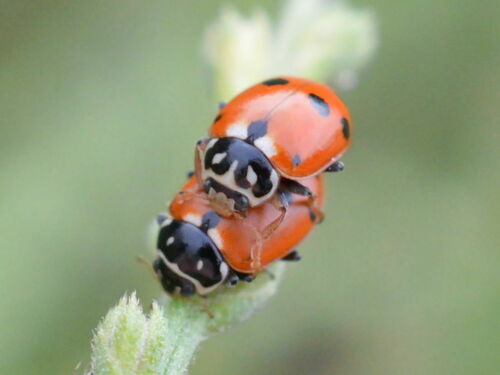
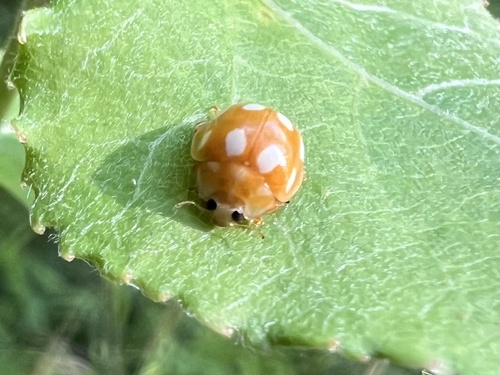
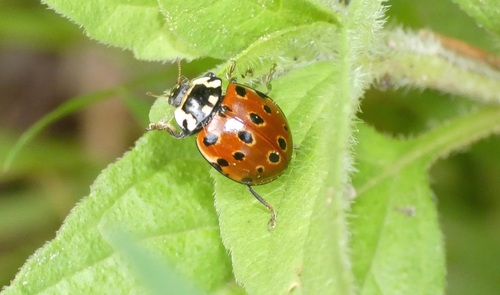
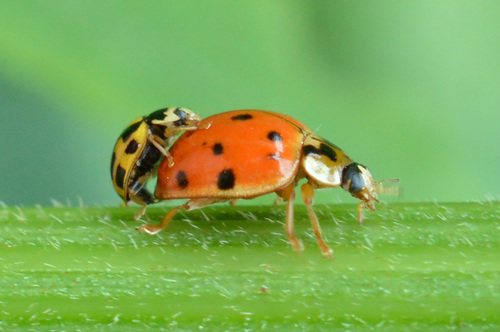
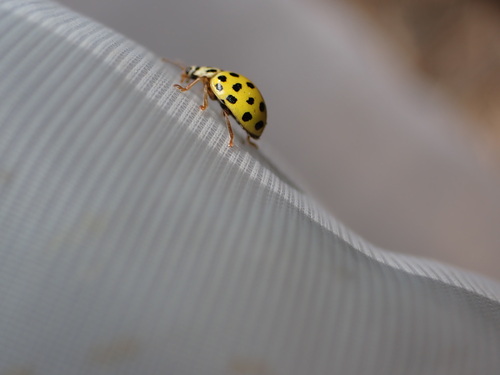
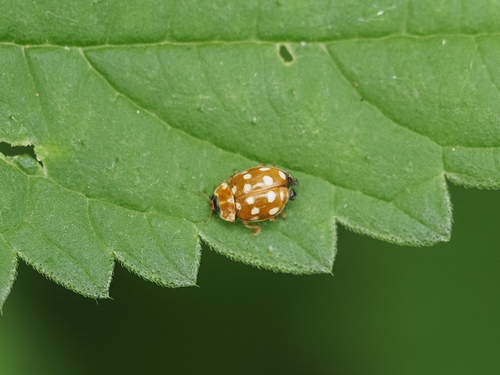
Subcoccinella vigintiquatuorpunctata (the 24-spot ladybird) is a beetle in the family Coccinellidae. It is the only member of the genus Subcoccinella (though this is disputed; see below). It has the typical, almost semi-spherical, ladybird shape and is patterned with spots. However it differs from many of the well-known ladybirds in being neither smooth and shiny nor an eater of aphids: the wing-cases look velvety and it eats the leaves of herbaceous plants.

The common names for this insect in many languages follow the binomial name and mention that it has twenty-four spots, but in English there is great variation in how this is written, with little consensus over the use of words or numerals, capitalisation, placement of hyphens and whether to use "spot", "spotted", "point" or "pointed"; "ladybird", "ladybird beetle" or "ladybug". There is even disagreement about the spelling of the Latin "vigintiquatuorpunctata" with some authoritative UK lists preferring a double "t": "vigintiquattuopunctata". For ease it is often written "Subcoccinella 24-punctata". Given the multitude of name formations, it is probably best to use just the genus "Subcoccinella" when carrying out a... Wikipedia →

Global Distribution

Parks Where Found

# Park Country Daily sighting probability
1 Vanoise National Park 🇫🇷 France
~20%
2 Fertő-Hanság National Park 🇭🇺 Hungary
~10%
3 Cévennes National Park 🇫🇷 France
~10%
4 Pyrénées National Park 🇫🇷 France
~10%
5 Sierra de Guadarrama National Park 🇪🇸 Spain
<5%

Cities Where Found

# City Country Daily sighting probability
1 Birmingham 🇬🇧 United Kingdom
~10%
2 Budapest 🇭🇺 Hungary
~10%
3 London 🇬🇧 United Kingdom
~10%
4 Liverpool 🇬🇧 United Kingdom
~10%
5 Berlin 🇩🇪 Germany
~10%
6 Vienna 🇦🇹 Austria
~10%
7 Warsaw 🇵🇱 Poland
<5%
8 Kazan 🇷🇺 Russia
<5%
9 Paris 🇫🇷 France
<5%
10 Moscow 🇷🇺 Russia
<5%

Before you go

What are the chances of seeing a 24-Spot Ladybird in Pyrénées National Park?

With luck

About 10% of wildlife watchers report a 24-Spot Ladybird sighting in Pyrénées National Park on a given day, based on 18 verified sightings from GBIF citizen-science data from 2019 to 2026. It is the 506th most-seen of the 1277 insects we can rate there. Over three days the chance rises to about 20%, and over a week to about 30%, if each day is a fresh chance.

When is the best time to see a 24-Spot Ladybird in Pyrénées National Park?

February, April–June and September

In those months about 10% of wildlife watchers report a 24-Spot Ladybird in Pyrénées National Park on a given day, against under 5% in March, July–August and October–January, the lowest months.

What time of day is best to see a 24-Spot Ladybird?

Between 9 am and noon

Across all the parks we cover, that three-hour window holds the most 24-Spot Ladybird sightings with a recorded time, and about 8 in 10 of them come between 6 am and 6 pm: it is a daytime animal.

Which relatives of the 24-Spot Ladybird live in Pyrénées National Park?

Same family: Coccinellidae

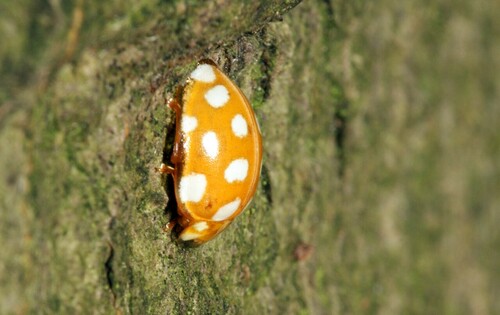
The closest relatives of the 24-Spot Ladybird that you can see in Pyrénées National Park (family Coccinellidae, Lady Beetles) are Seven-Spotted Lady Beetle (about 20%), Asian Lady Beetle (about 20%) and Orange Ladybird (about 10%), with each one's daily chance of a sighting.

Where does the 24-Spot Ladybird sighting chance come from?

GBIF citizen-science records

It is estimated from how often the 24-Spot Ladybird is recorded against all the insects logged in Pyrénées National Park (18 verified sightings from 2019 to 2026), calibrated against known sighting rates. Figures are rounded to the nearest 10% because citizen-science data supports honest approximations, not decimals, and months with records from fewer than five people show "—". How it works.

← Back to Pyrénées National Park