10-Spot Ladybird

10-Spot Ladybird

Adalia decempunctata

Daily sighting probability <5% · Rare
at Pyrénées National Park

In 3 days ~10% in a week ~30%

15 Verified sightings at Pyrénées National Park From 2019 to 2026
139 In all 8 parks
January Best month
☀️🌙 Day & Night When it's spotted

About the 10-Spot Ladybird

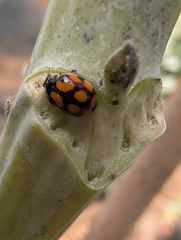
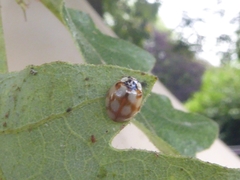
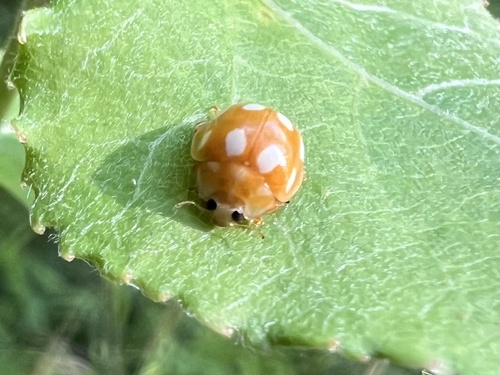
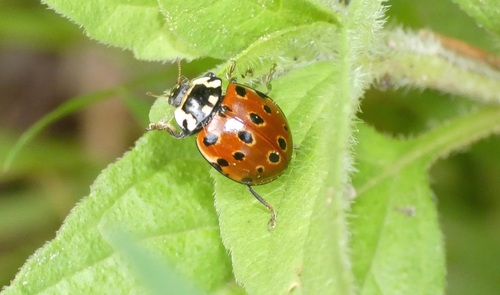
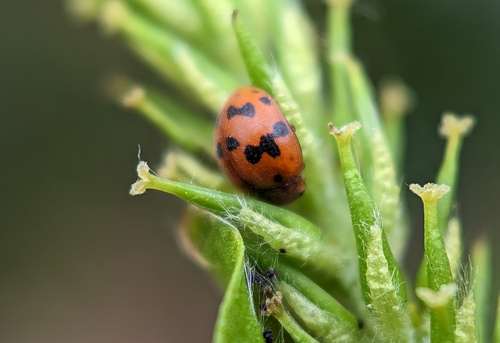
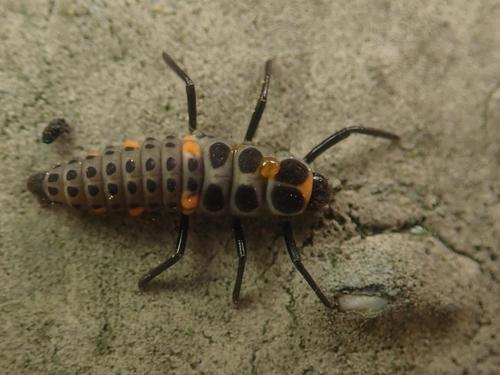
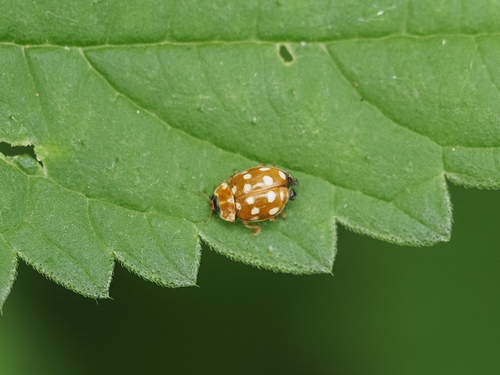
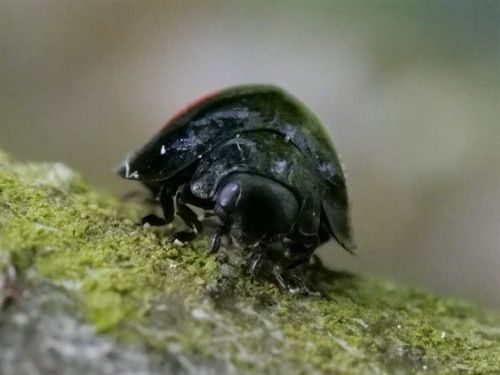
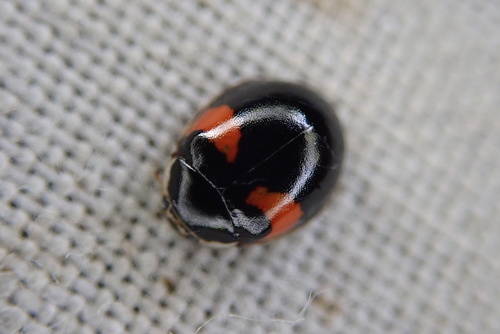
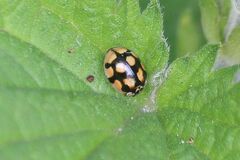
Adalia decempunctata, the ten-spotted ladybird or ten-spotted lady beetle, is a carnivorous beetle of the family Coccinellidae. The ten-spotted ladybird was one of the many species originally described by Carl Linnaeus in his 18th-century work, Systema Naturae, its original name was Coccinella decempunctata. Its specific name from the Latin decem "ten", and punctata "spotted".

Varietas include: Adalia decempunctata var. lutea (Rossi) Adalia decempunctata var. quattuorpunctata (Linnaeus) Adalia decempunctata var. octopunctata Müller Adalia decempunctata var. lateripunctata Gradl. Adalia decempunctata var. humeralis Schaller

Adalia decempunctata var. guttatopunctata (Linnaeus) Adalia decempunctata var. decempustulata (Linnaeus) Adalia decempunctata var. bipustulata Herbst Adalia decempunctata is a common Palearctic species found in Europe, North Africa, European Russia, the Caucasus, Siberia, Belarus, Ukraine, Moldova, Transcaucasia and western Asia.

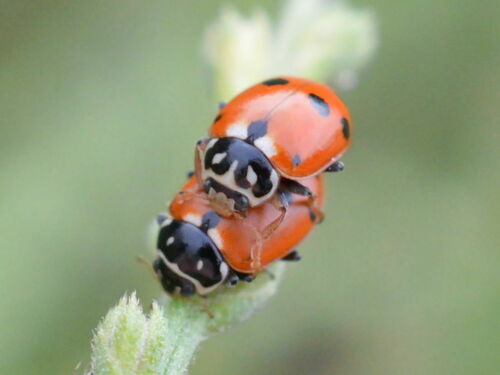
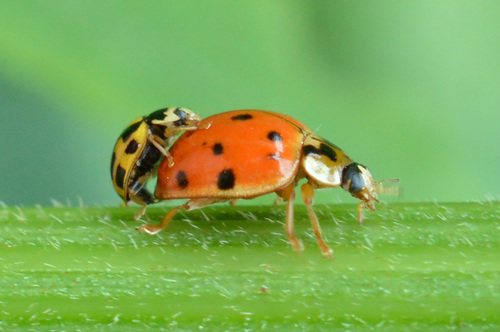
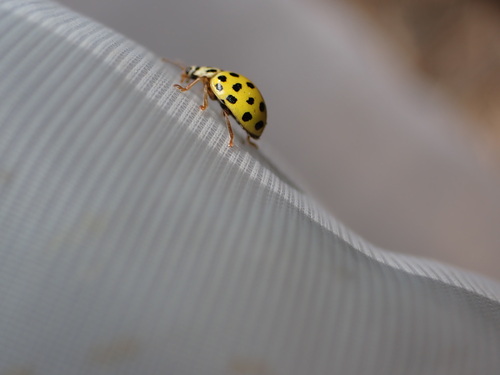
Adalia decempunctata can reach a body length of about 3.5–5 mm (0.14–0.20 in). This species is highly variable. Individuals may in fact have a red, orange or brown... Wikipedia →
Global Distribution

Parks Where Found

# Park Country Daily sighting probability
1 Sierra Nevada National Park 🇪🇸 Spain
~10%
2 Bavarian Forest National Park 🇩🇪 Germany
~10%
3 Wadden Sea National Park 🇩🇪 Germany
~10%
4 Snowdonia National Park 🇬🇧 United Kingdom
~10%
5 Cairngorms National Park 🇬🇧 United Kingdom
~10%
6 Cévennes National Park 🇫🇷 France
~10%
7 Sierra de Guadarrama National Park 🇪🇸 Spain
~10%
8 Pyrénées National Park 🇫🇷 France
<5%

Cities Where Found

# City Country Daily sighting probability
1 London 🇬🇧 United Kingdom
~20%
2 Sofia 🇧🇬 Bulgaria
~20%
3 Birmingham 🇬🇧 United Kingdom
~20%
4 Liverpool 🇬🇧 United Kingdom
~20%
5 Dublin 🇮🇪 Ireland
~20%
6 Manchester 🇬🇧 United Kingdom
~10%
7 Berlin 🇩🇪 Germany
~10%
8 Rome 🇮🇹 Italy
~10%
9 Madrid 🇪🇸 Spain
~10%
10 Vienna 🇦🇹 Austria
~10%

Before you go

What are the chances of seeing a 10-Spot Ladybird in Pyrénées National Park?

Rare

Under 5% of wildlife watchers report a 10-Spot Ladybird sighting in Pyrénées National Park on a given day, based on 15 verified sightings from GBIF citizen-science data from 2019 to 2026. It is the 610th most-seen of the 1277 insects we can rate there. Over three days the chance rises to about 10%, and over a week to about 30%, if each day is a fresh chance.

When is the best time to see a 10-Spot Ladybird in Pyrénées National Park?

January, April–June and November

In those months about 10% of wildlife watchers report a 10-Spot Ladybird in Pyrénées National Park on a given day, against under 5% in February–March, July–October and December, the lowest months.

What time of day is best to see a 10-Spot Ladybird?

Between 1 and 4 pm

Across all the parks we cover, that three-hour window holds the most 10-Spot Ladybird sightings with a recorded time, and about 7 in 10 of them come between 6 am and 6 pm: it is seen both by day and at night.

Which relatives of the 10-Spot Ladybird live in Pyrénées National Park?

Same family: Coccinellidae

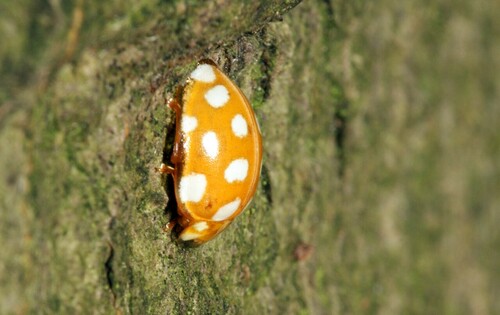
The closest relatives of the 10-Spot Ladybird that you can see in Pyrénées National Park (family Coccinellidae, Lady Beetles) are Seven-Spotted Lady Beetle (about 20%), Asian Lady Beetle (about 20%) and Orange Ladybird (about 10%), with each one's daily chance of a sighting.

Where does the 10-Spot Ladybird sighting chance come from?

GBIF citizen-science records

It is estimated from how often the 10-Spot Ladybird is recorded against all the insects logged in Pyrénées National Park (15 verified sightings from 2019 to 2026), calibrated against known sighting rates. Figures are rounded to the nearest 10% because citizen-science data supports honest approximations, not decimals, and months with records from fewer than five people show "—". How it works.

← Back to Pyrénées National Park