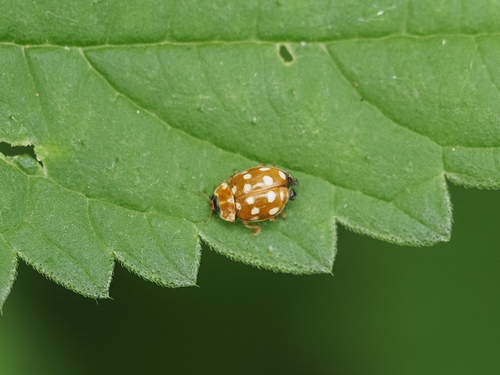
Eyed Ladybird Beetle

Eyed Ladybird Beetle

Anatis ocellata

Daily sighting probability ~10% · With luck
at Pyrénées National Park

In 3 days ~20% in a week ~40%

26 Verified sightings at Pyrénées National Park From 2019 to 2026
152 In all 10 parks
April Best month
☀️ Diurnal When it's spotted

About the Eyed Ladybird Beetle

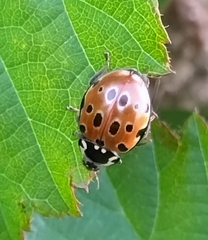
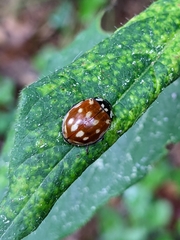
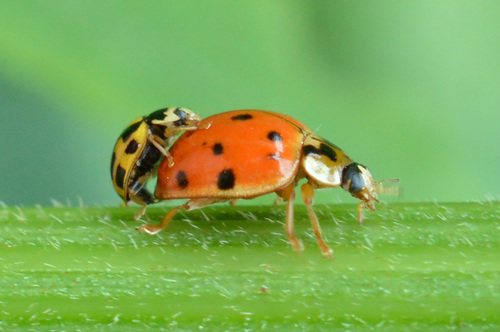
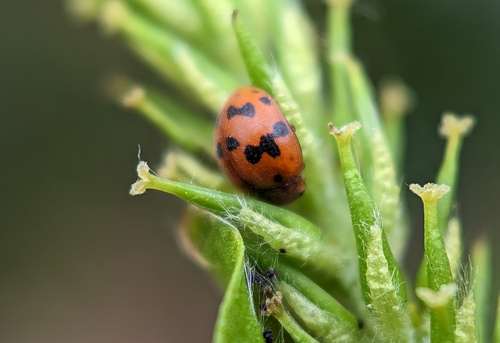
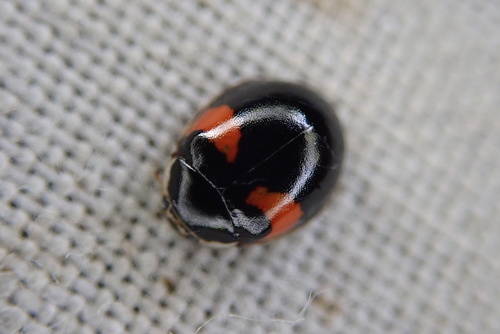
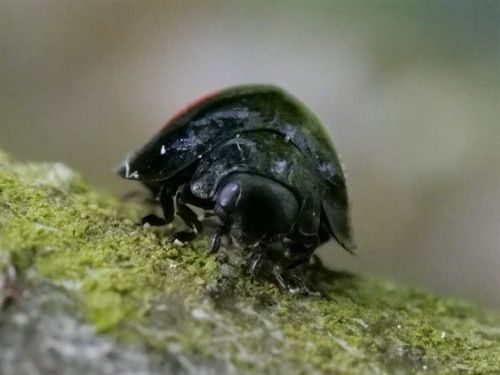
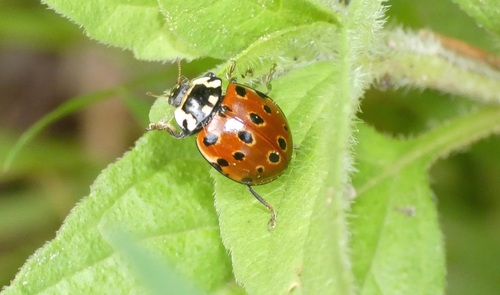
Anatis ocellata, commonly known as the eyed ladybug, is a species of ladybug in the family Coccinellidae. It has black spots on a red background, though a brown background has been seen in Alberta, with each spot surrounded by a yellowish halo. In one color variation, a specimen found in Scotland was reported having the spots fused to form longitudinal lines. Sometimes can also be found variation where black spots are absent.

The species is found from continental Europe, in transcontinental Russia, in central Asia, in Mongolia, in northern China, in Western Canada and to the Korean Peninsula and also Turkey. The primary habitat is temperate coniferous forest including Central European mixed forests and Sarmatic mixed forests, Scandinavian montane birch forest. Most frequently on pines but also on Picea abies and other Picea species, Betula pendula and other Betula species, and Populus tremula. Adults are entomophagous, mainly feeding on aphids on coniferous trees

The species feeds on aphids such as Eucallipterus tiliae, Tuberculatus annulatus, Euceraphis betulae, Cavariella konoi, Acyrthosiphon ignotum, A. pisum, and Macrosiphoniella artemisiae. They... Wikipedia →
Global Distribution

Parks Where Found

# Park Country Daily sighting probability
1 Aigüestortes National Park 🇪🇸 Spain
~10%
2 Mercantour National Park 🇫🇷 France
~10%
3 Sierra de Guadarrama National Park 🇪🇸 Spain
~10%
4 Cairngorms National Park 🇬🇧 United Kingdom
~10%
5 Bavarian Forest National Park 🇩🇪 Germany
~10%
6 Ecrins National Park 🇫🇷 France
~10%
7 Pyrénées National Park 🇫🇷 France
~10%
8 Cévennes National Park 🇫🇷 France
~10%
9 Snowdonia National Park 🇬🇧 United Kingdom
~10%
10 Wadden Sea National Park 🇩🇪 Germany
<5%

Cities Where Found

# City Country Daily sighting probability
1 Minsk 🇧🇾 Belarus
~10%
2 Kyiv 🇺🇦 Ukraine
~10%
3 Novosibirsk 🇷🇺 Russia
~10%
4 Stockholm 🇸🇪 Sweden
~10%
5 Nizhny Novgorod 🇷🇺 Russia
~10%
6 Helsinki 🇫🇮 Finland
~10%
7 Yekaterinburg 🇷🇺 Russia
~10%
8 Warsaw 🇵🇱 Poland
<5%
9 Moscow 🇷🇺 Russia
<5%
10 Hamburg 🇩🇪 Germany
<5%

Before you go

What are the chances of seeing an Eyed Ladybird Beetle in Pyrénées National Park?

With luck

About 10% of wildlife watchers report an Eyed Ladybird Beetle sighting in Pyrénées National Park on a given day, based on 26 verified sightings from GBIF citizen-science data from 2019 to 2026. It is the 334th most-seen of the 1277 insects we can rate there. Over three days the chance rises to about 20%, and over a week to about 40%, if each day is a fresh chance.

When is the best time to see an Eyed Ladybird Beetle in Pyrénées National Park?

February and April–June

In those months about 10% of wildlife watchers report an Eyed Ladybird Beetle in Pyrénées National Park on a given day, against under 5% in March and July–January, the lowest months.

What time of day is best to see an Eyed Ladybird Beetle?

Between 1 and 4 pm

Across all the parks we cover, that three-hour window holds the most Eyed Ladybird Beetle sightings with a recorded time, and about 9 in 10 of them come between 6 am and 6 pm: it is a daytime animal.

Which relatives of the Eyed Ladybird Beetle live in Pyrénées National Park?

Same family: Coccinellidae

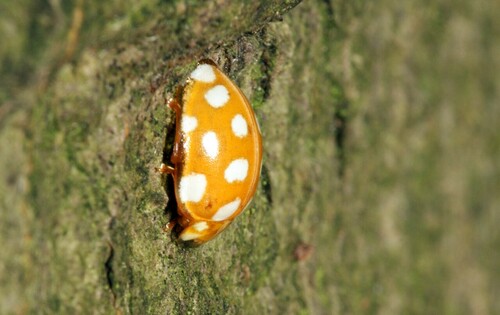
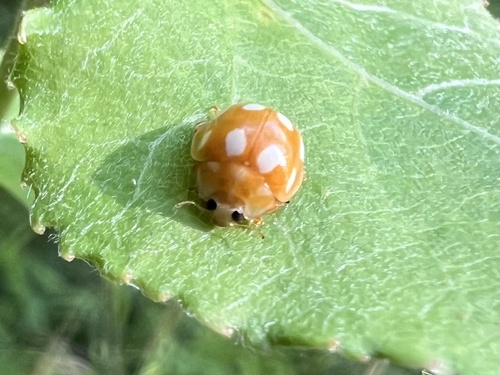
The closest relatives of the Eyed Ladybird Beetle that you can see in Pyrénées National Park (family Coccinellidae, Lady Beetles) are Seven-Spotted Lady Beetle (about 20%), Asian Lady Beetle (about 20%) and Orange Ladybird (about 10%), with each one's daily chance of a sighting.

Where does the Eyed Ladybird Beetle sighting chance come from?

GBIF citizen-science records

It is estimated from how often the Eyed Ladybird Beetle is recorded against all the insects logged in Pyrénées National Park (26 verified sightings from 2019 to 2026), calibrated against known sighting rates. Figures are rounded to the nearest 10% because citizen-science data supports honest approximations, not decimals, and months with records from fewer than five people show "—". How it works.

← Back to Pyrénées National Park