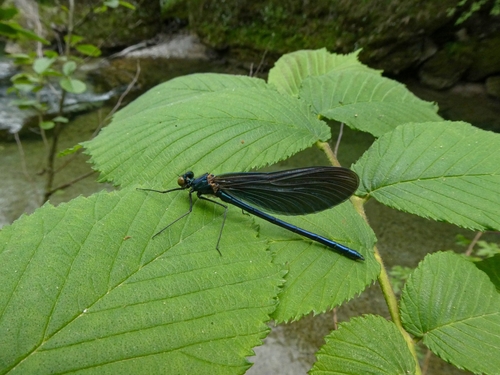
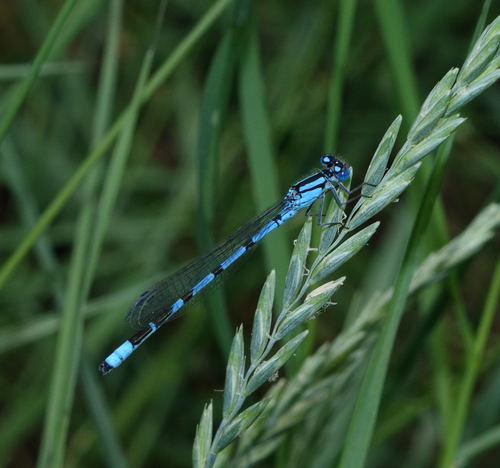
Common Blue Damselfly

Common Blue Damselfly

Enallagma cyathigerum

Daily sighting probability ~10% · With luck
at Pyrénées National Park

In 3 days ~40% in a week ~70%

143 Verified sightings at Pyrénées National Park From 2019 to 2026
579 In all 14 parks
August Best month
☀️ Diurnal When it's spotted

About the Common Blue Damselfly

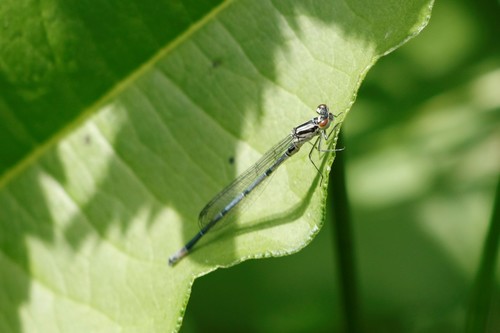
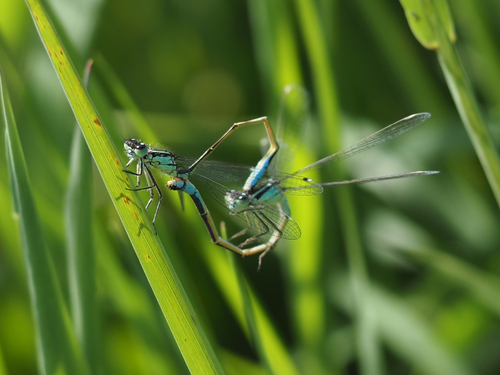
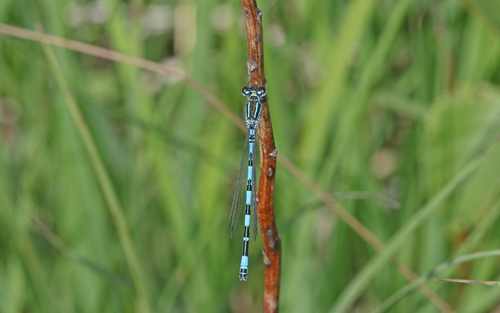
Enallagma cyathigerum (common blue damselfly or common bluet) is a species found mainly between latitudes 40°N and 72°N; It is widely distributed in the Palearctic, common in all European countries (including Portugal, Spain, France, Great Britain, Ireland, Germany, Sweden, Norway, Finland, Poland, etc.) and in Asia in Turkey, Iran, Russia, and South Korea, and throughout Ontario in North America. The species reaches a length of 29–36 mm (1.1–1.4 in) with wings 18–20 mm (0.71–0.79 in) long. Damselflies are an important link between the health of the aquatic ecosystem and its response to climate change. The closely related Nearctic species Enallagma annexum (northern bluet) was at one time considered to be synonymous with it.

These damselflies inhabit freshwater bodies whose conditions range, they have been seen in acidic fens as well as eutrophic ponds. They have been considered one of the more sensitive insects in an aquatic setting. They are important within the trophic levels as they are an intermediate predator. They consume smaller larvae and they are preyed on by fish and larvae bigger than them.

The larvae prefer a habitat that has a more complex structure in the... Wikipedia →
Global Distribution

Parks Where Found

# Park Country Daily sighting probability
1 Plitvice Lakes National Park 🇭🇷 Croatia
~50%
2 Aigüestortes National Park 🇪🇸 Spain
~40%
3 Mercantour National Park 🇫🇷 France
~30%
4 Cairngorms National Park 🇬🇧 United Kingdom
~30%
5 Picos de Europa National Park 🇪🇸 Spain
~20%
6 Vanoise National Park 🇫🇷 France
~20%
7 Snowdonia National Park 🇬🇧 United Kingdom
~20%
8 Pyrénées National Park 🇫🇷 France
~10%
9 Ecrins National Park 🇫🇷 France
~10%
10 Cévennes National Park 🇫🇷 France
~10%
11 Bavarian Forest National Park 🇩🇪 Germany
~10%
12 Triglav National Park 🇸🇮 Slovenia
~10%
13 Fertő-Hanság National Park 🇭🇺 Hungary
~10%
14 Wadden Sea National Park 🇩🇪 Germany
~10%

Cities Where Found

# City Country Daily sighting probability
1 Manchester 🇬🇧 United Kingdom
~30%
2 Leeds 🇬🇧 United Kingdom
~20%
3 London 🇬🇧 United Kingdom
~20%
4 Birmingham 🇬🇧 United Kingdom
~20%
5 Astana 🇰🇿 Kazakhstan
~20%
6 Brussels 🇧🇪 Belgium
~20%
7 Munich 🇩🇪 Germany
~10%
8 Novosibirsk 🇷🇺 Russia
~10%
9 Copenhagen 🇩🇰 Denmark
~10%
10 Essen 🇩🇪 Germany
~10%

Before you go

What are the chances of seeing a Common Blue Damselfly in Pyrénées National Park?

With luck

About 10% of wildlife watchers report a Common Blue Damselfly sighting in Pyrénées National Park on a given day, based on 143 verified sightings from GBIF citizen-science data from 2019 to 2026. It is the 64th most-seen of the 1277 insects we can rate there. Over three days the chance rises to about 40%, and over a week to about 70%, if each day is a fresh chance.

When is the best time to see a Common Blue Damselfly in Pyrénées National Park?

July and August

In those months about 20% of wildlife watchers report a Common Blue Damselfly in Pyrénées National Park on a given day, against under 5% in October to April, the lowest months.

What time of day is best to see a Common Blue Damselfly?

Between 11 am and 2 pm

Across all the parks we cover, that three-hour window holds the most Common Blue Damselfly sightings with a recorded time, and about 9 in 10 of them come between 6 am and 6 pm: it is a daytime animal.

Which relatives of the Common Blue Damselfly live in Pyrénées National Park?

Same family: Coenagrionidae

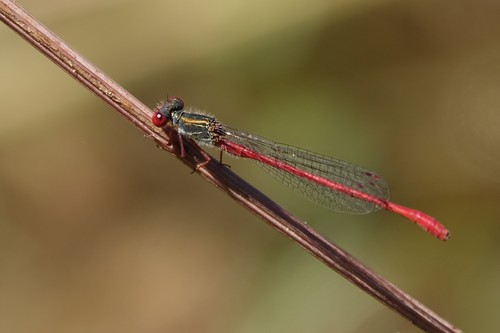
The closest relatives of the Common Blue Damselfly that you can see in Pyrénées National Park (family Coenagrionidae, Narrow-winged Damselflies) are Large Red Damselfly (about 10%) and Azure Damselfly (about 10%), with each one's daily chance of a sighting.

Where does the Common Blue Damselfly sighting chance come from?

GBIF citizen-science records

It is estimated from how often the Common Blue Damselfly is recorded against all the insects logged in Pyrénées National Park (143 verified sightings from 2019 to 2026), calibrated against known sighting rates. Figures are rounded to the nearest 10% because citizen-science data supports honest approximations, not decimals, and months with records from fewer than five people show "—". How it works.

← Back to Pyrénées National Park