Peach-throated Monitor

Peach-throated Monitor

Varanus jobiensis

Silhouette: Steven Traver · PhyloPic

LCLeast ConcernNTVUENCR
Daily sighting probability ~20% · Possible
at Raja Ampat

In 3 days ~50% in a week ~80%

15 Verified sightings at Raja Ampat From 2019 to 2026
15 In 1 park
February Best month
☀️ Diurnal When it's spotted

About the Peach-throated Monitor

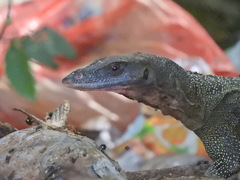
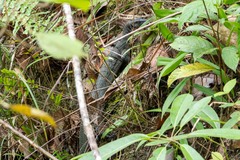
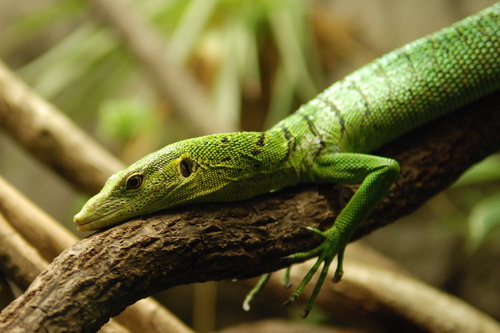
The peach-throated monitor (Varanus jobiensis), also known as the Sepik monitor, is a species of monitor lizard native to New Guinea. Varanus jobiensis belongs to the subgenus Euprepiosaurus, which includes species such as the blue-tailed monitor and mangrove monitor, both of which it is sympatric with in much of its range.

It is likely that this species is actually a species complex of multiple different species that have been diverging since the Pliocene, and diverged from the V. indicus species complex 4.7 million years ago. The specific name, jobiensis, which is Latin, means "from Jobi". Jobi is the island also known as Yapen, which is the type locality of this species.

The junior synonym, Varanus karlschmidti, was named in honour of American herpetologist Karl Patterson Schmidt. Peach-throated monitors are endemic to New Guinea and surrounding islands such as Biak, Salawati, Yapen, Normanby, and Waigeo. It occurs in rainforests at altitudes of 0–900 m (0–2,953 ft). Peach-throated monitors grow up to 120 centimetres (3.9 ft) in total length (including tail). The colour of the throat is white-yellow to red, to... Wikipedia →

Global Distribution

Parks Where Found

# Park Country Daily sighting probability
1 Raja Ampat 🇮🇩 Indonesia
~20%

More parks will be added in future updates.

Zoos & Centres Where Found

# Zoo / Centre Country
1 Brookfield Zoo 🇺🇸 United States In captivity
2 Le Cornelle 🇮🇹 Italy In captivity

Before you go

What are the chances of seeing a Peach-throated Monitor in Raja Ampat?

Possible

About 20% of wildlife watchers report a Peach-throated Monitor sighting in Raja Ampat on a given day, based on 15 verified sightings from GBIF citizen-science data from 2019 to 2026. It is the 18th most-seen of the 33 reptiles we can rate there. Over three days the chance rises to about 50%, and over a week to about 80%, if each day is a fresh chance.

When is the best time to see a Peach-throated Monitor in Raja Ampat?

February and August

In those months about 40% of wildlife watchers report a Peach-throated Monitor in Raja Ampat on a given day, against under 5% in January, May–June and November, the lowest months.

What time of day is best to see a Peach-throated Monitor?

Between 9 am and noon

Across all the parks we cover, that three-hour window holds the most Peach-throated Monitor sightings with a recorded time, and about 8 in 10 of them come between 6 am and 6 pm: it is a daytime animal.

Where else can you see a Peach-throated Monitor?

Only Raja Ampat, in our data

Raja Ampat is the only park on Wallace's Line with enough records to rate Peach-throated Monitor sightings: about 20% of wildlife watchers there report one on a given day.

Which relatives of the Peach-throated Monitor live in Raja Ampat?

Same genus: Varanus

The closest relatives of the Peach-throated Monitor that you can see in Raja Ampat (genus Varanus, Monitor Lizards) are Mangrove Monitor (about 50%), Blue-spotted Tree Monitor (about 30%) and Emerald Monitor (about 20%), with each one's daily chance of a sighting.

Where does the Peach-throated Monitor sighting chance come from?

GBIF citizen-science records

It is estimated from how often the Peach-throated Monitor is recorded against all the reptiles logged in Raja Ampat (15 verified sightings from 2019 to 2026), calibrated against known sighting rates. Figures are rounded to the nearest 10% because citizen-science data supports honest approximations, not decimals, and months with records from fewer than five people show "—". How it works.

← Back to Raja Ampat