Jacky Lashtail

Jacky Lashtail

Amphibolurus muricatus

Silhouette: Michael Scroggie · PhyloPic

LCLeast ConcernNTVUENCR Endemic
Daily sighting probability ~60% · Likely
at Royal National Park

In 3 days ~90% in a week >90%

264 Verified sightings at Royal National Park From 2019 to 2026
810 In all 6 parks
January Best month
☀️ Diurnal When it's spotted

About the Jacky Lashtail

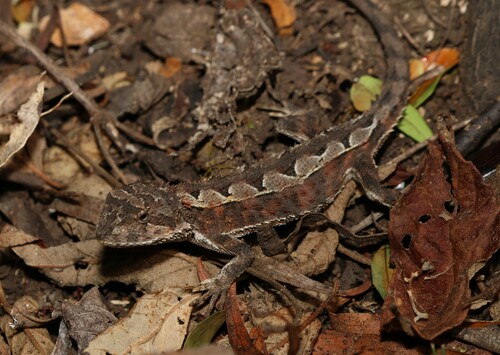
The jacky dragon (Amphibolurus muricatus) is a type of lizard native to south-eastern Australia. Other common names include blood-sucker, stonewalker, and tree dragon. It was one of the first Australian reptiles to be named by Europeans, originally described by English zoologist George Shaw in Surgeon-General John White's Journal of a Voyage to New South Wales, published in London in 1790. The lizard is well-known for its bright yellow mouth and well-developed vertebral crest, as well as the temperature-dependent sex determination of its offspring.

The Wergaia people of the Wimmera region of north-western Victoria call it nganurganity. In 2017, the star Sigma Canis Majoris was officially named "Unurgunite" (a 19th-century transcription of nganurganity), due to its identification with the jacky dragon in Wergaia traditions.

The jacky dragon is one of the 70 species of dragons (Agamidae) found in Australia. It is generally diurnal and tends to run in an upright posture when pursued. Common morphological characteristics include rough, nonglossy scales, broad, thick, and fleshy tongues, and well-developed limbs, especially hind limbs, which are generally longer and have five... Wikipedia →

Global Distribution

Parks Where Found

# Park Country Daily sighting probability
1 Grampians National Park 🇦🇺 Australia
~60%
2 Royal National Park 🇦🇺 Australia
~60%
3 Booderee National Park 🇦🇺 Australia
~50%
4 Blue Mountains National Park 🇦🇺 Australia
~30%
5 Kosciuszko National Park 🇦🇺 Australia
~20%
6 Great Otway National Park 🇦🇺 Australia
~20%

Cities Where Found

# City Country Daily sighting probability
1 Sydney 🇦🇺 Australia
~10%
2 Melbourne 🇦🇺 Australia
<5%

Zoos & Centres Where Found

# Zoo / Centre Country
1 Koala Park Sanctuary 🇦🇺 Australia In captivity

Before you go

What are the chances of seeing a Jacky Lashtail in Royal National Park?

Likely

About 60% of wildlife watchers report a Jacky Lashtail sighting in Royal National Park on a given day, based on 264 verified sightings from GBIF citizen-science data from 2019 to 2026. It is the 2nd most-seen of the 37 reptiles we can rate there. Over three days the chance rises to about 90%, and over a week to over 90%, if each day is a fresh chance.

When is the best time to see a Jacky Lashtail in Royal National Park?

January–February and October–November

In those months about 70% of wildlife watchers report a Jacky Lashtail in Royal National Park on a given day, against about 10% in July, the lowest month.

What time of day is best to see a Jacky Lashtail?

Between 10 am and 1 pm

Across all the parks we cover, that three-hour window holds the most Jacky Lashtail sightings with a recorded time, and nearly all of them come between 6 am and 6 pm: it is a daytime animal.

Is Royal National Park the best place to see a Jacky Lashtail?

Among the best

Of the 6 parks where we can rate Jacky Lashtail sightings, Royal National Park ranks 2nd at about 60%, level with the leaders once rounded. The best odds are in Grampians National Park (Australia, about 60%). All parks ranked.

Which relatives of the Jacky Lashtail live in Royal National Park?

Same family: Agamidae

The closest relatives of the Jacky Lashtail that you can see in Royal National Park (family Agamidae, Dragons) are Australian Water Dragon (about 70%) and Mountain Dragon (about 20%), with each one's daily chance of a sighting.

Where does the Jacky Lashtail sighting chance come from?

GBIF citizen-science records

It is estimated from how often the Jacky Lashtail is recorded against all the reptiles logged in Royal National Park (264 verified sightings from 2019 to 2026), calibrated against known sighting rates. Figures are rounded to the nearest 10% because citizen-science data supports honest approximations, not decimals, and months with records from fewer than five people show "—". How it works.

← Back to Royal National Park