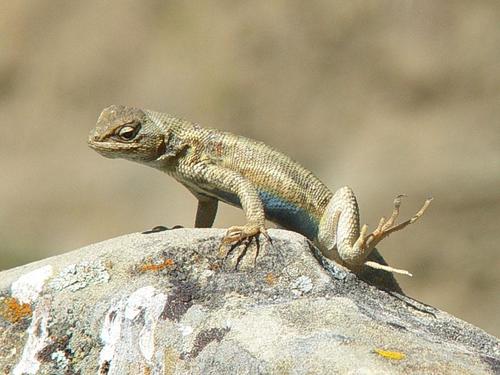
Sharp-tailed Snake

Sharp-tailed Snake

Contia tenuis

Silhouette: Alex Slavenko · PhyloPic

LCLeast ConcernNTVUENCR
Daily sighting probability ~10% · With luck
at Sequoia and Kings Canyon National Parks

In 3 days ~30% in a week ~50%

10 Verified sightings at Sequoia and Kings Canyon National Parks From 2019 to 2026
19 In all 2 parks
June Best month
☀️🌙 Day & Night When it's spotted

About the Sharp-tailed Snake

The sharp-tailed snake or sharptail snake (Contia tenuis) is a small species of nonvenomous snake in the family Colubridae. The species is endemic to the Western United States and British Columbia. Additional common names for C. tenuis include brown snake, gentle brown snake, Oregon worm snake, Pacific brown snake, Pacific ground snake, and purple-tailed snake.

C. tenuis is distributed through the states of California, Oregon, and Washington, as well as British Columbia, Canada: Southern Vancouver Island, British Columbia around Victoria, British Columbia, in Pemberton, British Columbia and newly discovered in 2026 on Lasqueti Island, British Columbia.

The sharp-tailed snake has an average total length (including tail) of 12–18 in (30–46 cm) as an adult. It is distinguished by its sharp tail spine, which is the protruding tip of the last tail vertebra. The spine is not toxic and cannot injure humans. Rather, the tail is used to stabilize small prey, such as slugs, for consumption. The dorsal surface ranges in color from grayish brown to brown to brick red, with bubble-gum pink and peachy-orange specimens occasionally found... Wikipedia →

Global Distribution

Parks Where Found

# Park Country Daily sighting probability
1 Sequoia and Kings Canyon National Parks 🇺🇸 United States
~10%
2 Yosemite National Park 🇺🇸 United States
~10%

Cities Where Found

# City Country Daily sighting probability
1 Sacramento 🇺🇸 United States
~10%
2 San Francisco 🇺🇸 United States
<5%

Closest Relatives at Sequoia and Kings Canyon National Parks

Before you go

What are the chances of seeing a Sharp-tailed Snake in Sequoia and Kings Canyon National Parks?

With luck

About 10% of wildlife watchers report a Sharp-tailed Snake sighting in Sequoia and Kings Canyon National Parks on a given day, based on 10 verified sightings from GBIF citizen-science data from 2019 to 2026. It is the 15th most-seen of the 17 reptiles we can rate there. Over three days the chance rises to about 30%, and over a week to about 50%, if each day is a fresh chance.

When is the best time to see a Sharp-tailed Snake in Sequoia and Kings Canyon National Parks?

June

In that month about 20% of wildlife watchers report a Sharp-tailed Snake in Sequoia and Kings Canyon National Parks on a given day, against under 5% in July–August and October–April, the lowest months. That is one of Sequoia and Kings Canyon National Parks's driest months, with about 25 mm of rain against 190 mm in January.

What time of day is best to see a Sharp-tailed Snake?

Between 4 and 7 pm

Across all the parks we cover, that three-hour window holds the most Sharp-tailed Snake sightings with a recorded time, and about 6 in 10 of them come between 6 am and 6 pm: it is seen both by day and at night.

Is Sequoia and Kings Canyon National Parks the best place to see a Sharp-tailed Snake?

Yes

Of the 2 parks where we can rate Sharp-tailed Snake sightings, Sequoia and Kings Canyon National Parks has the highest daily chance: about 10%. Next come Yosemite National Park (United States, about 10%).

Which relatives of the Sharp-tailed Snake live in Sequoia and Kings Canyon National Parks?

Same family: Colubridae

The closest relatives of the Sharp-tailed Snake that you can see in Sequoia and Kings Canyon National Parks (family Colubridae, Colubrid Snakes) are Western Terrestrial Garter Snake (about 30%), Gopher Snake (about 30%) and California Mountain Kingsnake (about 30%), with each one's daily chance of a sighting.

Where does the Sharp-tailed Snake sighting chance come from?

GBIF citizen-science records

It is estimated from how often the Sharp-tailed Snake is recorded against all the reptiles logged in Sequoia and Kings Canyon National Parks (10 verified sightings from 2019 to 2026), calibrated against known sighting rates. Figures are rounded to the nearest 10% because citizen-science data supports honest approximations, not decimals, and months with records from fewer than five people show "—". How it works.

← Back to Sequoia and Kings Canyon National Parks