Common Idia Moth

Common Idia Moth

Idia aemula

Daily sighting probability ~10% · With luck
at Shenandoah National Park

In 3 days ~20% in a week ~30%

12 Verified sightings at Shenandoah National Park From 2019 to 2026
39 In all 3 parks
July Best month
🌙 Nocturnal When it's spotted

About the Common Idia Moth

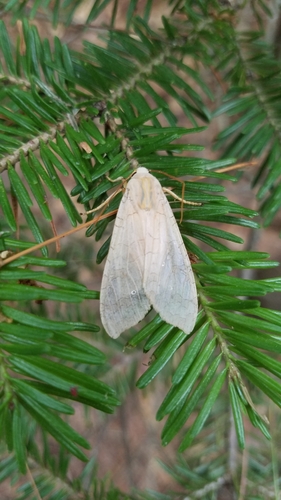
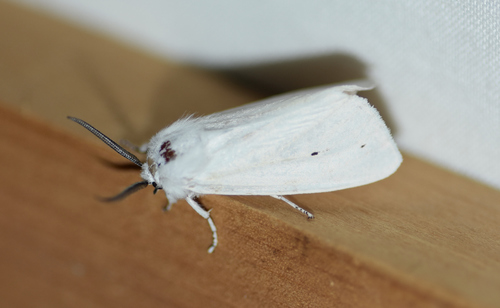
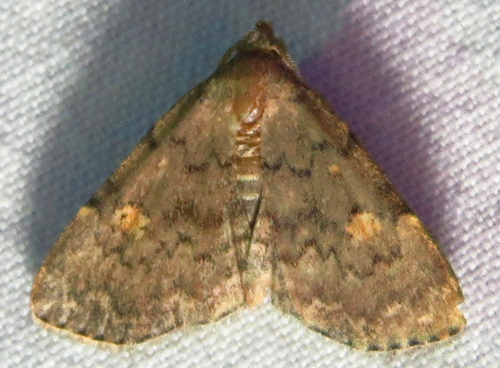
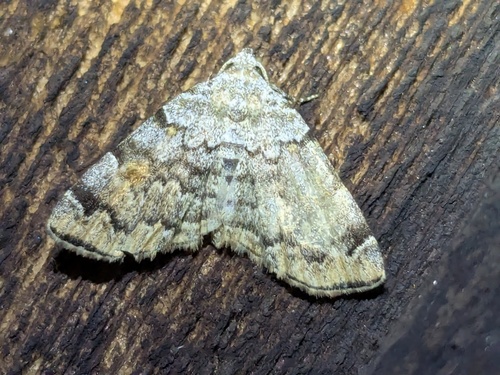
Idia aemula, the common idia, powdered snout or waved tabby, is a litter moth of the family Erebidae. The species was first described by Jacob Hübner in 1813. It is found from Canada south to Florida and Texas. It has been reported in the Palearctic.

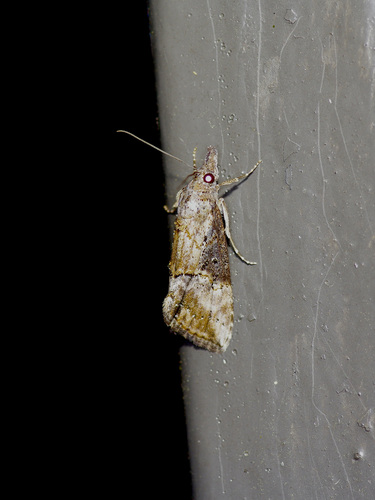
The ground colour of both wings is medium grey. The basal, antemedial, postmedial lines are darker and thin. There is a more diffuse median line and sometimes a median shade. A pale subterminal line is preceded by a dark shade. The reniform spot is large and pale or warm ochre to orange brown. The hindwing has several wavy light and dark lines and a dark discal spot. The wingspan is 20–30 mm. In North America, adults are on wing from May to October in the north and from April to November in the south. There are two to three generations per year.

The larvae feed on dead leaves. Wikipedia →

Global Distribution

Parks Where Found

# Park Country Daily sighting probability
1 Acadia National Park 🇺🇸 United States
~10%
2 Shenandoah National Park 🇺🇸 United States
~10%
3 Great Smoky Mountains National Park 🇺🇸 United States
~10%

Cities Where Found

# City Country Daily sighting probability
1 Dallas 🇺🇸 United States
~10%
2 Baltimore 🇺🇸 United States
~10%
3 Austin 🇺🇸 United States
~10%
4 Boston 🇺🇸 United States
~10%
5 Washington 🇺🇸 United States
~10%
6 Chicago 🇺🇸 United States
~10%
7 Edmonton 🇨🇦 Canada
~10%
8 Toronto 🇨🇦 Canada
<5%
9 Montreal 🇨🇦 Canada
<5%
10 Philadelphia 🇺🇸 United States
<5%

Before you go

What are the chances of seeing a Common Idia Moth in Shenandoah National Park?

With luck

About 10% of wildlife watchers report a Common Idia Moth sighting in Shenandoah National Park on a given day, based on 12 verified sightings from GBIF citizen-science data from 2019 to 2026. It is the 363rd most-seen of the 723 insects we can rate there. Over three days the chance rises to about 20%, and over a week to about 30%, if each day is a fresh chance.

When is the best time to see a Common Idia Moth in Shenandoah National Park?

June–July and October

In those months about 10% of wildlife watchers report a Common Idia Moth in Shenandoah National Park on a given day, against under 5% in August–September and November–May, the lowest months.

What time of day is best to see a Common Idia Moth?

Between 9 pm and midnight

Across all the parks we cover, that three-hour window holds the most Common Idia Moth sightings with a recorded time, and about 7 in 10 of them come between 6 pm and 6 am: it is mostly seen at night.

Is Shenandoah National Park the best place to see a Common Idia Moth?

Among the best

Of the 3 parks where we can rate Common Idia Moth sightings, Shenandoah National Park ranks 2nd at about 10%, level with the leaders once rounded. The best odds are in Acadia National Park (United States, about 10%).

Where does the Common Idia Moth sighting chance come from?

GBIF citizen-science records

It is estimated from how often the Common Idia Moth is recorded against all the insects logged in Shenandoah National Park (12 verified sightings from 2019 to 2026), calibrated against known sighting rates. Figures are rounded to the nearest 10% because citizen-science data supports honest approximations, not decimals, and months with records from fewer than five people show "—". How it works.
← Back to Shenandoah National Park