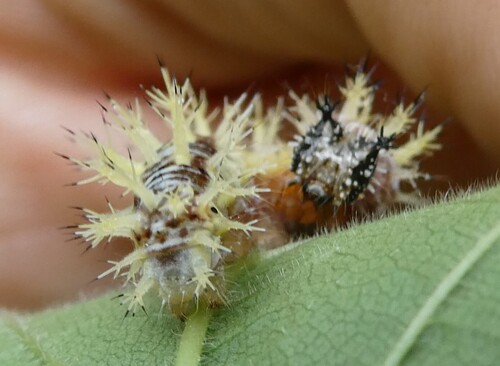
Large Tolype Moth

Large Tolype Moth

Tolype velleda

Daily sighting probability <5% · Rare
at Shenandoah National Park

In 3 days ~10% in a week ~30%

6 Verified sightings at Shenandoah National Park From 2019 to 2026
13 In all 2 parks
October Best month
☀️ Diurnal When it's spotted

About the Large Tolype Moth

Tolype velleda, the large tolype moth or velleda lappet moth, is a species of moth of the family Lasiocampidae. It was first described by Caspar Stoll in 1791. The species is found from Nova Scotia to central Florida, west to Texas and north to Ontario. Out of the United States, they can also be found in low and littoral areas of the Iberian Peninsula and North Africa from Egypt to the Atlantic coast of Morocco.

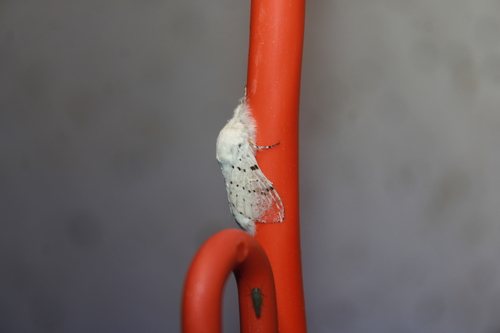
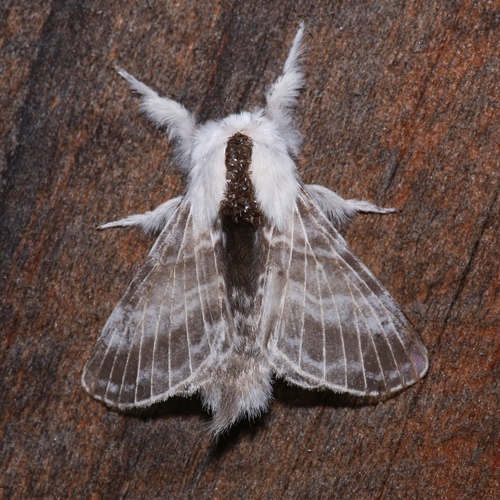
The wingspan is 32–58 mm. The females are larger than the males. When the wings are opened, they appear to be dark gray with wavy bands running across. When the wings are closed, the white lines become less visible, but the pattern is still there and remains the same. Adults are on wing from June to November in one generation per year.

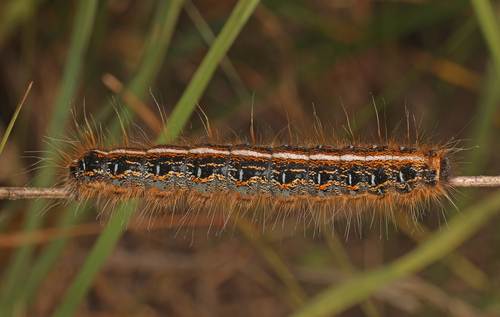
The larvae feed on various broadleaf trees and shrubs, including Malus, Fraxinus, Populus, Tilia, Fagus, Betula, Prunus, and Quercus species. The larvae can be identified by its dull gray color, and a flap that is present on its pro legs that disappears as it matures. Larvae can be found from June to August.

Common host plants of the Tolype Velleda are apple, plum, cherry, apricot, almond, birch, poplar, oak, beech, and citrus trees. Eggs are placed on leaves of host plants. Feeding is most active in summer months. Wikipedia →
Global Distribution

Parks Where Found

# Park Country Daily sighting probability
1 Shenandoah National Park 🇺🇸 United States
<5%
2 Great Smoky Mountains National Park 🇺🇸 United States
<5%

Cities Where Found

# City Country Daily sighting probability
1 Mexico City 🇲🇽 México
<5%
2 Chicago 🇺🇸 United States
<5%
3 Boston 🇺🇸 United States
<5%
4 Austin 🇺🇸 United States
<5%
5 Toronto 🇨🇦 Canada
<5%
6 New York City 🇺🇸 United States
<5%

Before you go

What are the chances of seeing a Large Tolype Moth in Shenandoah National Park?

Rare

Under 5% of wildlife watchers report a Large Tolype Moth sighting in Shenandoah National Park on a given day, based on 6 verified sightings from GBIF citizen-science data from 2019 to 2026. It is the 571st most-seen of the 723 insects we can rate there. Over three days the chance rises to about 10%, and over a week to about 30%, if each day is a fresh chance.

When is the best time to see a Large Tolype Moth in Shenandoah National Park?

October and November

In those months about 10% of wildlife watchers report a Large Tolype Moth in Shenandoah National Park on a given day, against under 5% in December to September, the lowest months.

What time of day is best to see a Large Tolype Moth?

Between 9 am and noon

Across all the parks we cover, that three-hour window holds the most Large Tolype Moth sightings with a recorded time, and about 9 in 10 of them come between 6 am and 6 pm: it is a daytime animal.

Is Shenandoah National Park the best place to see a Large Tolype Moth?

Yes

Of the 2 parks where we can rate Large Tolype Moth sightings, Shenandoah National Park has the highest daily chance: under 5%. Next come Great Smoky Mountains National Park (United States, under 5%).

Which relatives of the Large Tolype Moth live in Shenandoah National Park?

Same family: Lasiocampidae

The closest relatives of the Large Tolype Moth that you can see in Shenandoah National Park (family Lasiocampidae, Lappet Moths) are Eastern Tent Caterpillar Moth (about 20%) and Forest Tent Caterpillar Moth (about 10%), with each one's daily chance of a sighting.

Where does the Large Tolype Moth sighting chance come from?

GBIF citizen-science records

It is estimated from how often the Large Tolype Moth is recorded against all the insects logged in Shenandoah National Park (6 verified sightings from 2019 to 2026), calibrated against known sighting rates. Figures are rounded to the nearest 10% because citizen-science data supports honest approximations, not decimals, and months with records from fewer than five people show "—". How it works.

← Back to Shenandoah National Park