
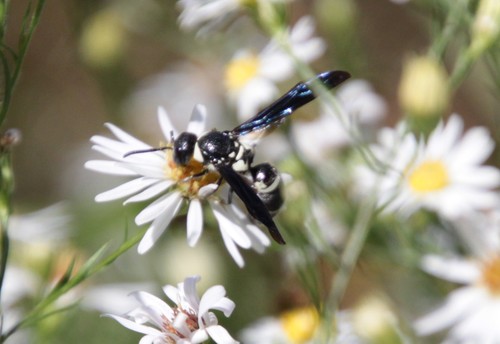
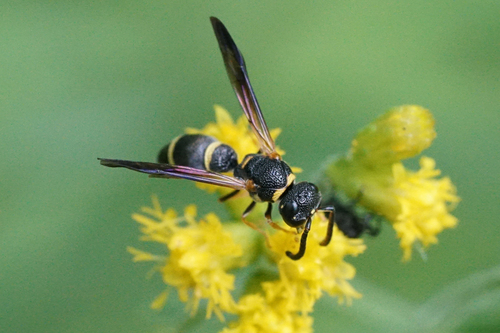
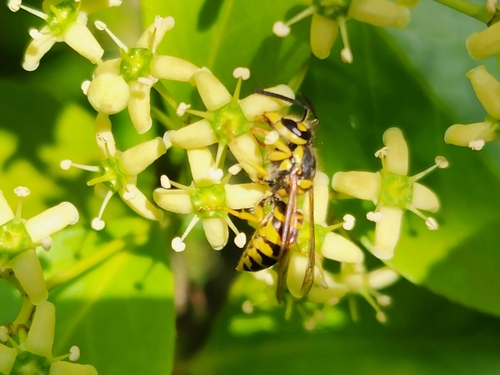
Northern Paper Wasp

Northern Paper Wasp

Polistes fuscatus

Daily sighting probability ~10% · With luck
at Shenandoah National Park

In 3 days ~20% in a week ~40%

13 Verified sightings at Shenandoah National Park From 2019 to 2026
132 In all 6 parks
September Best month
☀️ Diurnal When it's spotted

About the Northern Paper Wasp

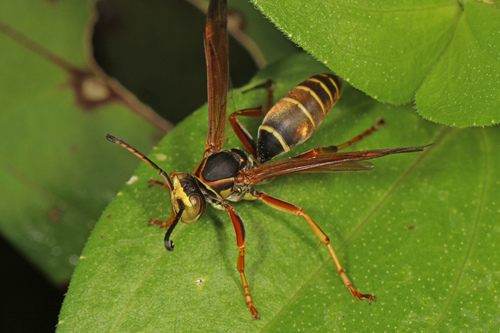
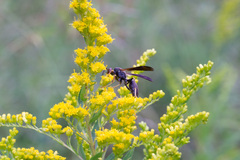
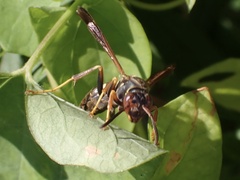
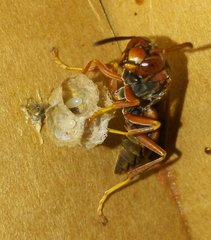
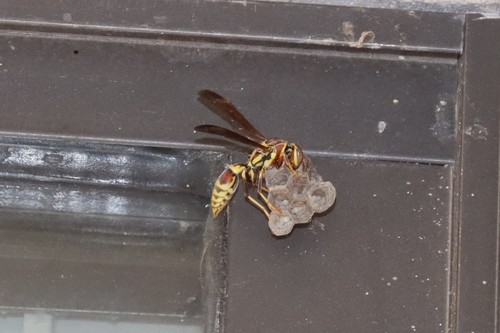
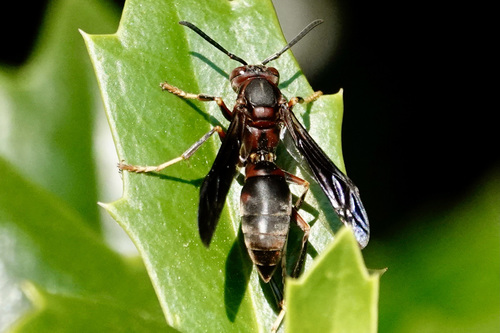
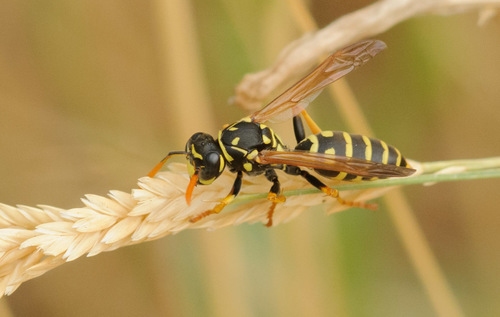
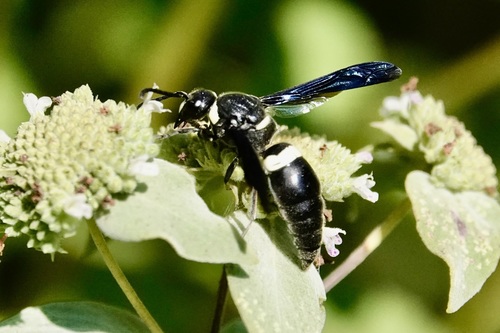
Polistes fuscatus, whose common name is the dark or northern paper wasp, is widely found in eastern North America, from southern Canada through the southern United States. It often nests around human development. However, it greatly prefers areas in which wood is readily available for use as nest material, therefore they are also found near and in woodlands and savannas. P. fuscatus is a social wasp that is part of a complex society based around a single dominant foundress along with other cofoundresses and a dominance hierarchy.

P. fuscatus is a part of the order Hymenoptera, the suborder Apocrita, the family of Vespidae, and the subfamily Polistinae, the second-largest subfamily within the Vespidae, of which all are social wasps. The Polistinae comprise four tribes, including Polistini, Epiponini, Mischocyttarini, and Ropalidiini. It is characterized by two major behaviors: colony founding and reproductive dominance. P. fuscatus is part of the Polistini tribe and in the genus Polistes. Polistes is one of the five independent-founding groups. Older taxonomic concepts considered P. fuscatus to have a much broader definition, treating several species, including... Wikipedia →

Global Distribution

Parks Where Found

# Park Country Daily sighting probability
1 Acadia National Park 🇺🇸 United States
~20%
2 Big Cypress National Preserve 🇺🇸 United States
~10%
3 Great Smoky Mountains National Park 🇺🇸 United States
~10%
4 Shenandoah National Park 🇺🇸 United States
~10%
5 Everglades National Park 🇺🇸 United States
~10%
6 Merritt Island National Wildlife Refuge 🇺🇸 United States
~10%

Cities Where Found

# City Country Daily sighting probability
1 Minneapolis [Saint Paul] 🇺🇸 United States
~20%
2 Boston 🇺🇸 United States
~20%
3 Toronto 🇨🇦 Canada
~10%
4 Chicago 🇺🇸 United States
~10%
5 Baltimore 🇺🇸 United States
~10%
6 Detroit 🇺🇸 United States
~10%
7 Washington 🇺🇸 United States
~10%
8 New York City 🇺🇸 United States
~10%
9 Philadelphia 🇺🇸 United States
~10%
10 Montreal 🇨🇦 Canada
~10%

Before you go

What are the chances of seeing a Northern Paper Wasp in Shenandoah National Park?

With luck

About 10% of wildlife watchers report a Northern Paper Wasp sighting in Shenandoah National Park on a given day, based on 13 verified sightings from GBIF citizen-science data from 2019 to 2026. It is the 301st most-seen of the 723 insects we can rate there. Over three days the chance rises to about 20%, and over a week to about 40%, if each day is a fresh chance.

When is the best time to see a Northern Paper Wasp in Shenandoah National Park?

March–May and September–October

In those months about 10% of wildlife watchers report a Northern Paper Wasp in Shenandoah National Park on a given day, against under 5% in June–August and November–February, the lowest months.

What time of day is best to see a Northern Paper Wasp?

Between noon and 3 pm

Across all the parks we cover, that three-hour window holds the most Northern Paper Wasp sightings with a recorded time, and about 9 in 10 of them come between 6 am and 6 pm: it is a daytime animal.

Which relatives of the Northern Paper Wasp live in Shenandoah National Park?

Same genus: Polistes

The closest relatives of the Northern Paper Wasp that you can see in Shenandoah National Park (genus Polistes, Umbrella Paper Wasps) are Guinea Paper Wasp (about 10%) and Metric Paper Wasp (about 10%), with each one's daily chance of a sighting.

Where does the Northern Paper Wasp sighting chance come from?

GBIF citizen-science records

It is estimated from how often the Northern Paper Wasp is recorded against all the insects logged in Shenandoah National Park (13 verified sightings from 2019 to 2026), calibrated against known sighting rates. Figures are rounded to the nearest 10% because citizen-science data supports honest approximations, not decimals, and months with records from fewer than five people show "—". How it works.

← Back to Shenandoah National Park