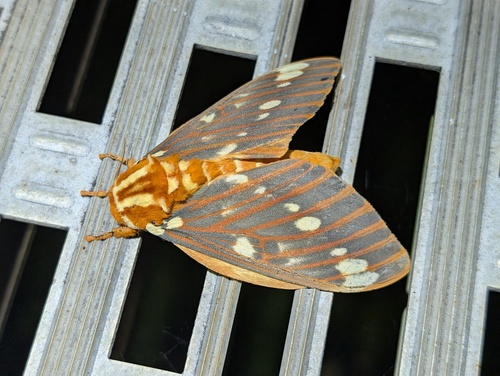
Regal Moth

Regal Moth

Citheronia regalis

Daily sighting probability ~10% · With luck
at Shenandoah National Park

In 3 days ~20% in a week ~50%

21 Verified sightings at Shenandoah National Park From 2019 to 2026
74 In all 2 parks
September Best month
☀️ Diurnal When it's spotted

About the Regal Moth

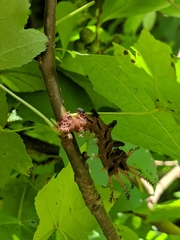
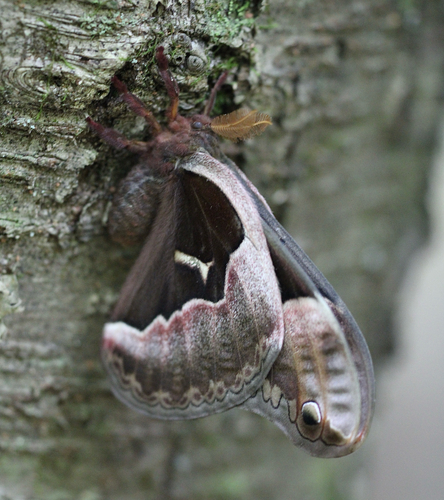
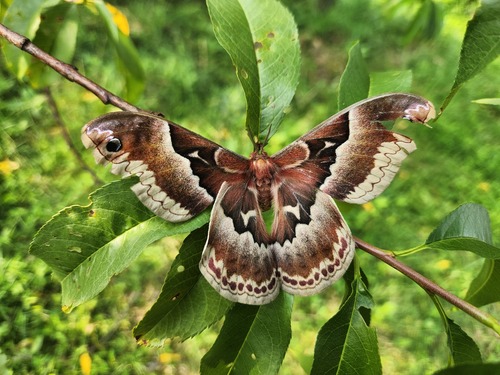
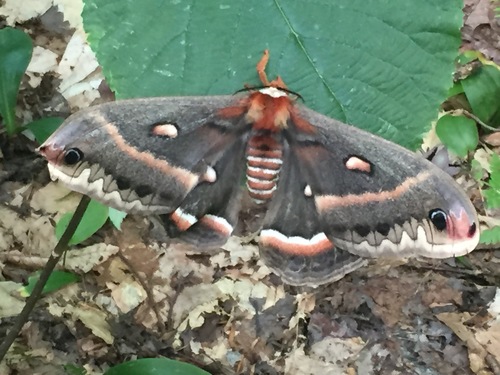
Citheronia regalis, the regal moth or royal walnut moth, is a North American moth in the family Saturniidae. The caterpillars are called hickory horned devils. The adult (imago) has a wingspan of 3.75–6.1 in (9.5–15.5 cm). The species was first described by Johan Christian Fabricius in 1793.

The adult moth is the largest moth by mass in latitudes north of Mexico, as are the spectacular larva and the substantial pupa. The life cycle of the moth is typical of the Saturniidae species, and typical of the Ceratocampinae. It burrows into the ground to pupate in an earthen chamber, rather than spinning a cocoon.

Its eggs are yellowish, ovular and 2 mm in diameter. They are laid either singly or in groups of up to four on the upper surface of the host plant leaves, favoring nut trees such as Juglans and Carya (walnuts and hickories). There are regional preferences, with the utilization of sweet gum and persimmon in the south, and sumacs where the others are not available. Larvae are solitary in later stages and rarely occur in numbers large enough to cause defoliation; however, an individual larva can strip several branches of their leaves during the ravenous fifth instar.... Wikipedia →
Global Distribution

Parks Where Found

# Park Country Daily sighting probability
1 Great Smoky Mountains National Park 🇺🇸 United States
~10%
2 Shenandoah National Park 🇺🇸 United States
~10%

Cities Where Found

# City Country Daily sighting probability
1 Washington 🇺🇸 United States
<5%
2 Philadelphia 🇺🇸 United States
<5%

Before you go

What are the chances of seeing a Regal Moth in Shenandoah National Park?

With luck

About 10% of wildlife watchers report a Regal Moth sighting in Shenandoah National Park on a given day, based on 21 verified sightings from GBIF citizen-science data from 2019 to 2026. It is the 173rd most-seen of the 723 insects we can rate there. Over three days the chance rises to about 20%, and over a week to about 50%, if each day is a fresh chance.

When is the best time to see a Regal Moth in Shenandoah National Park?

September

In that month about 20% of wildlife watchers report a Regal Moth in Shenandoah National Park on a given day, against under 5% in October to June, the lowest months.

What time of day is best to see a Regal Moth?

Between 7 and 10 am

Across all the parks we cover, that three-hour window holds the most Regal Moth sightings with a recorded time, and about 8 in 10 of them come between 6 am and 6 pm: it is a daytime animal.

Is Shenandoah National Park the best place to see a Regal Moth?

Among the best

Of the 2 parks where we can rate Regal Moth sightings, Shenandoah National Park ranks 2nd at about 10%, level with the leaders once rounded. The best odds are in Great Smoky Mountains National Park (United States, about 10%).

Which relatives of the Regal Moth live in Shenandoah National Park?

Same family: Saturniidae

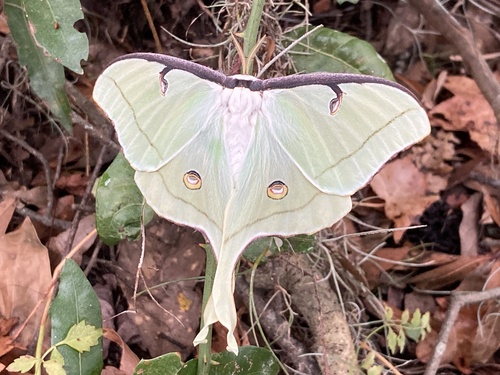
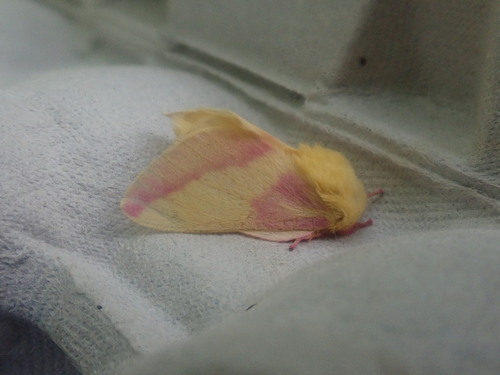
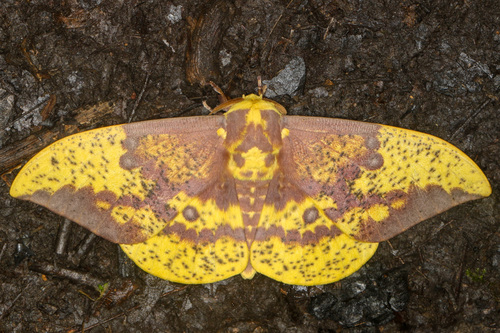
The closest relatives of the Regal Moth that you can see in Shenandoah National Park (family Saturniidae, Emperor and Giant Silk Moths) are North American Luna Moth (about 20%), Rosy Maple Moth (about 20%) and Imperial Moth (about 10%), with each one's daily chance of a sighting.

Where does the Regal Moth sighting chance come from?

GBIF citizen-science records

It is estimated from how often the Regal Moth is recorded against all the insects logged in Shenandoah National Park (21 verified sightings from 2019 to 2026), calibrated against known sighting rates. Figures are rounded to the nearest 10% because citizen-science data supports honest approximations, not decimals, and months with records from fewer than five people show "—". How it works.

← Back to Shenandoah National Park