Cecropia Moth

Cecropia Moth

Hyalophora cecropia

Daily sighting probability ~10% · With luck
at Shenandoah National Park

In 3 days ~20% in a week ~30%

9 Verified sightings at Shenandoah National Park From 2019 to 2026
21 In all 2 parks
January Best month
☀️ Diurnal When it's spotted

About the Cecropia Moth

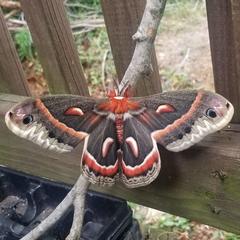
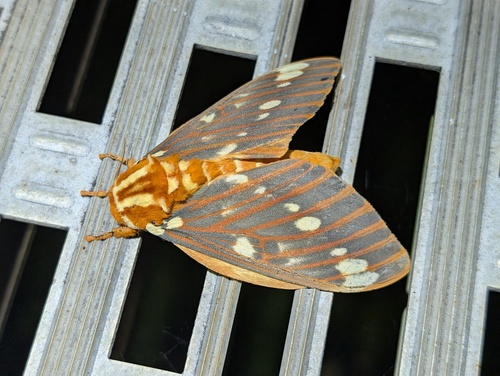
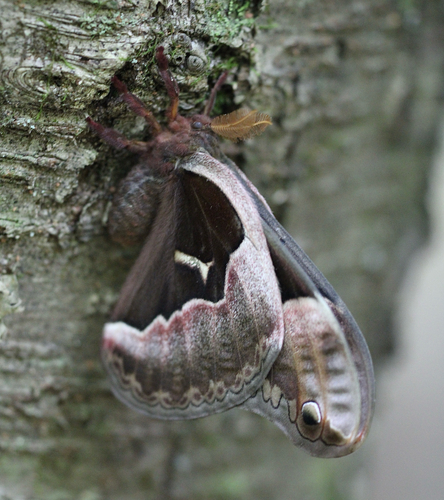
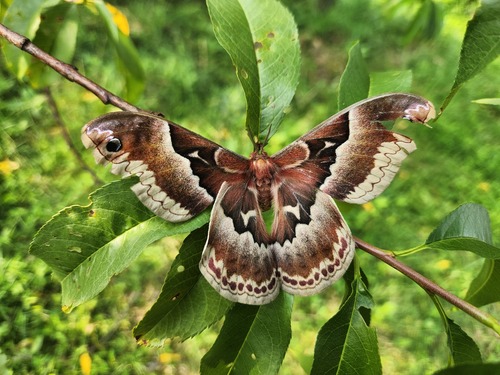
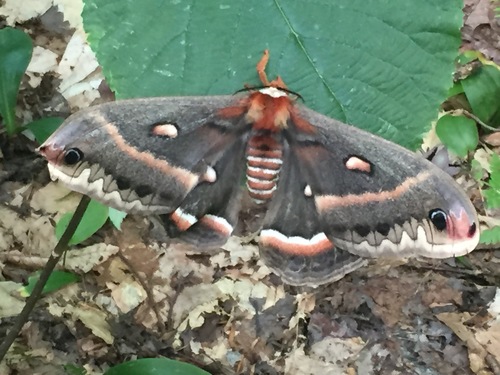
Hyalophora cecropia, the cecropia moth, is North America's largest native moth. It is a member of the family Saturniidae, or giant silk moths. Females have been documented with a wingspan of 5 to 7 in (13 to 18 cm) or more. These moths can be found predominantly across eastern North America, with occurrences as far west as Washington and north into most Canadian provinces. Cecropia moth larvae are most commonly found on maple trees, but they have also been found on cherry and birch trees, among many others. The species was first described by Carl Linnaeus in his 1758 10th edition of Systema Naturae.

Like other members of the giant silk moth family, the adult cecropia moth lacks functional mouth parts and a digestive system, so they only survive for around 2 weeks. To find a mate, the female cecropia moth emits pheromones, which the male detects with his sensitive antennae. Male cecropia moths can detect these pheromones from up to a mile away, although a male may fly up to 7 miles while searching for a female. Mating typically begins early in the morning and lasts until the evening.

After mating, the female lays up to 100 eggs. These eggs are mottled reddish brown and... Wikipedia →

Global Distribution

Parks Where Found

# Park Country Daily sighting probability
1 Shenandoah National Park 🇺🇸 United States
~10%
2 Great Smoky Mountains National Park 🇺🇸 United States
~10%

Cities Where Found

# City Country Daily sighting probability
1 Toronto 🇨🇦 Canada
~10%
2 Minneapolis [Saint Paul] 🇺🇸 United States
~10%
3 Montreal 🇨🇦 Canada
~10%
4 Detroit 🇺🇸 United States
~10%
5 Philadelphia 🇺🇸 United States
<5%
6 Boston 🇺🇸 United States
<5%
7 Washington 🇺🇸 United States
<5%
8 Austin 🇺🇸 United States
<5%
9 New York City 🇺🇸 United States
<5%
10 Chicago 🇺🇸 United States
<5%

Before you go

What are the chances of seeing a Cecropia Moth in Shenandoah National Park?

With luck

About 10% of wildlife watchers report a Cecropia Moth sighting in Shenandoah National Park on a given day, based on 9 verified sightings from GBIF citizen-science data from 2019 to 2026. It is the 406th most-seen of the 723 insects we can rate there. Over three days the chance rises to about 20%, and over a week to about 30%, if each day is a fresh chance.

When is the best time to see a Cecropia Moth in Shenandoah National Park?

January and February

In those months about 20% of wildlife watchers report a Cecropia Moth in Shenandoah National Park on a given day, against under 5% in March, May and July–December, the lowest months.

What time of day is best to see a Cecropia Moth?

Between 9 am and noon

Across all the parks we cover, that three-hour window holds the most Cecropia Moth sightings with a recorded time, and nearly all of them come between 6 am and 6 pm: it is a daytime animal.

Is Shenandoah National Park the best place to see a Cecropia Moth?

Yes

Of the 2 parks where we can rate Cecropia Moth sightings, Shenandoah National Park has the highest daily chance: about 10%. Next come Great Smoky Mountains National Park (United States, about 10%).

Which relatives of the Cecropia Moth live in Shenandoah National Park?

Same family: Saturniidae

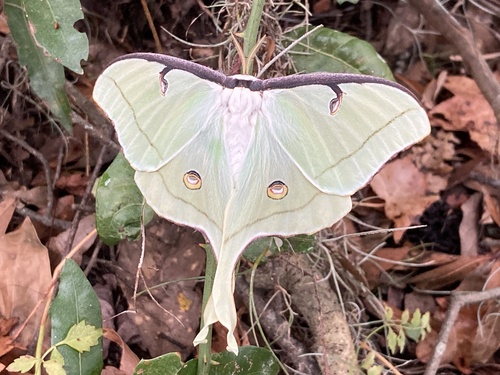
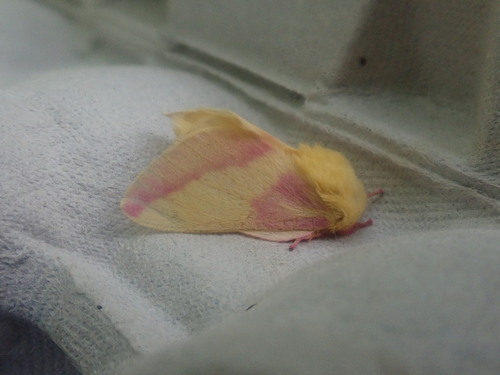
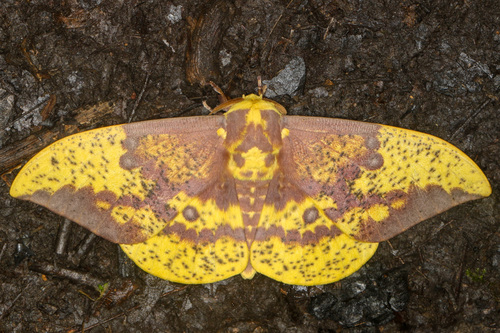
The closest relatives of the Cecropia Moth that you can see in Shenandoah National Park (family Saturniidae, Emperor and Giant Silk Moths) are North American Luna Moth (about 20%), Rosy Maple Moth (about 20%) and Imperial Moth (about 10%), with each one's daily chance of a sighting.

Where does the Cecropia Moth sighting chance come from?

GBIF citizen-science records

It is estimated from how often the Cecropia Moth is recorded against all the insects logged in Shenandoah National Park (9 verified sightings from 2019 to 2026), calibrated against known sighting rates. Figures are rounded to the nearest 10% because citizen-science data supports honest approximations, not decimals, and months with records from fewer than five people show "—". How it works.

← Back to Shenandoah National Park