Gold-Banded Etiella Moth

Gold-Banded Etiella Moth

Etiella zinckenella

Daily sighting probability ~10% · With luck
at Sierra Nevada National Park

In 3 days ~20% in a week ~50%

6 Verified sightings at Sierra Nevada National Park From 2019 to 2026
46 In all 4 parks
August Best month
🌙 Nocturnal When it's spotted

About the Gold-Banded Etiella Moth

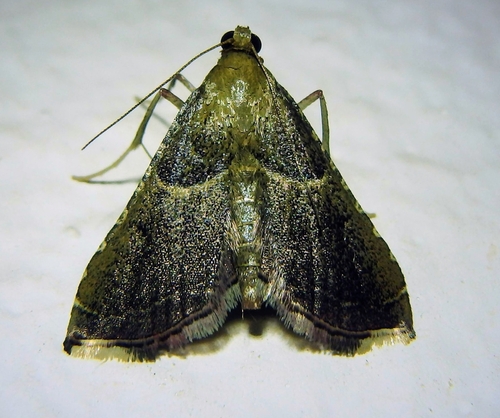
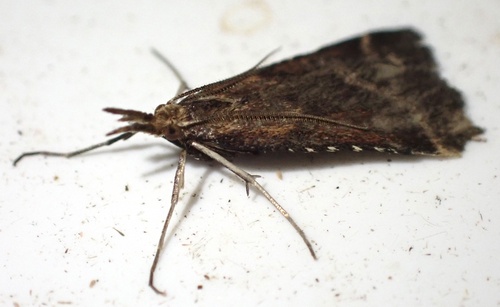
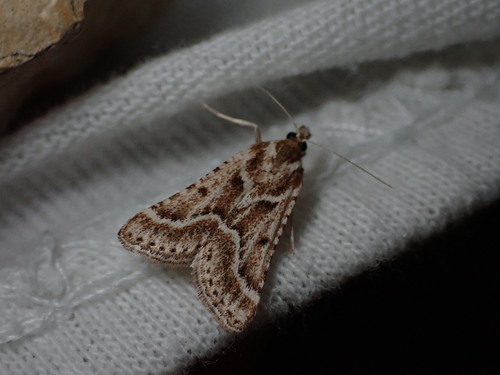
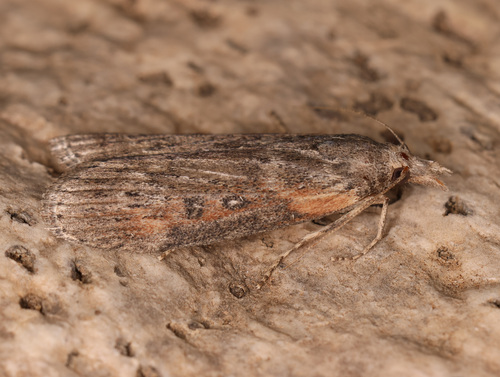
Etiella zinckenella, the pulse pod borer moth, is a moth of the family Pyralidae. It is found in southern and eastern Europe and in the tropics and subtropics of Africa and Asia. They have also been introduced to North America and Australia. It is usually a minor pest for many legumes, but can be a serious pest.

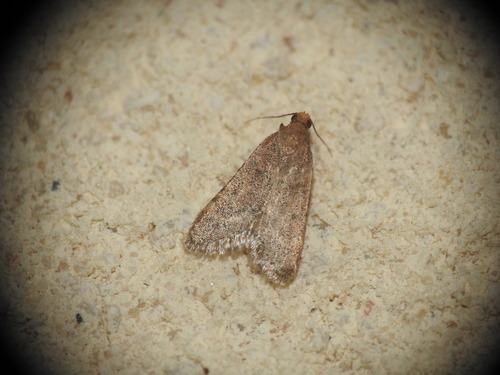
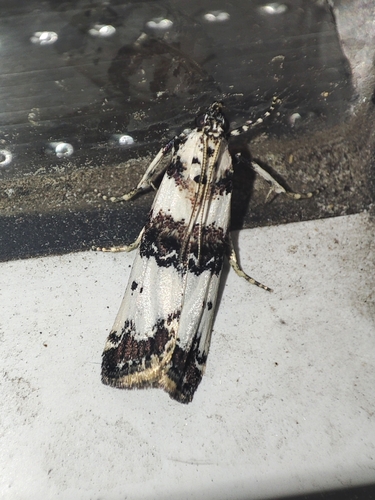
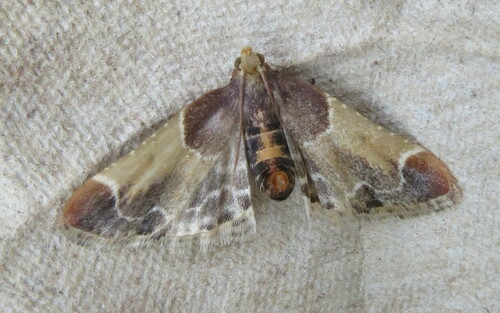
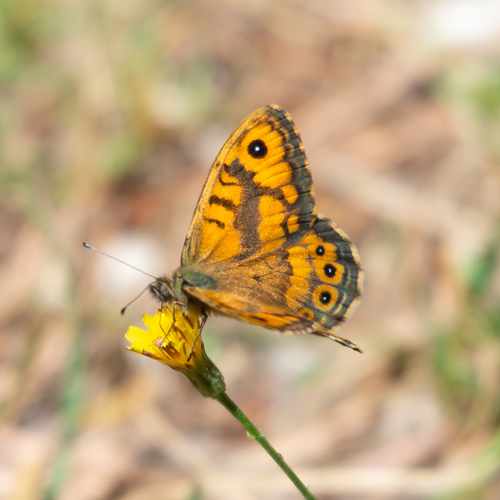
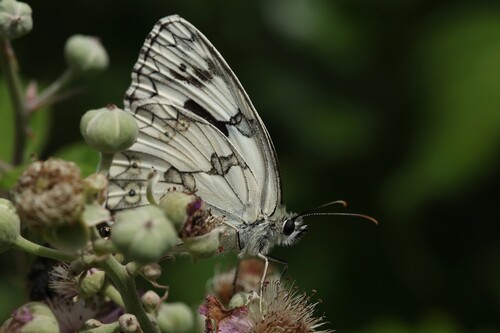
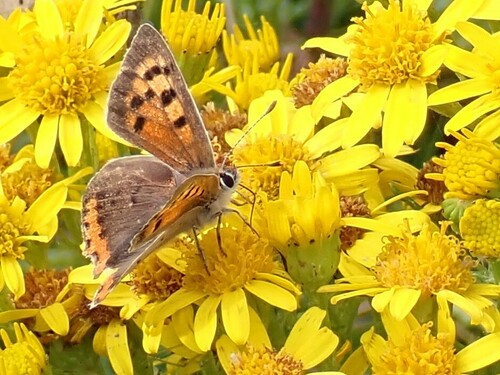
The wingspan is 22–26 mm.19-27 mm The forewings are yellow brown to brownish grey with a lighter costal stripe and a yellowish and chestnut fascia at one third. Hindwings are pale grey with black venation and a dark double line before the fringe.

The caterpillars feed on the mung bean, Phaseolus lunatus and other species of Fabaceae such as pigeonpea, cowpea, lablab, soybean, peas, chickpea, horse gram, green and black grams, Crotalaria juncea, C. micans, C. saltiana, Lathyrus sativus, and Vigna unguiculata. They have also been recorded on Catha edulis (Celastraceae). Wikipedia →

Global Distribution

Parks Where Found

# Park Country Daily sighting probability
1 Sierra Nevada National Park 🇪🇸 Spain
~10%
2 Cévennes National Park 🇫🇷 France
~10%
3 Lamington National Park 🇦🇺 Australia
~10%
4 Pyrénées National Park 🇫🇷 France
<5%

Cities Where Found

# City Country Daily sighting probability
1 Kharkiv 🇺🇦 Ukraine
~10%
2 Bucharest 🇷🇴 Romania
~10%
3 Kyiv 🇺🇦 Ukraine
~10%
4 Budapest 🇭🇺 Hungary
~10%
5 Vienna 🇦🇹 Austria
~10%
6 Madrid 🇪🇸 Spain
<5%
7 Austin 🇺🇸 United States
<5%

Before you go

What are the chances of seeing a Gold-Banded Etiella Moth in Sierra Nevada National Park?

With luck

About 10% of wildlife watchers report a Gold-Banded Etiella Moth sighting in Sierra Nevada National Park on a given day, based on 6 verified sightings from GBIF citizen-science data from 2019 to 2026. It is the 330th most-seen of the 479 insects we can rate there. Over three days the chance rises to about 20%, and over a week to about 50%, if each day is a fresh chance.

When is the best time to see a Gold-Banded Etiella Moth in Sierra Nevada National Park?

July and August

In those months about 20% of wildlife watchers report a Gold-Banded Etiella Moth in Sierra Nevada National Park on a given day, against under 5% in September to May, the lowest months.

What time of day is best to see a Gold-Banded Etiella Moth?

Between 9 pm and midnight

Across all the parks we cover, that three-hour window holds the most Gold-Banded Etiella Moth sightings with a recorded time, and about 9 in 10 of them come between 6 pm and 6 am: it is mostly seen at night.

Is Sierra Nevada National Park the best place to see a Gold-Banded Etiella Moth?

Yes

Of the 4 parks where we can rate Gold-Banded Etiella Moth sightings, Sierra Nevada National Park has the highest daily chance: about 10%. Next come Cévennes National Park (France, about 10%) and Lamington National Park (Australia, about 10%).

Which relatives of the Gold-Banded Etiella Moth live in Sierra Nevada National Park?

Same family: Pyralidae

The closest relatives of the Gold-Banded Etiella Moth that you can see in Sierra Nevada National Park (family Pyralidae, Pyralid Snout Moths) are Rosy Tabby (about 20%), Long-Legged Tabby (about 10%) and Bostra obsoletalis (about 10%), with each one's daily chance of a sighting.

Where does the Gold-Banded Etiella Moth sighting chance come from?

GBIF citizen-science records

It is estimated from how often the Gold-Banded Etiella Moth is recorded against all the insects logged in Sierra Nevada National Park (6 verified sightings from 2019 to 2026), calibrated against known sighting rates. Figures are rounded to the nearest 10% because citizen-science data supports honest approximations, not decimals, and months with records from fewer than five people show "—". How it works.

← Back to Sierra Nevada National Park