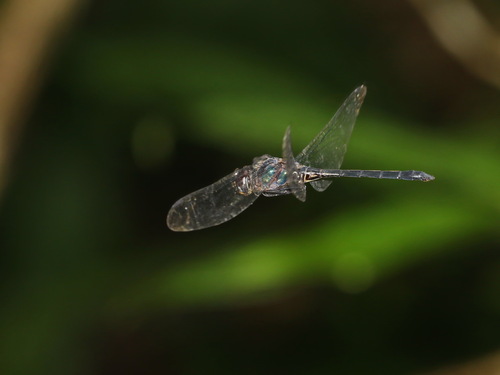
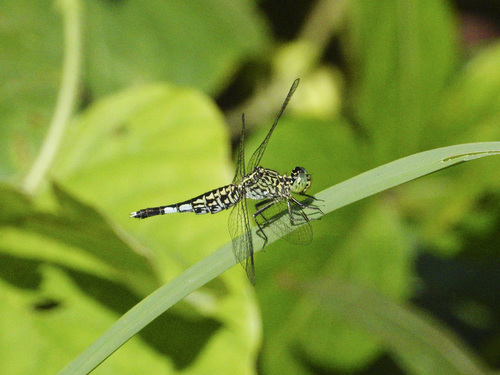
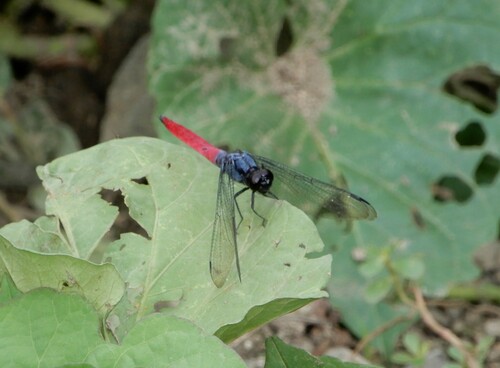
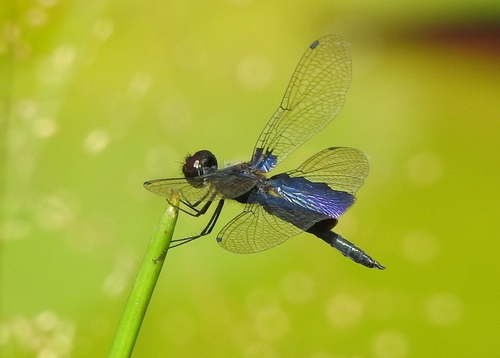
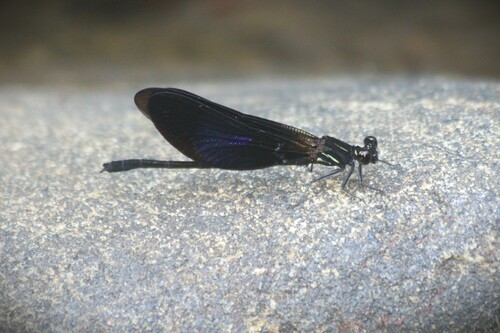
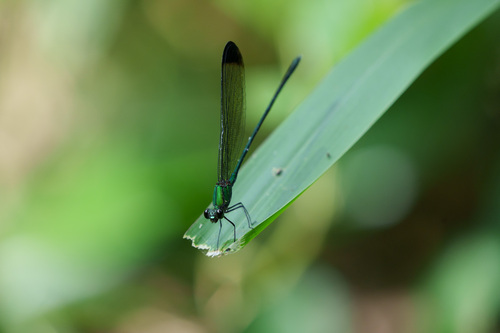
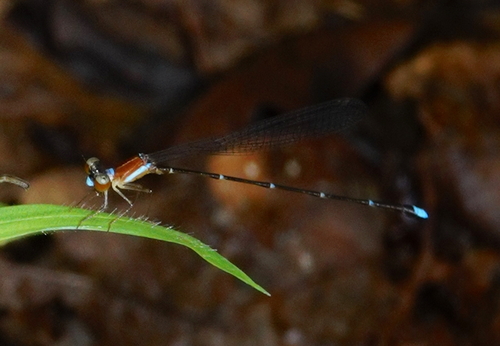
Chalky Percher

Chalky Percher

Diplacodes trivialis

Daily sighting probability ~10% · With luck
at Sinharaja Forest Reserve

In 3 days ~30% in a week ~60%

5 Verified sightings at Sinharaja Forest Reserve From 2019 to 2026
323 In all 16 parks
March Best month
☀️ Diurnal When it's spotted

About the Chalky Percher

Diplacodes trivialis is a species of dragonfly in the family Libellulidae known as the chalky percher or ground skimmer. It is found in Seychelles, Oman, United Arab Emirates, China, Japan, India, Maldives and southwards to New Guinea and Australia.

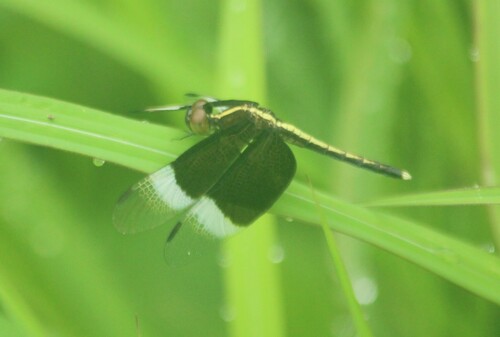
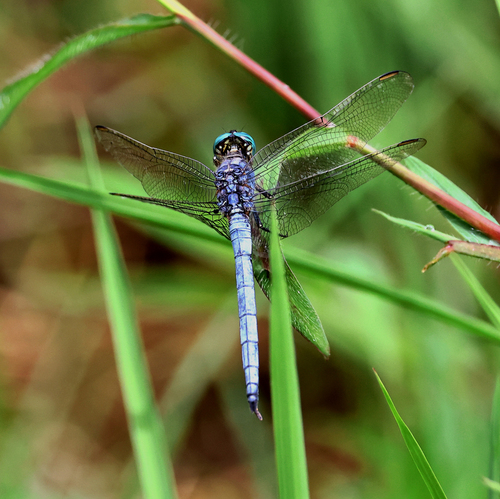
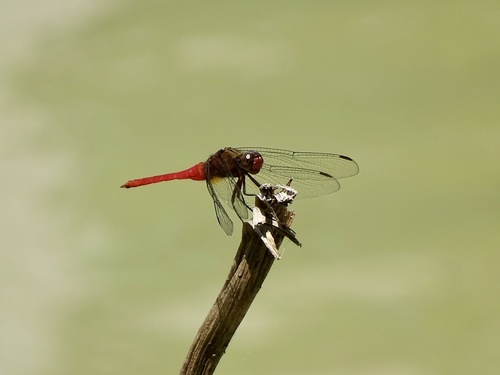
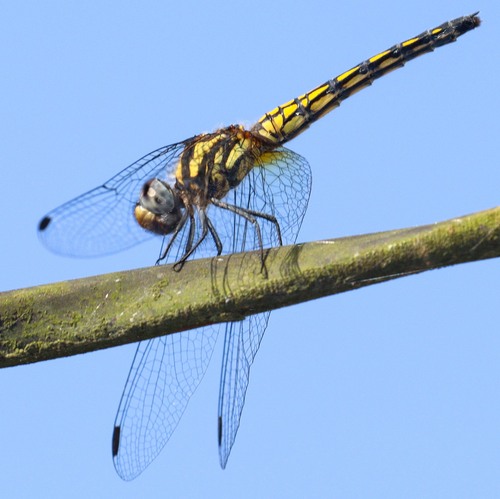
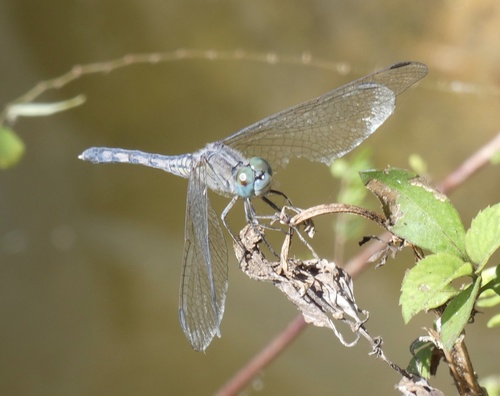
Diplacodes trivialis is small dragonfly with bluish eyes and greenish-yellow or olivaceous thorax and abdomen with black marks. In very old adults, the whole thorax and abdomen become uniform pruinosed blue. Clear wings, without apical or basal markings, and the creamy white anal appendages and deep pruinescence in adults help to distinguish this species from others in its genus. It breeds in ponds, wet rice fields, shallow lakes, drainage ditches and similar habitats. It is one of the most common dragonflies in Asia, found in both the plains and hills and in dry and wet areas.

The genus name Diplacodes combines Diplax, a genus name derived from the Greek δίς (dis, "twice") and πλάξ (plax, "flat and broad"), with the Greek suffix –ώδης (-ōdēs, "resembling" or "having the nature of"). The name refers to the similarity of the genus to Diplax and Diplacina.

The species name trivialis is Latin for... Wikipedia →
Global Distribution

Parks Where Found

# Park Country Daily sighting probability
1 Litchfield National Park 🇦🇺 Australia
~40%
2 Bali Barat National Park 🇮🇩 Indonesia
~40%
3 Cat Tien National Park 🇻🇳 Vietnam
~30%
4 Kakadu National Park 🇦🇺 Australia
~30%
5 Mudumalai National Park 🇮🇳 India
~30%
6 Periyar National Park 🇮🇳 India
~30%
7 Royal Manas National Park 🇧🇹 Bhutan
~30%
8 Kanha National Park 🇮🇳 India
~30%
9 Bandhavgarh National Park 🇮🇳 India
~30%
10 Minneriya National Park 🇱🇰 Sri Lanka
~20%
11 Yala National Park 🇱🇰 Sri Lanka
~20%
12 Khao Yai National Park 🇹🇭 Thailand
~20%
13 Doi Inthanon National Park 🇹🇭 Thailand
~20%
14 Kaeng Krachan National Park 🇹🇭 Thailand
~20%
15 Sinharaja Forest Reserve 🇱🇰 Sri Lanka
~10%
16 Taroko National Park 🇹🇼 Taiwan
~10%

Cities Where Found

# City Country Daily sighting probability
1 Hyderabad 🇮🇳 India
~50%
2 Thrissur 🇮🇳 India
~50%
3 Chhatrapati Sambhajinagar 🇮🇳 India
~50%
4 Phnom Penh 🇰🇭 Cambodia
~40%
5 Raipur 🇮🇳 India
~40%
6 Ranchi 🇮🇳 India
~40%
7 Makassar 🇮🇩 Indonesia
~40%
8 Chennai 🇮🇳 India
~40%
9 Tiruchirappalli 🇮🇳 India
~40%
10 Durg 🇮🇳 India
~40%

Before you go

What are the chances of seeing a Chalky Percher in Sinharaja Forest Reserve?

With luck

About 10% of wildlife watchers report a Chalky Percher sighting in Sinharaja Forest Reserve on a given day, based on 5 verified sightings from GBIF citizen-science data from 2019 to 2026. It is the 98th most-seen of the 117 insects we can rate there. Over three days the chance rises to about 30%, and over a week to about 60%, if each day is a fresh chance.

When is the best time to see a Chalky Percher in Sinharaja Forest Reserve?

March

In that month about 30% of wildlife watchers report a Chalky Percher in Sinharaja Forest Reserve on a given day, against under 5% in April to December, the lowest months. That is one of Sinharaja Forest Reserve's driest months, with about 150 mm of rain against 490 mm in November.

What time of day is best to see a Chalky Percher?

Between 9 am and noon

Across all the parks we cover, that three-hour window holds the most Chalky Percher sightings with a recorded time, and about 9 in 10 of them come between 6 am and 6 pm: it is a daytime animal.

Is Sinharaja Forest Reserve the best place to see a Chalky Percher?

15th of 16

Of the 16 parks where we can rate Chalky Percher sightings, Sinharaja Forest Reserve ranks 15th at about 10%. The best odds are in Litchfield National Park (Australia, about 40%), Bali Barat National Park (Indonesia, about 40%) and Cat Tien National Park (Vietnam, about 30%).

Where does the Chalky Percher sighting chance come from?

GBIF citizen-science records

It is estimated from how often the Chalky Percher is recorded against all the insects logged in Sinharaja Forest Reserve (5 verified sightings from 2019 to 2026), calibrated against known sighting rates. Figures are rounded to the nearest 10% because citizen-science data supports honest approximations, not decimals, and months with records from fewer than five people show "—". How it works.

← Back to Sinharaja Forest Reserve