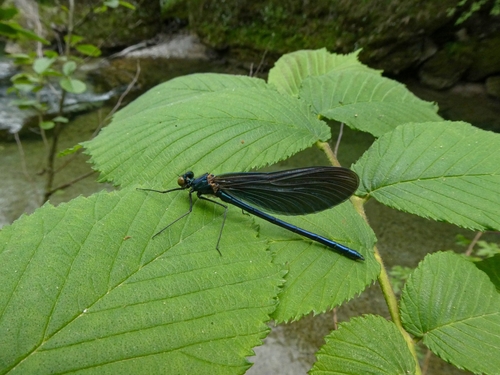
Blue-Tailed Damselfly

Blue-Tailed Damselfly

Ischnura elegans

Daily sighting probability ~10% · With luck
at Snowdonia National Park

In 3 days ~20% in a week ~40%

6 Verified sightings at Snowdonia National Park From 2019 to 2026
338 In all 12 parks
May Best month
☀️ Diurnal When it's spotted

About the Blue-Tailed Damselfly

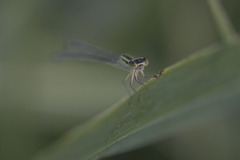
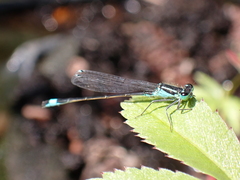
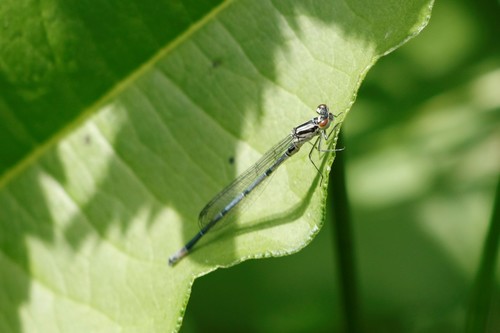
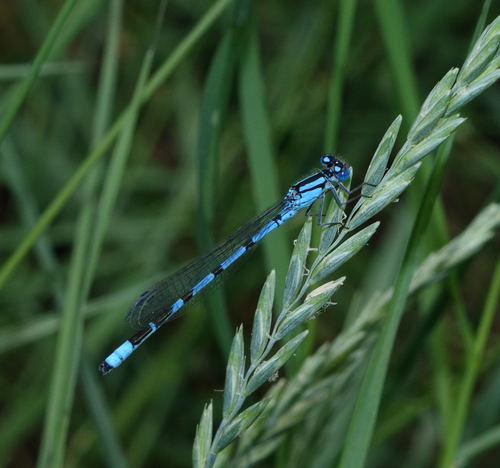
The blue-tailed damselfly or common bluetail (Ischnura elegans) is a damselfly, belonging to the family Coenagrionidae. Ischnura elegans pontica Schmidt, 1939 Ischnura elegans f. infuscans Ischnura elegans f. infuscans-obsoleta Ischnura elegans f. rufescens Ischnura elegans f. typica Ischnura elegans f. violacea This species is present in most of Europe and the Middle East. It is a common species.

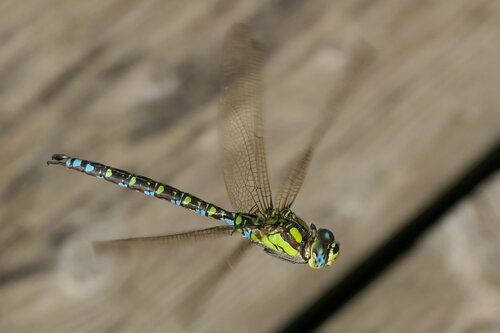
These damselflies can be found in a wide range of lowland environments, with standing and slow flowing waters, brackish and polluted water. Ischnura elegans can reach a body length of 27–35 millimetres (1.1–1.4 in) and a wingspan of about 35 millimetres (1.4 in). Hindwings reach a length of 14–20 millimetres (0.55–0.79 in). Adult male blue-tailed damselflies have a head and thorax patterned with blue and black. There is a bi-coloured pterostigma on the front wings. Eyes are blue. They have a largely black abdomen with very narrow pale markings where each segment joins the next. Segment eight... Wikipedia →

Global Distribution

Parks Where Found

# Park Country Daily sighting probability
1 Kiskunság National Park 🇭🇺 Hungary
~40%
2 Hortobágy National Park 🇭🇺 Hungary
~40%
3 Camargue 🇫🇷 France
~30%
4 Fertő-Hanság National Park 🇭🇺 Hungary
~30%
5 Bavarian Forest National Park 🇩🇪 Germany
~10%
6 Triglav National Park 🇸🇮 Slovenia
~10%
7 Vanoise National Park 🇫🇷 France
~10%
8 Wadden Sea National Park 🇩🇪 Germany
~10%
9 Cairngorms National Park 🇬🇧 United Kingdom
~10%
10 Snowdonia National Park 🇬🇧 United Kingdom
~10%
11 Cévennes National Park 🇫🇷 France
<5%
12 Pyrénées National Park 🇫🇷 France
<5%

Cities Where Found

# City Country Daily sighting probability
1 Antalya 🇹🇷 Turkey
~40%
2 Brussels 🇧🇪 Belgium
~30%
3 Milan 🇮🇹 Italy
~30%
4 Rostov-on-Don 🇷🇺 Russia
~20%
5 Kharkiv 🇺🇦 Ukraine
~20%
6 Paris 🇫🇷 France
~20%
7 Jerusalem 🇮🇱 Israel
~20%
8 Leeds 🇬🇧 United Kingdom
~20%
9 Birmingham 🇬🇧 United Kingdom
~20%
10 Rotterdam [The Hague] 🇳🇱 Netherlands
~20%

Before you go

What are the chances of seeing a Blue-Tailed Damselfly in Snowdonia National Park?

With luck

About 10% of wildlife watchers report a Blue-Tailed Damselfly sighting in Snowdonia National Park on a given day, based on 6 verified sightings from GBIF citizen-science data from 2019 to 2026. It is the 294th most-seen of the 387 insects we can rate there. Over three days the chance rises to about 20%, and over a week to about 40%, if each day is a fresh chance.

When is the best time to see a Blue-Tailed Damselfly in Snowdonia National Park?

May and July

In those months about 10% of wildlife watchers report a Blue-Tailed Damselfly in Snowdonia National Park on a given day, against under 5% in June and August–April, the lowest months.

What time of day is best to see a Blue-Tailed Damselfly?

Between 11 am and 2 pm

Across all the parks we cover, that three-hour window holds the most Blue-Tailed Damselfly sightings with a recorded time, and about 9 in 10 of them come between 6 am and 6 pm: it is a daytime animal.

Is Snowdonia National Park the best place to see a Blue-Tailed Damselfly?

10th of 12

Of the 12 parks where we can rate Blue-Tailed Damselfly sightings, Snowdonia National Park ranks 10th at about 10%. The best odds are in Kiskunság National Park (Hungary, about 40%), Hortobágy National Park (Hungary, about 40%) and Camargue (France, about 30%). All parks ranked.

Which relatives of the Blue-Tailed Damselfly live in Snowdonia National Park?

Same family: Coenagrionidae

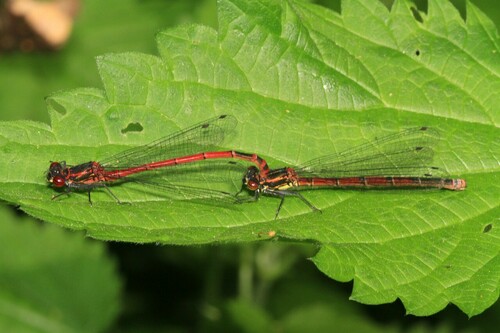
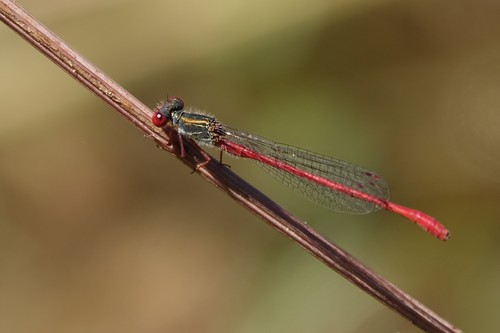
The closest relatives of the Blue-Tailed Damselfly that you can see in Snowdonia National Park (family Coenagrionidae, Narrow-winged Damselflies) are Large Red Damselfly (about 30%), Azure Damselfly (about 20%) and Common Blue Damselfly (about 20%), with each one's daily chance of a sighting.

Where does the Blue-Tailed Damselfly sighting chance come from?

GBIF citizen-science records

It is estimated from how often the Blue-Tailed Damselfly is recorded against all the insects logged in Snowdonia National Park (6 verified sightings from 2019 to 2026), calibrated against known sighting rates. Figures are rounded to the nearest 10% because citizen-science data supports honest approximations, not decimals, and months with records from fewer than five people show "—". How it works.
← Back to Snowdonia National Park