Heart And Dart

Heart And Dart

Agrotis exclamationis

Daily sighting probability ~10% · With luck
at Snowdonia National Park

In 3 days ~40% in a week ~70%

23 Verified sightings at Snowdonia National Park From 2019 to 2026
221 In all 6 parks
June Best month
🌅 Crepuscular When it's spotted

About the Heart And Dart

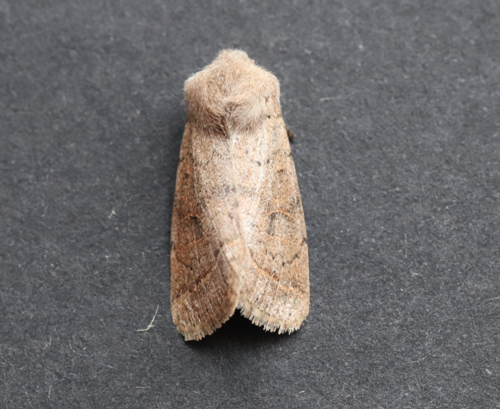
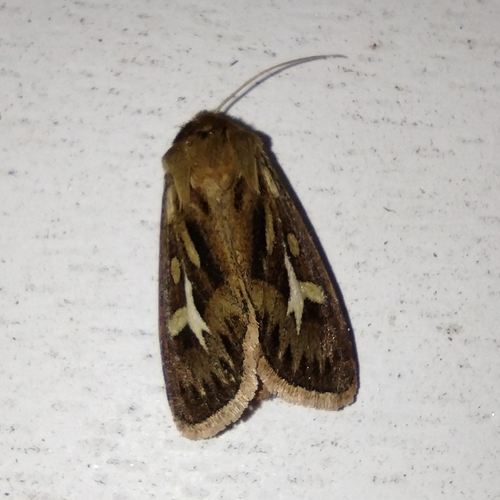
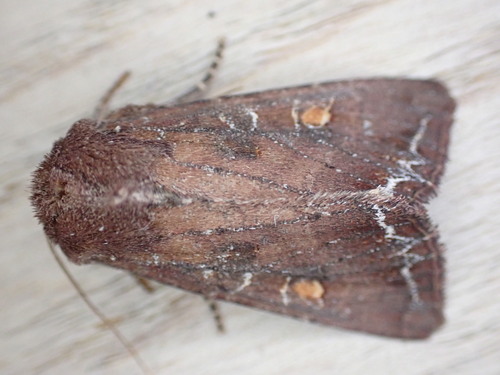
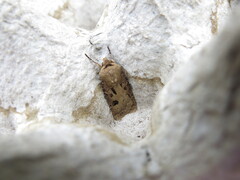
The heart and dart (Agrotis exclamationis) is a moth of the family Noctuidae. The species was first described by Carl Linnaeus in his 1758 10th edition of Systema Naturae. A familiar moth to many, it is considered one of the most common of the European region. It occurs throughout the Palearctic realm from Ireland to Japan.

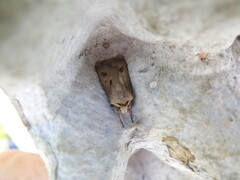
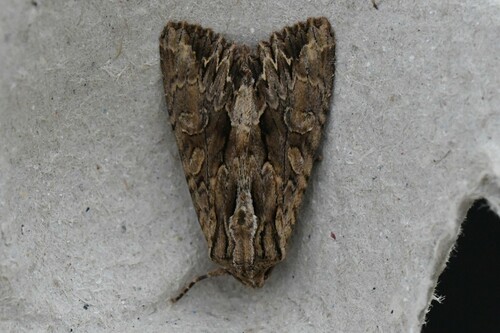
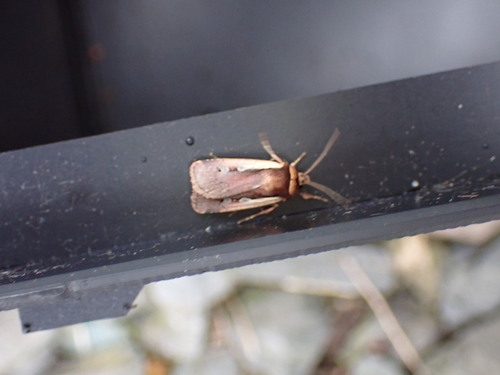
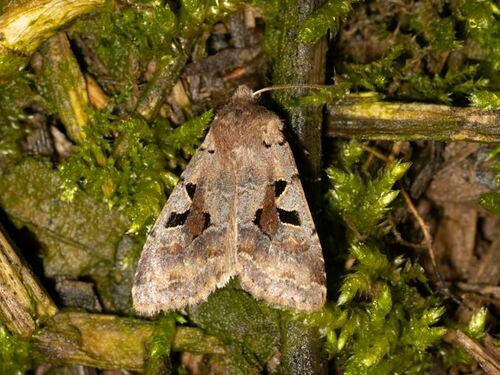
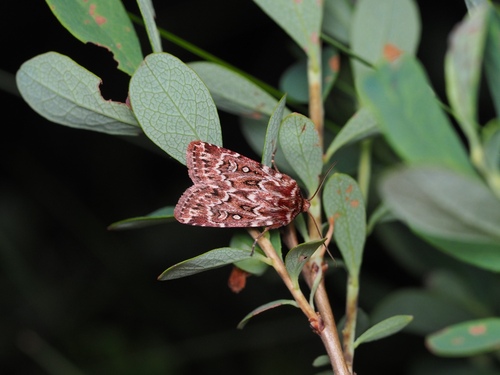
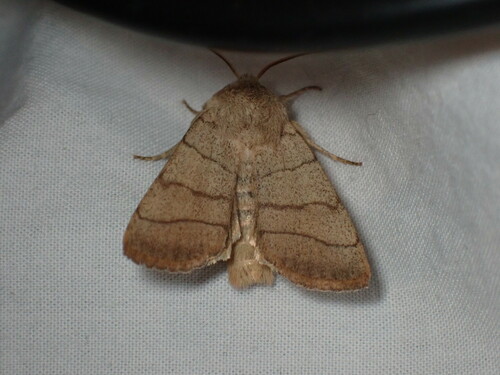
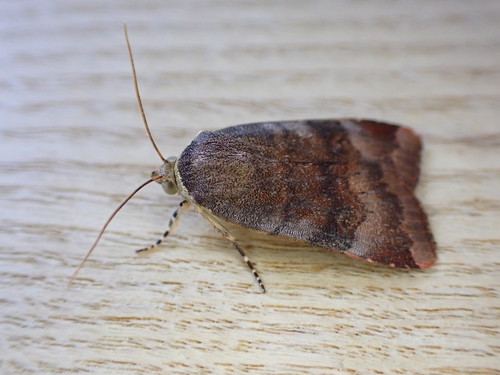
This is a quite variable species with forewings ranging from pale to dark brown but always recognizable by the distinctively shaped dark stigmata which give it its common name. The wingspan is 35–44 mm. The hindwings are whitish (compared with other common Agrotis species, the hindwings of this species are usually paler than in heart and club but darker than in turnip moth). This species usually has a dark area at the front of the thorax, visible as a horizontal bar when viewing the moth head on. The differences are not consistent however; they are highly variable in both colour and markings, and identification of atypical or worn examples may prove impossible without examination of genitalia. See Townsend et al.

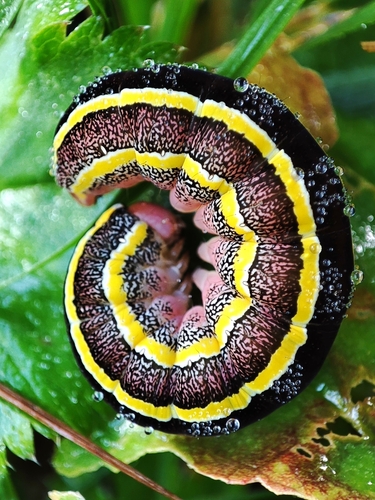
This moth flies at night from May to July[1] and is attracted to light, sometimes in large numbers. It also frequently visits nectar-rich flowers such as Buddleia, ragwort and red valerian. The larva The caterpillars are coloured grey-brown, paler ventrally and have a pale dorsal line and clearly recognizable black point warts.

The pupa is bright red. On the cremaster sit two short curved thorns.Larvae feed on a variety of plants, both wild and cultivated (see list below). This is one of the notorious cutworms and often severs or fatally damages plants at the base. The species overwinters as a full-grown larva in a chamber in the soil before pupating in the spring.

^The flight season refers to the British Isles. This may vary in other parts of the range. Wikipedia →
Global Distribution

Parks Where Found

# Park Country Daily sighting probability
1 Snowdonia National Park 🇬🇧 United Kingdom
~10%
2 Cévennes National Park 🇫🇷 France
~10%
3 Bavarian Forest National Park 🇩🇪 Germany
~10%
4 Wadden Sea National Park 🇩🇪 Germany
~10%
5 Pyrénées National Park 🇫🇷 France
~10%
6 Sierra de Guadarrama National Park 🇪🇸 Spain
<5%

Cities Where Found

# City Country Daily sighting probability
1 Liverpool 🇬🇧 United Kingdom
~40%
2 London 🇬🇧 United Kingdom
~20%
3 Manchester 🇬🇧 United Kingdom
~20%
4 Kharkiv 🇺🇦 Ukraine
~10%
5 Birmingham 🇬🇧 United Kingdom
~10%
6 Budapest 🇭🇺 Hungary
~10%
7 Berlin 🇩🇪 Germany
~10%
8 Essen 🇩🇪 Germany
~10%
9 Vienna 🇦🇹 Austria
~10%
10 Kyiv 🇺🇦 Ukraine
~10%

Before you go

What are the chances of seeing a Heart And Dart in Snowdonia National Park?

With luck

About 10% of wildlife watchers report a Heart And Dart sighting in Snowdonia National Park on a given day, based on 23 verified sightings from GBIF citizen-science data from 2019 to 2026. It is the 92nd most-seen of the 387 insects we can rate there. Over three days the chance rises to about 40%, and over a week to about 70%, if each day is a fresh chance.

When is the best time to see a Heart And Dart in Snowdonia National Park?

June

In that month about 30% of wildlife watchers report a Heart And Dart in Snowdonia National Park on a given day, against under 5% in August and October–April, the lowest months.

What time of day is best to see a Heart And Dart?

Between 10 pm and 1 am

Across all the parks we cover, that three-hour window holds the most Heart And Dart sightings with a recorded time, and about half of them come between 6 am and 6 pm: it is most active around dawn and dusk.

Is Snowdonia National Park the best place to see a Heart And Dart?

Yes

Of the 6 parks where we can rate Heart And Dart sightings, Snowdonia National Park has the highest daily chance: about 10%. Next come Cévennes National Park (France, about 10%) and Bavarian Forest National Park (Germany, about 10%).

Which relatives of the Heart And Dart live in Snowdonia National Park?

Same family: Noctuidae

The closest relatives of the Heart And Dart that you can see in Snowdonia National Park (family Noctuidae, Cutworm Moths and Allies) are Large Yellow Underwing (about 30%), Dark Arches (about 30%) and Flame Shoulder Moth (about 20%), with each one's daily chance of a sighting.

Where does the Heart And Dart sighting chance come from?

GBIF citizen-science records

It is estimated from how often the Heart And Dart is recorded against all the insects logged in Snowdonia National Park (23 verified sightings from 2019 to 2026), calibrated against known sighting rates. Figures are rounded to the nearest 10% because citizen-science data supports honest approximations, not decimals, and months with records from fewer than five people show "—". How it works.

← Back to Snowdonia National Park