Thick-Legged Hover Fly

Thick-Legged Hover Fly

Syritta pipiens

Daily sighting probability ~10% · With luck
at Snowdonia National Park

In 3 days ~20% in a week ~40%

6 Verified sightings at Snowdonia National Park From 2019 to 2026
137 In all 9 parks
June Best month
☀️ Diurnal When it's spotted

About the Thick-Legged Hover Fly

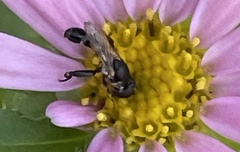
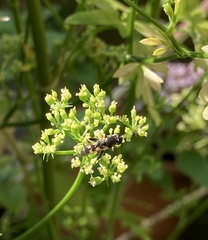
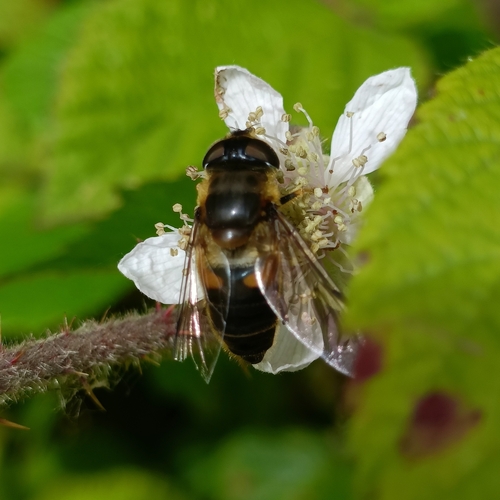
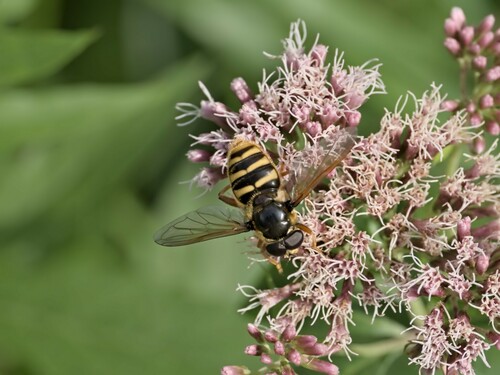
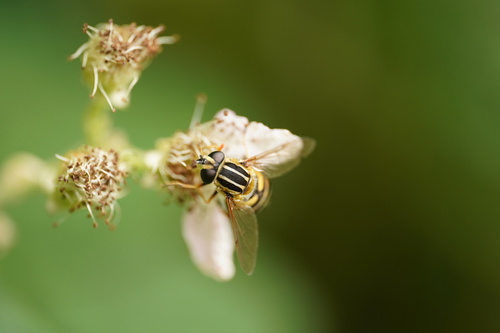
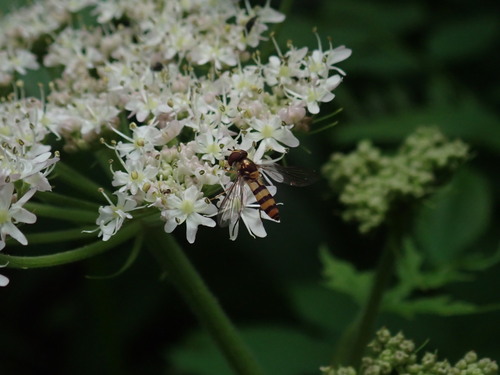
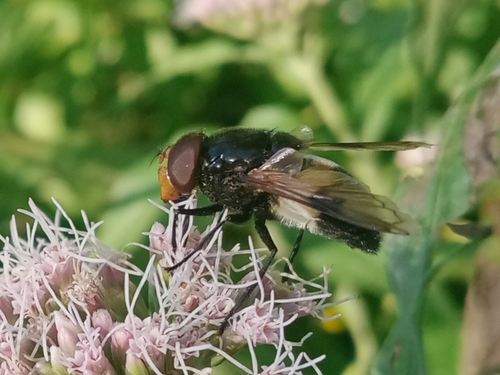
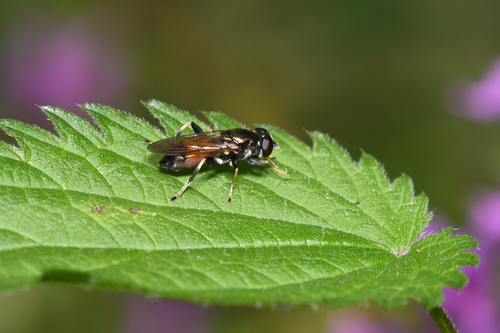
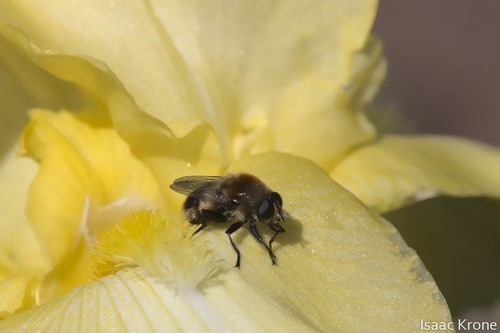
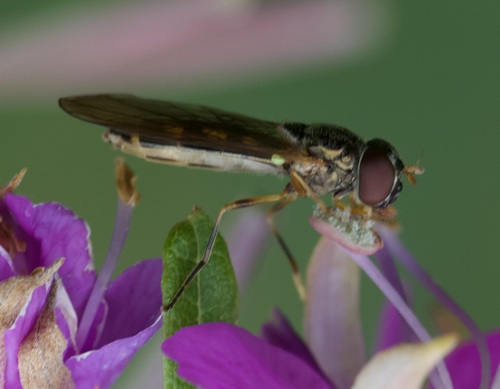
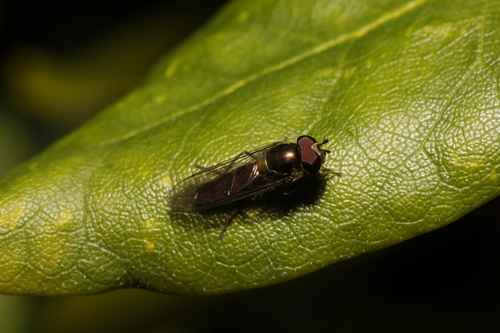
Syritta pipiens, sometimes called the thick-legged hoverfly, is one of the most common species in the insect family Syrphidae. This fly originates from Europe and is currently distributed across Eurasia and North America. They are fast and nimble fliers, and their larvae are found in wet, rotting organic matter such as garden compost, manure, and silage. The species is also commonly found in human-created environments such as most farmland, gardens, and urban parks, wherever there are flowers. This species is an important part of its native ecosystem as adult Syritta pipiens flies are critical pollinators for a variety of flowering plants and the species supports parasitism by various parasitic wasp species. Thus, they play an important role in environmental functionality, and can serve as bio-indicators, in which their abundance can reflect the health of the environment. Syritta pipiens looks like many predatory hoverfly species, yet is not predatory.

The species Syritta pipiens is within the family of Syrphidae, commonly called hover or flower flies. Syrphidae is one of the largest families within the Diptera order and contains about 6,000 known species widely distributed... Wikipedia →

Global Distribution

Parks Where Found

# Park Country Daily sighting probability
1 Acadia National Park 🇺🇸 United States
~10%
2 Camargue 🇫🇷 France
~10%
3 Snowdonia National Park 🇬🇧 United Kingdom
~10%
4 Great Bear Rainforest 🇨🇦 Canada
~10%
5 Wadden Sea National Park 🇩🇪 Germany
~10%
6 Bavarian Forest National Park 🇩🇪 Germany
~10%
7 Shenandoah National Park 🇺🇸 United States
<5%
8 Pyrénées National Park 🇫🇷 France
<5%
9 Yellowstone National Park 🇺🇸 United States
<5%

Cities Where Found

# City Country Daily sighting probability
1 Birmingham 🇬🇧 United Kingdom
~20%
2 London 🇬🇧 United Kingdom
~20%
3 Liverpool 🇬🇧 United Kingdom
~20%
4 Manchester 🇬🇧 United Kingdom
~20%
5 Jerusalem 🇮🇱 Israel
~10%
6 Boston 🇺🇸 United States
~10%
7 Kharkiv 🇺🇦 Ukraine
~10%
8 Warsaw 🇵🇱 Poland
~10%
9 Algiers 🇩🇿 Algeria
~10%
10 Budapest 🇭🇺 Hungary
~10%

Before you go

What are the chances of seeing a Thick-Legged Hover Fly in Snowdonia National Park?

With luck

About 10% of wildlife watchers report a Thick-Legged Hover Fly sighting in Snowdonia National Park on a given day, based on 6 verified sightings from GBIF citizen-science data from 2019 to 2026. It is the 294th most-seen of the 387 insects we can rate there. Over three days the chance rises to about 20%, and over a week to about 40%, if each day is a fresh chance.

When is the best time to see a Thick-Legged Hover Fly in Snowdonia National Park?

May to August

In those months about 10% of wildlife watchers report a Thick-Legged Hover Fly in Snowdonia National Park on a given day, against under 5% in September to April, the lowest months.

What time of day is best to see a Thick-Legged Hover Fly?

Between 11 am and 2 pm

Across all the parks we cover, that three-hour window holds the most Thick-Legged Hover Fly sightings with a recorded time, and about 9 in 10 of them come between 6 am and 6 pm: it is a daytime animal.

Is Snowdonia National Park the best place to see a Thick-Legged Hover Fly?

Among the best

Of the 9 parks where we can rate Thick-Legged Hover Fly sightings, Snowdonia National Park ranks 3rd at about 10%, level with the leaders once rounded. The best odds are in Acadia National Park (United States, about 10%) and Camargue (France, about 10%).

Which relatives of the Thick-Legged Hover Fly live in Snowdonia National Park?

Same family: Syrphidae

The closest relatives of the Thick-Legged Hover Fly that you can see in Snowdonia National Park (family Syrphidae, Hover Flies) are Tapered Drone Fly (about 20%), Marmalade Hover Fly (about 20%) and Common Drone Fly (about 10%), with each one's daily chance of a sighting.

Where does the Thick-Legged Hover Fly sighting chance come from?

GBIF citizen-science records

It is estimated from how often the Thick-Legged Hover Fly is recorded against all the insects logged in Snowdonia National Park (6 verified sightings from 2019 to 2026), calibrated against known sighting rates. Figures are rounded to the nearest 10% because citizen-science data supports honest approximations, not decimals, and months with records from fewer than five people show "—". How it works.

← Back to Snowdonia National Park