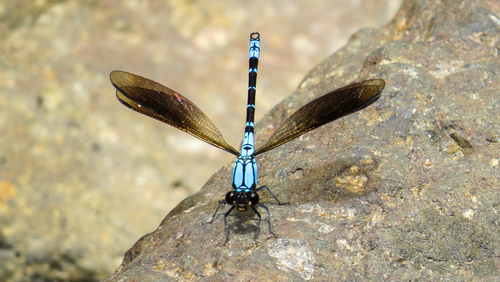
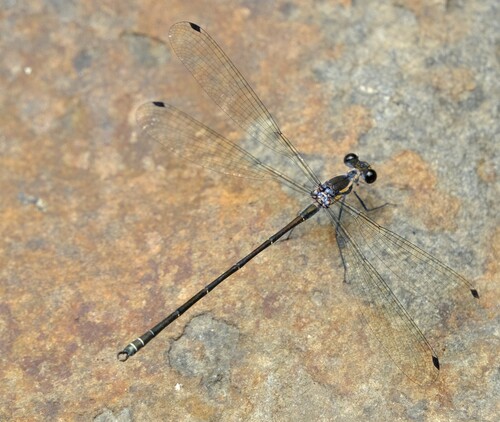
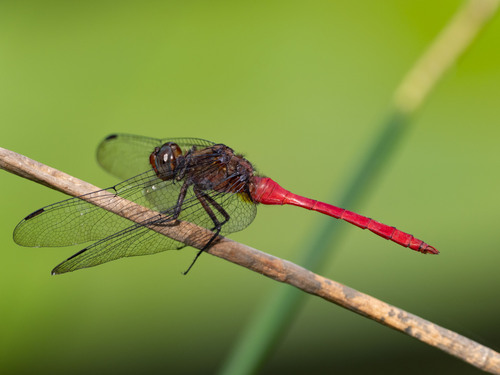
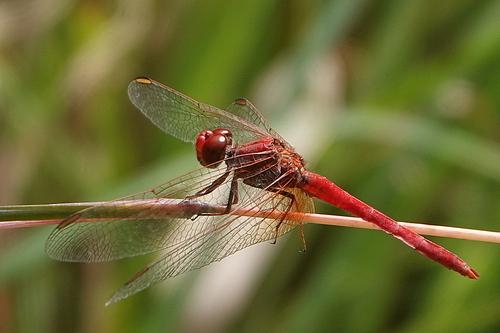
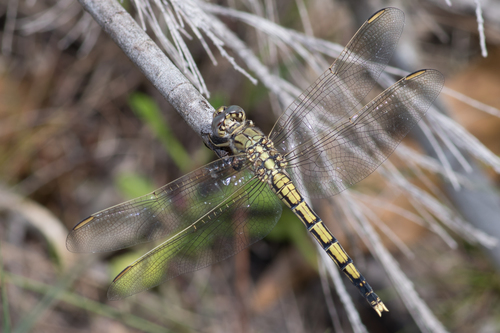
Aurora Bluetail

Aurora Bluetail

Ischnura aurora

Daily sighting probability ~10% · With luck
at Springbrook National Park

In 3 days ~20% in a week ~30%

5 Verified sightings at Springbrook National Park From 2019 to 2026
121 In all 5 parks
December Best month
☀️ Diurnal When it's spotted

About the Aurora Bluetail

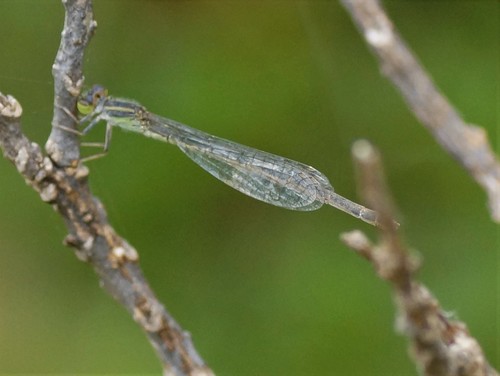
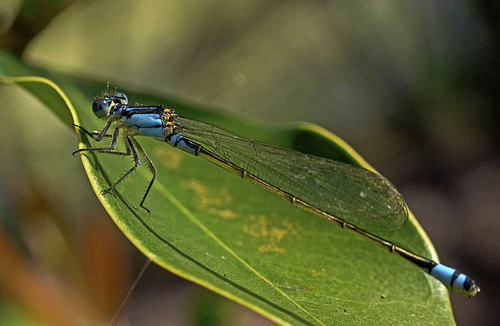
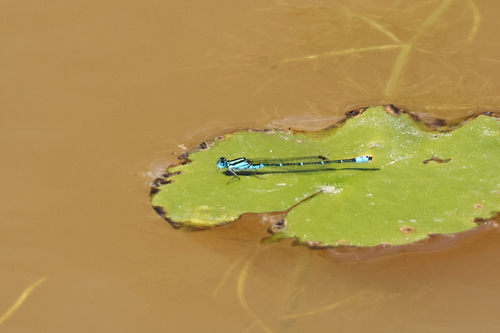
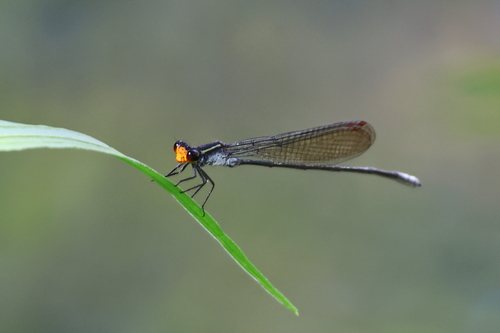
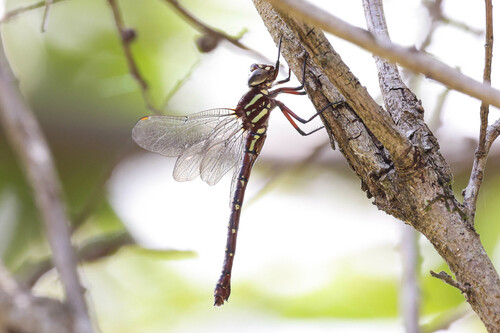
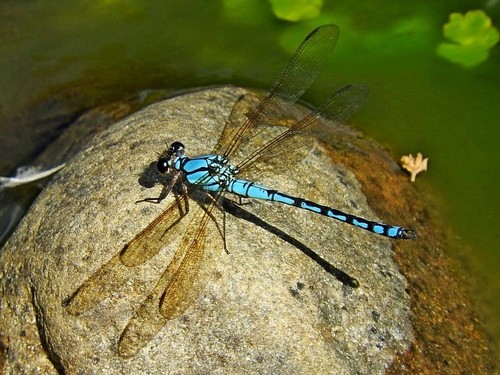
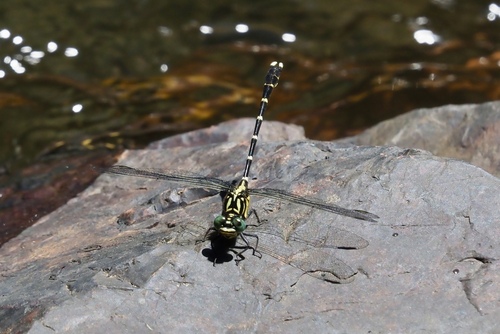
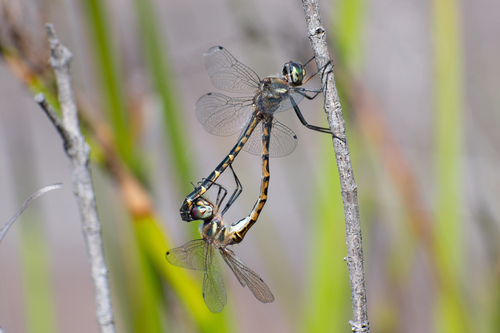
Ischnura aurora,, the gossamer damselfy or golden dartlet and also known as the aurora bluetail, is a species of damselfly in the family Coenagrionidae. A small apple green damselfly with black thoracic stripes and blue tipped yellow tail.

Male Eyes: Black half moon-like cap above, olive green to dark olive below, which fades to pale olive beneath. Two azure blue spots are present behind the eyes. Thorax: Shining black with two pale grass green stripes; sides are light green and white below. Legs: Pale greenish white with a vertical stripe on the femur, just above the femur - tibia joint. Wings: Transparent. Wing spots: The wing spots are different in fore and hindwings, being rose-red on the forewings and uniform pale grey on the hindwings. Abdomen: Bright reddish yellow. The upper parts of the second and seventh segments have narrow and broad black marks, respectively. A third of the length of the eighth segment and the full length of the ninth segment are blue. The base color of the eighth segment tergite is melanic black.

Female Eyes: Brown half moon-like cap above, green to pale green below. Thorax: Shining black with two orange stripes; sides are pale green. Legs... Wikipedia →

Global Distribution

Parks Where Found

# Park Country Daily sighting probability
1 Grampians National Park 🇦🇺 Australia
~20%
2 Hattah-Kulkyne National Park 🇦🇺 Australia
~20%
3 Great Otway National Park 🇦🇺 Australia
~10%
4 Lamington National Park 🇦🇺 Australia
~10%
5 Springbrook National Park 🇦🇺 Australia
~10%

Cities Where Found

# City Country Daily sighting probability
1 Perth 🇦🇺 Australia
~10%
2 Brisbane 🇦🇺 Australia
~10%
3 Melbourne 🇦🇺 Australia
~10%
4 Auckland 🇳🇿 New Zealand
~10%
5 Sydney 🇦🇺 Australia
~10%

Before you go

What are the chances of seeing an Aurora Bluetail in Springbrook National Park?

With luck

About 10% of wildlife watchers report an Aurora Bluetail sighting in Springbrook National Park on a given day, based on 5 verified sightings from GBIF citizen-science data from 2019 to 2026. It is the 358th most-seen of the 429 insects we can rate there. Over three days the chance rises to about 20%, and over a week to about 30%, if each day is a fresh chance.

When is the best time to see an Aurora Bluetail in Springbrook National Park?

May and October–December

In those months about 10% of wildlife watchers report an Aurora Bluetail in Springbrook National Park on a given day, against under 5% in January–April and June–September, the lowest months.

What time of day is best to see an Aurora Bluetail?

Between 10 am and 1 pm

Across all the parks we cover, that three-hour window holds the most Aurora Bluetail sightings with a recorded time, and about 8 in 10 of them come between 6 am and 6 pm: it is a daytime animal.

Where does the Aurora Bluetail sighting chance come from?

GBIF citizen-science records

It is estimated from how often the Aurora Bluetail is recorded against all the insects logged in Springbrook National Park (5 verified sightings from 2019 to 2026), calibrated against known sighting rates. Figures are rounded to the nearest 10% because citizen-science data supports honest approximations, not decimals, and months with records from fewer than five people show "—". How it works.

← Back to Springbrook National Park