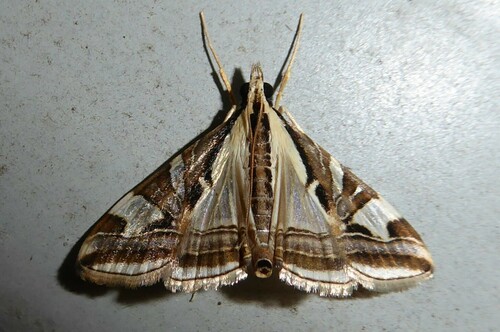
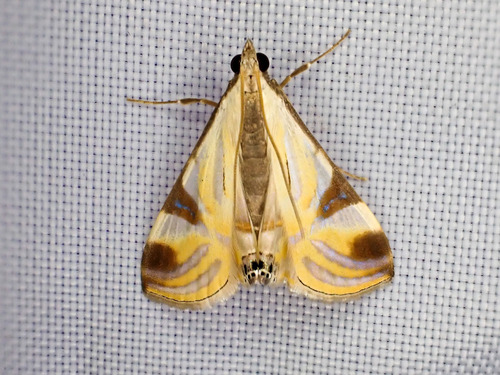
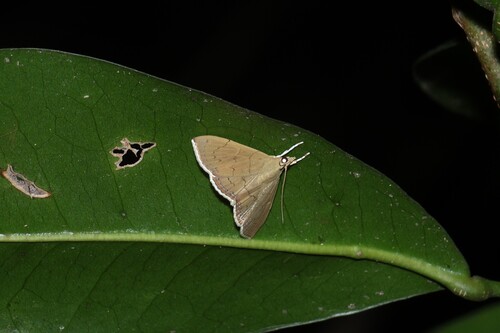
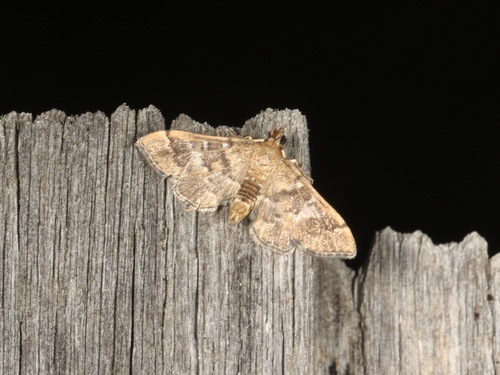
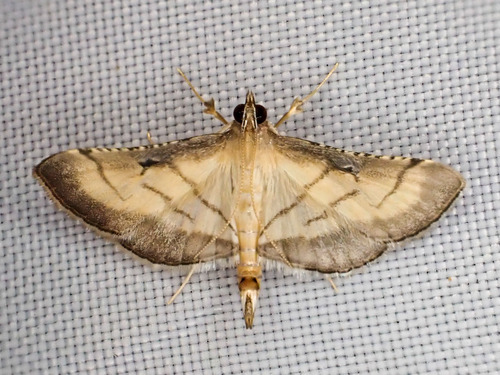
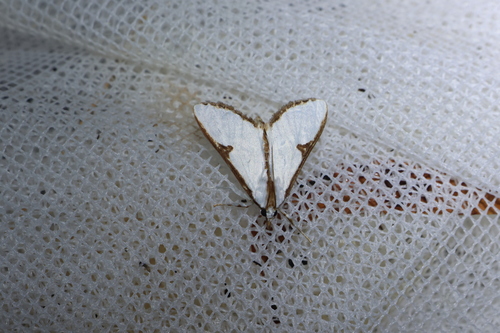
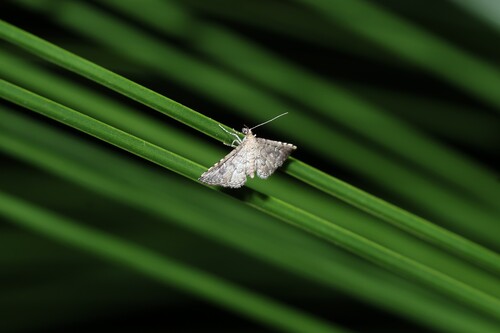
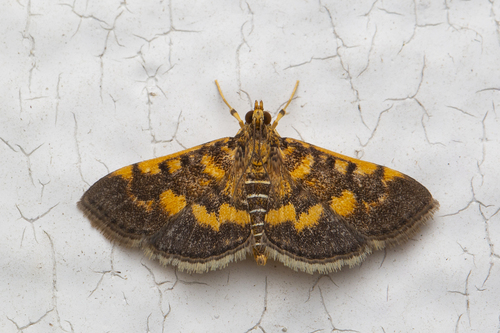
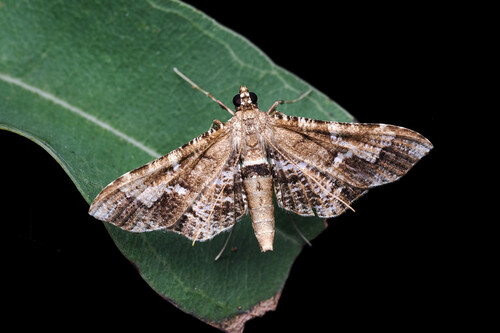
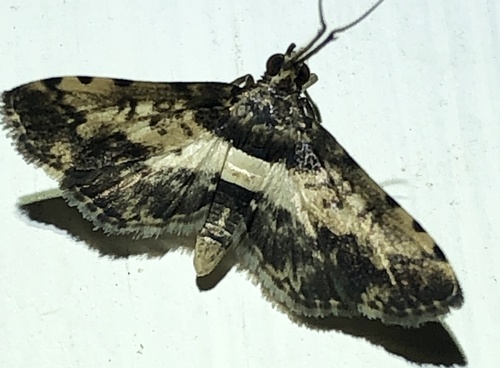
Grass Webworm Moth

Grass Webworm Moth

Herpetogramma licarsisalis

Daily sighting probability ~10% · With luck
at Springbrook National Park

In 3 days ~40% in a week ~60%

31 Verified sightings at Springbrook National Park From 2019 to 2026
118 In all 5 parks
May Best month
🌅 Crepuscular When it's spotted

About the Grass Webworm Moth

Herpetogramma licarsisalis, commonly known as the grass webworm or pale sod-webworm, is a species of moth in the family Crambidae. It is distributed in most of the Old World tropics, including South Africa, Zimbabwe, the Democratic Republic of the Congo, Togo, Sierra Leone, Sudan, Ethiopia, Egypt, Réunion, Madagascar, Saudi Arabia, the United Arab Emirates, Hong Kong, Malaysia, Borneo, the Philippines, New Caledonia, Australia, and New Zealand. It is an introduced species in many other parts of the world, including Hawaii, continental Spain and the Canary Islands, Portugal, Great Britain, Turkey, Cyprus, India and Sri Lanka.

The flat, elliptical eggs are deposited singly or in masses on the leaf blade's upper surface along the midrib. The caterpillars hatch after 4-6 days and undergo five instars in the following 14 days. First instar larvae are characterised by a black head capsule, whereas later instars have a brown head capsule. Mature larvae are green to brown, sometimes with a rose tint. Full-grown larvae are about 20 mm long. Pupation occurs in a loosely-woven hibernaculum and takes about 7.3 days. After eclosion from the pupa, the... Wikipedia →
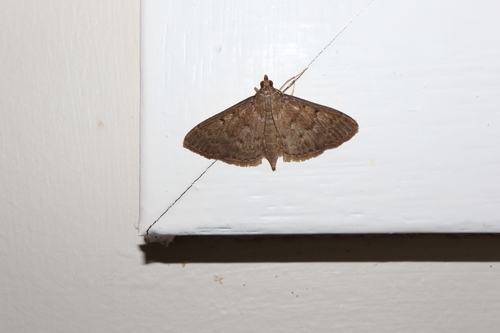
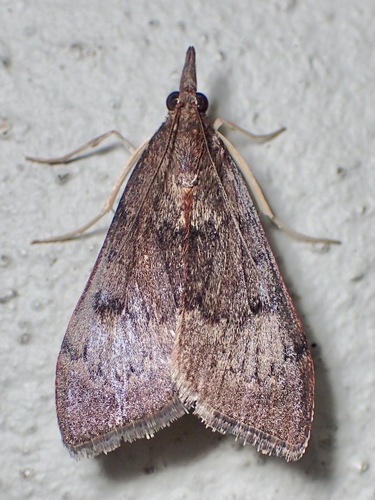
Global Distribution

Parks Where Found

# Park Country Daily sighting probability
1 Lamington National Park 🇦🇺 Australia
~20%
2 Springbrook National Park 🇦🇺 Australia
~10%
3 Blue Mountains National Park 🇦🇺 Australia
~10%
4 Daintree National Park 🇦🇺 Australia
~10%
5 Royal National Park 🇦🇺 Australia
~10%

Cities Where Found

# City Country Daily sighting probability
1 Brisbane 🇦🇺 Australia
~20%
2 Kuwait City 🇰🇼 Kuwait
~10%
3 Cairo 🇪🇬 Egypt
~10%
4 Xiamen City 🇨🇳 China
~10%
5 Perth 🇦🇺 Australia
~10%
6 Sydney 🇦🇺 Australia
~10%
7 Tel Aviv 🇮🇱 Israel
~10%
8 Hyderabad 🇮🇳 India
~10%
9 Athens 🇬🇷 Greece
~10%
10 Istanbul 🇹🇷 Turkey
~10%

Before you go

What are the chances of seeing a Grass Webworm Moth in Springbrook National Park?

With luck

About 10% of wildlife watchers report a Grass Webworm Moth sighting in Springbrook National Park on a given day, based on 31 verified sightings from GBIF citizen-science data from 2019 to 2026. It is the 49th most-seen of the 429 insects we can rate there. Over three days the chance rises to about 40%, and over a week to about 60%, if each day is a fresh chance.

When is the best time to see a Grass Webworm Moth in Springbrook National Park?

May

In that month about 40% of wildlife watchers report a Grass Webworm Moth in Springbrook National Park on a given day, against under 5% in June, August–October and December, the lowest months.

What time of day is best to see a Grass Webworm Moth?

Between 7 and 10 pm

Across all the parks we cover, that three-hour window holds the most Grass Webworm Moth sightings with a recorded time, and about 7 in 10 of them come between 6 pm and 6 am: it is most active around dawn and dusk.

Is Springbrook National Park the best place to see a Grass Webworm Moth?

2nd of 5

Of the 5 parks where we can rate Grass Webworm Moth sightings, Springbrook National Park ranks 2nd at about 10%. The best odds are in Lamington National Park (Australia, about 20%).

Which relatives of the Grass Webworm Moth live in Springbrook National Park?

Same family: Crambidae

The closest relatives of the Grass Webworm Moth that you can see in Springbrook National Park (family Crambidae, Crambid Snout Moths) are Tree Lucerne Moth (about 20%), Agrioglypta excelsalis (about 10%) and Fig Leaf Moth (about 10%), with each one's daily chance of a sighting.

Where does the Grass Webworm Moth sighting chance come from?

GBIF citizen-science records

It is estimated from how often the Grass Webworm Moth is recorded against all the insects logged in Springbrook National Park (31 verified sightings from 2019 to 2026), calibrated against known sighting rates. Figures are rounded to the nearest 10% because citizen-science data supports honest approximations, not decimals, and months with records from fewer than five people show "—". How it works.

← Back to Springbrook National Park