Bearded Seal

Bearded Seal

Erignathus barbatus

Silhouette: Mike Pennington, GoEThe · PhyloPic

LCNTNear ThreatenedVUENCR
Daily sighting probability ~50% · Likely
at Svalbard

In 3 days ~90% in a week >90%

146 Verified sightings at Svalbard From 2019 to 2026
146 In 1 park
June Best month
☀️ Diurnal When it's spotted

About the Bearded Seal

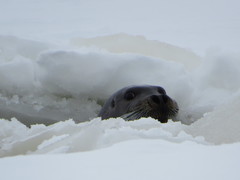
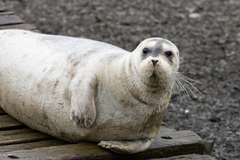
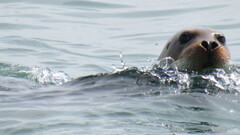
The bearded seal (Erignathus barbatus), also known as the square-flipper seal, is a medium-sized pinniped that is found in and near to the Arctic Ocean. It gets its generic name from two Greek words (eri and gnathos) that refer to its heavy jaw. The other part of its Linnaean name means bearded and refers to its most characteristic feature, the conspicuous and abundant whiskers. When dry, these whiskers curl elegantly, giving the bearded seal a "raffish" look.

Bearded seals are the largest northern phocid. They have been found to weigh as much as 300 kg (660 lb), with the females being the largest. However, male and female bearded seals are not very dimorphic. The only member of the genus Erignathus, the bearded seal is unique in that it is intermediate in characteristics between the two subfamilies in the family Phocidae: Phocinae and Monachinae.

Fossils first described in 2002 indicate that, during the Pleistocene epoch, bearded seals ranged as far south as South Carolina. Distinguishing features of this earless seal include square fore flippers and thick bristles on its muzzle. Adults are greyish-brown in colour, darker on the back, rarely with a few faint spots... Wikipedia →

Sounds

Recording0:12

Russia · 2022

Светлана Царахова · iNaturalist · CC0

Global Distribution

Parks Where Found

# Park Country Daily sighting probability
1 Svalbard 🇳🇴 Norway
~50%

More parks will be added in future updates.

Zoos & Centres Where Found

# Zoo / Centre Country
1 Polaria 🇳🇴 Norway In captivity

Before you go

What are the chances of seeing a Bearded Seal in Svalbard?

Likely

About 50% of wildlife watchers report a Bearded Seal sighting in Svalbard on a given day, based on 146 verified sightings from GBIF citizen-science data from 2019 to 2026. It is the 6th most-seen of the 14 mammals we can rate there. Over three days the chance rises to about 90%, and over a week to over 90%, if each day is a fresh chance.

When is the best time to see a Bearded Seal in Svalbard?

June and September

In those months about 60% of wildlife watchers report a Bearded Seal in Svalbard on a given day, against about 10% in March and April, the lowest months. December has too few records to rate.

What time of day is best to see a Bearded Seal?

Between 9 am and noon

Across all the parks we cover, that three-hour window holds the most Bearded Seal sightings with a recorded time, and about 8 in 10 of them come between 6 am and 6 pm: it is a daytime animal.

Where else can you see a Bearded Seal?

Only Svalbard, in our data

Svalbard is the only park on Wallace's Line with enough records to rate Bearded Seal sightings: about 50% of wildlife watchers there report one on a given day.

Which relatives of the Bearded Seal live in Svalbard?

Same family: Phocidae

The closest relatives of the Bearded Seal that you can see in Svalbard (family Phocidae, Earless Seals) are Harbor Seal (about 50%), Ringed Seal (about 20%) and Harp Seal (about 10%), with each one's daily chance of a sighting.

Where does the Bearded Seal sighting chance come from?

GBIF citizen-science records

It is estimated from how often the Bearded Seal is recorded against all the mammals logged in Svalbard (146 verified sightings from 2019 to 2026), calibrated against known sighting rates. Figures are rounded to the nearest 10% because citizen-science data supports honest approximations, not decimals, and months with records from fewer than five people show "—". How it works.

← Back to Svalbard