


Completed



Fiery-billed Aracari
Pteroglossus frantzii
Silhouette: Edwin Price · PhyloPic
- KingdomAnimalia (Animals)
- PhylumChordata (Chordates)
- ClassAves (Birds)
- OrderPiciformes (Woodpeckers and Allies)
- FamilyRamphastidae (Toucans)
- GenusPteroglossus (Aracaris)
- SpeciesPteroglossus frantzii (Fiery-billed Aracari)
In 3 days ~20% in a week ~50%
14 Verified sightings at Tapantí-Macizo de la Muerte National Park From 2019 to 2026
3,601 In all 9 parks
September Best month
☀️ Diurnal When it's spotted
About the Fiery-billed Aracari
The fiery-billed aracari or fiery-billed araçari (Pteroglossus frantzii) is a near-passerine bird in the toucan family Ramphastidae. It is found in Costa Rica and Panama. Major taxonomic systems have long treated the fiery-billed aracari as a species that is closely related to the collared aracari (P. torquatus). At least one 20th century author treated it as a subspecies of the collared aracari.
The fiery-billed aracari is monotypic. The species' specific epithet commemorates the German naturalist Alexander von Frantzius. The fiery-billed aracari is about 45 cm (18 in) long and weighs 225 to 280 g (7.9 to 9.9 oz). Like other toucans, the fiery-billed aracari is brightly marked and has a large bill. The adult's bill has a vertical ivory line at its base. Its mandible is black. Its maxilla is mostly red, with a black culmen, yellow tip, and greenish base. Adults have a black head, neck, and throat with a chestnut collar on the nape. Bare red skin surrounds the eye. Their back is blue-green and their rump is red. Their underparts are bright yellow with a red band across the belly and a black spot in the center of the breast. Their thighs... Wikipedia →
Recent sightings of Fiery-billed Aracari in Tapantí-Macizo de la Muerte National Park
LIVEiNaturalistGlobal Distribution
Parks Where Found
| # | Park | Country | Daily sighting probability |
|---|---|---|---|
| 1 | Piedras Blancas National Park | 🇨🇷 Costa Rica | |
| 2 | Manuel Antonio National Park | 🇨🇷 Costa Rica | |
| 3 | Marino Ballena National Park | 🇨🇷 Costa Rica | |
| 4 | Corcovado National Park | 🇨🇷 Costa Rica | |
| 5 | Chirripó National Park | 🇨🇷 Costa Rica | |
| 6 | Carara National Park | 🇨🇷 Costa Rica | |
| 7 | Tapantí-Macizo de la Muerte National Park | 🇨🇷 Costa Rica | |
| 8 | La Amistad International Park (Panama) | 🇵🇦 Panama | |
| 9 | Braulio Carrillo National Park | 🇨🇷 Costa Rica |
Cities Where Found
| # | City | Country | Daily sighting probability |
|---|---|---|---|
| 1 | San José | 🇨🇷 Costa Rica |
Zoos & Centres Where Found
| # | Zoo / Centre | Country | |
|---|---|---|---|
| 1 | National Zoological Park | 🇺🇸 United States | |
| 2 | Dallas World Aquarium | 🇺🇸 United States |
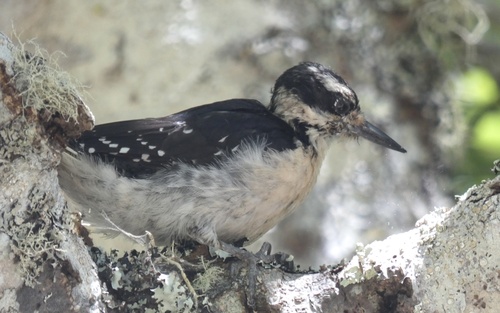
Closest Relatives at Tapantí-Macizo de la Muerte National Park




Before you go
What are the chances of seeing a Fiery-billed Aracari in Tapantí-Macizo de la Muerte National Park?
With luck
About 10% of wildlife watchers report a Fiery-billed Aracari sighting in Tapantí-Macizo de la Muerte National Park on a given day, based on 14 verified sightings from GBIF citizen-science data from 2019 to 2026. It is the 111th most-seen of the 467 birds we can rate there. Over three days the chance rises to about 20%, and over a week to about 50%, if each day is a fresh chance.
When is the best time to see a Fiery-billed Aracari in Tapantí-Macizo de la Muerte National Park?
April, June, August–September and December–February
In those months about 10% of wildlife watchers report a Fiery-billed Aracari in Tapantí-Macizo de la Muerte National Park on a given day, against under 5% in March, May, July and October–November, the lowest months.
What time of day is best to see a Fiery-billed Aracari?
Between 2 and 5 pm
Across all the parks we cover, that three-hour window holds the most Fiery-billed Aracari sightings with a recorded time, and about 9 in 10 of them come between 6 am and 6 pm: it is a daytime animal.
Is Tapantí-Macizo de la Muerte National Park the best place to see a Fiery-billed Aracari?
7th of 9
Of the 9 parks where we can rate Fiery-billed Aracari sightings, Tapantí-Macizo de la Muerte National Park ranks 7th at about 10%. The best odds are in Piedras Blancas National Park (Costa Rica, about 30%), Manuel Antonio National Park (Costa Rica, about 20%) and Marino Ballena National Park (Costa Rica, about 20%).
Where does the Fiery-billed Aracari sighting chance come from?
GBIF citizen-science records
It is estimated from how often the Fiery-billed Aracari is recorded against all the birds logged in Tapantí-Macizo de la Muerte National Park (14 verified sightings from 2019 to 2026), calibrated against known sighting rates. Figures are rounded to the nearest 10% because citizen-science data supports honest approximations, not decimals, and months with records from fewer than five people show "—". How it works.
