


Completed


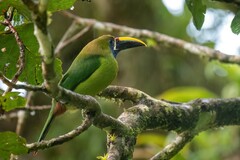


Northern Emerald-Toucanet
Aulacorhynchus prasinus
Silhouette: Edwin Price · PhyloPic
- KingdomAnimalia (Animals)
- PhylumChordata (Chordates)
- ClassAves (Birds)
- OrderPiciformes (Woodpeckers and Allies)
- FamilyRamphastidae (Toucans)
- GenusAulacorhynchus (Green Toucanets)
- SpeciesAulacorhynchus prasinus (Northern Emerald-Toucanet)
In 3 days ~40% in a week ~70%
1,690 Verified sightings at Tapantí-Macizo de la Muerte National Park From 2019 to 2026
20,996 In all 22 parks
July Best month
☀️ Diurnal When it's spotted
About the Northern Emerald-Toucanet
The northern emerald toucanet (Aulacorhynchus prasinus) also called the Wagler’s toucanet, is a species of bird in the toucan family Ramphastidae. It occurs in montane regions from southern Mexico to southern Panama. The northern emerald toucanet was formally described and illustrated in 1833 by the English ornithologist John Gould. He coined the binomial name Pteroglossus prasinus and specified the locality as Mexico. The specific epithet prasinus is Latin meaning "leek-green", from Ancient Greek πρασον/prason meaning "leek". The northern emerald toucanet is now one of eight toucanets placed in the genus Aulacorhynchus that was introduced in 1835 by Gould.
For many years the northern emerald toucanet was considered to have 14 subspecies. In 2008 the International Ornithological Committee (IOC) divided the subspecies into five species based on differences in morphology and mitochondrial DNA sequences. The species were the emerald toucanet (A. prasinus) with four subspecies, the blue-throated toucanet (A. caeruleogularis) with two subspecies, the white-throated toucanet (A. albivitta) with four subspecies, the black-throated toucanet (A. atrogularis) with three subspecies... Wikipedia →
Recent sightings of Northern Emerald-Toucanet in Tapantí-Macizo de la Muerte National Park
LIVEiNaturalistGlobal Distribution
Parks Where Found
| # | Park | Country | Daily sighting probability |
|---|---|---|---|
| 1 | Poás Volcano National Park | 🇨🇷 Costa Rica | |
| 2 | Monteverde Cloud Forest Reserve | 🇨🇷 Costa Rica | |
| 3 | Chirripó National Park | 🇨🇷 Costa Rica | |
| 4 | Los Quetzales National Park | 🇨🇷 Costa Rica | |
| 5 | El Triunfo | 🇲🇽 Mexico | |
| 6 | Volcán Barú National Park | 🇵🇦 Panama | |
| 7 | La Tigra National Park | 🇭🇳 Honduras | |
| 8 | Tapantí-Macizo de la Muerte National Park | 🇨🇷 Costa Rica | |
| 9 | La Amistad International Park (Panama) | 🇵🇦 Panama | |
| 10 | Celaque National Park | 🇭🇳 Honduras | |
| 11 | Cusuco National Park | 🇭🇳 Honduras | |
| 12 | Cañón del Sumidero National Park | 🇲🇽 Mexico | |
| 13 | Braulio Carrillo National Park | 🇨🇷 Costa Rica | |
| 14 | Darién National Park | 🇵🇦 Panama | |
| 15 | Tikal National Park | 🇬🇹 Guatemala | |
| 16 | Arenal Volcano National Park | 🇨🇷 Costa Rica | |
| 17 | Irazú Volcano National Park | 🇨🇷 Costa Rica | |
| 18 | Lago de Yojoa | 🇭🇳 Honduras | |
| 19 | Calakmul Biosphere Reserve | 🇲🇽 Mexico | |
| 20 | Rincón de la Vieja National Park | 🇨🇷 Costa Rica | |
| 21 | Cerro Azul Meámbar National Park | 🇭🇳 Honduras | |
| 22 | Tenorio Volcano National Park | 🇨🇷 Costa Rica |
Cities Where Found
| # | City | Country | Daily sighting probability |
|---|---|---|---|
| 1 | Guatemala City | 🇬🇹 Guatemala | |
| 2 | San José | 🇨🇷 Costa Rica |
Zoos & Centres Where Found
| # | Zoo / Centre | Country | |
|---|---|---|---|
| 1 | SeaWorld Abu Dhabi | 🇦🇪 United Arab Emirates | |
| 2 | La Paz Waterfall Gardens | 🇨🇷 Costa Rica | |
| 3 | Parque del pueblo | 🇲🇽 Mexico | |
| 4 | Yaguar Xoo | 🇲🇽 Mexico | |
| 5 | Macaw mountain bird park | 🇭🇳 Honduras | |
| 6 | Acuario Inbursa | 🇲🇽 Mexico | |
| 7 | Zoológico Miguél Álvarez del Toro | 🇲🇽 Mexico |
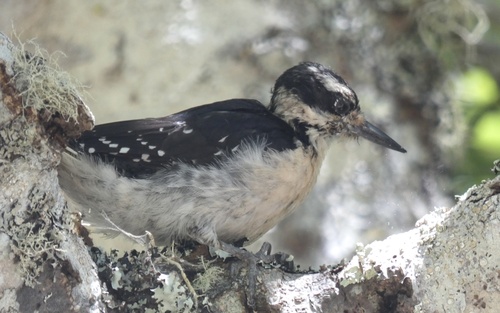
Closest Relatives at Tapantí-Macizo de la Muerte National Park




Before you go
What are the chances of seeing a Northern Emerald-Toucanet in Tapantí-Macizo de la Muerte National Park?
Possible
About 20% of wildlife watchers report a Northern Emerald-Toucanet sighting in Tapantí-Macizo de la Muerte National Park on a given day, based on 1,690 verified sightings from GBIF citizen-science data from 2019 to 2026. It is the 44th most-seen of the 467 birds we can rate there. Over three days the chance rises to about 40%, and over a week to about 70%, if each day is a fresh chance.
When is the best time to see a Northern Emerald-Toucanet in Tapantí-Macizo de la Muerte National Park?
July
In that month about 30% of wildlife watchers report a Northern Emerald-Toucanet in Tapantí-Macizo de la Muerte National Park on a given day, against about 10% in January–February and October, the lowest months.
What time of day is best to see a Northern Emerald-Toucanet?
Between 7 and 10 am
Across all the parks we cover, that three-hour window holds the most Northern Emerald-Toucanet sightings with a recorded time, and about 9 in 10 of them come between 6 am and 6 pm: it is a daytime animal.
Is Tapantí-Macizo de la Muerte National Park the best place to see a Northern Emerald-Toucanet?
8th of 22
Of the 22 parks where we can rate Northern Emerald-Toucanet sightings, Tapantí-Macizo de la Muerte National Park ranks 8th at about 20%. The best odds are in Poás Volcano National Park (Costa Rica, about 70%), Monteverde Cloud Forest Reserve (Costa Rica, about 60%) and Chirripó National Park (Costa Rica, about 40%). All parks ranked.
Which relatives of the Northern Emerald-Toucanet live in Tapantí-Macizo de la Muerte National Park?
Same family: Ramphastidae
The closest relatives of the Northern Emerald-Toucanet that you can see in Tapantí-Macizo de la Muerte National Park (family Ramphastidae, Toucans) are Keel-billed Toucan (about 10%) and Fiery-billed Aracari (about 10%), with each one's daily chance of a sighting.
Where does the Northern Emerald-Toucanet sighting chance come from?
GBIF citizen-science records
It is estimated from how often the Northern Emerald-Toucanet is recorded against all the birds logged in Tapantí-Macizo de la Muerte National Park (1,690 verified sightings from 2019 to 2026), calibrated against known sighting rates. Figures are rounded to the nearest 10% because citizen-science data supports honest approximations, not decimals, and months with records from fewer than five people show "—". How it works.
