Common Fruit-Piercing Moth

Common Fruit-Piercing Moth

Eudocima phalonia

Daily sighting probability ~10% · With luck
at Taroko National Park

In 3 days ~20% in a week ~40%

7 Verified sightings at Taroko National Park From 2019 to 2026
63 In all 6 parks
November Best month
☀️🌙 Day & Night When it's spotted

About the Common Fruit-Piercing Moth

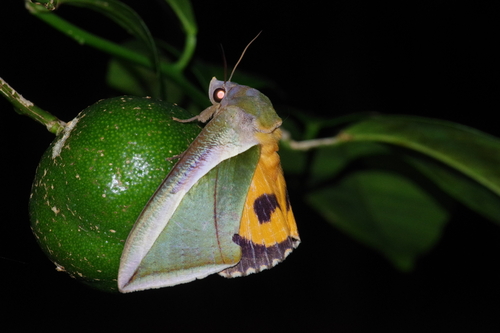
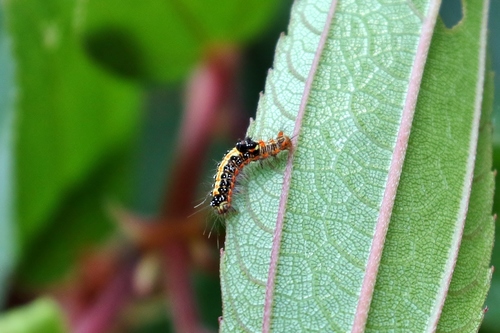
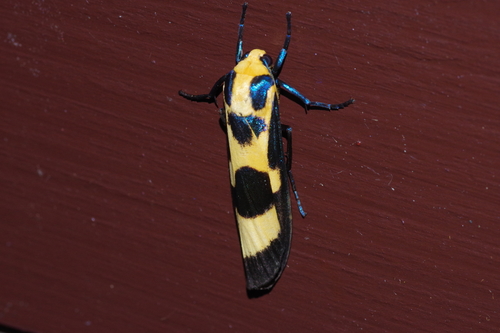
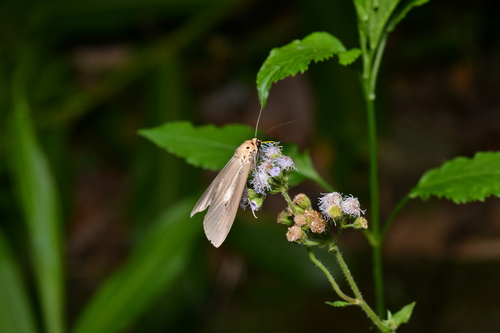
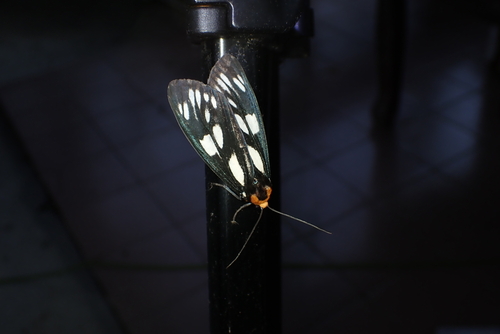
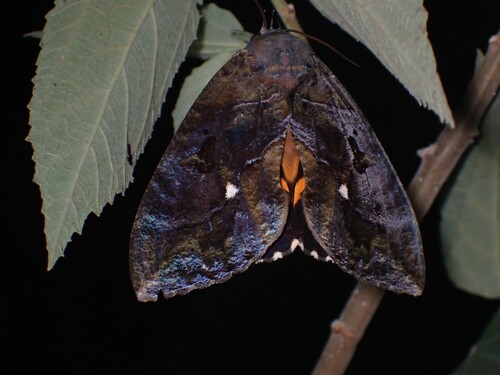
Eudocima phalonia, the common fruit-piercing moth, is a fruit piercing moth of the family Erebidae. The species was first described by Carl Linnaeus in his 1763 Centuria Insectorum. It is found in large parts of the tropics, mainly in Asia, Africa and Australia but introduced into other areas such as Hawaii, New Zealand and the Society Islands. It is one of major fruit pests in the world.

The wingspan is about 80–94 mm in male. Palpi with third joint long and spatulate at extremity. Forewings with non-crenulate cilia in male, crenulate in female. Head and thorax reddish brown with plum-color suffusion. Abdomen orange. Forewings reddish brown, usually with a greenish tinge and irrorated with dark specks. An oblique antemedial line present, which is generally dark and indistinct but sometimes pale and prominent. Reniform indistinct. A curve postmedial line found, which is almost always met by an oblique streak from apex. Hindwings orange, with a large black lunule beyond lower angle of cell. There is a marginal black band with cilia pale spots runs from costa to vein 2. Ventral side of forewings with orange postmedial band.

The wingspan is about 90–110 mm in female.... Wikipedia →
Global Distribution

Parks Where Found

# Park Country Daily sighting probability
1 Raja Ampat 🇮🇩 Indonesia
~20%
2 Daintree National Park 🇦🇺 Australia
~10%
3 Khao Yai National Park 🇹🇭 Thailand
~10%
4 Kaeng Krachan National Park 🇹🇭 Thailand
~10%
5 Taroko National Park 🇹🇼 Taiwan
~10%
6 Springbrook National Park 🇦🇺 Australia
~10%

Cities Where Found

# City Country Daily sighting probability
1 Jabalpur 🇮🇳 India
~30%
2 Chennai 🇮🇳 India
~10%
3 Pune 🇮🇳 India
~10%
4 Kuala Lumpur 🇲🇾 Malaysia
~10%
5 Hyderabad 🇮🇳 India
~10%
6 Bengaluru 🇮🇳 India
~10%
7 Manila 🇵🇭 Philippines
~10%
8 Hong Kong 🇨🇳 China
~10%
9 New Delhi 🇮🇳 India
~10%
10 Singapore 🇸🇬 Singapore
~10%

Before you go

What are the chances of seeing a Common Fruit-Piercing Moth in Taroko National Park?

With luck

About 10% of wildlife watchers report a Common Fruit-Piercing Moth sighting in Taroko National Park on a given day, based on 7 verified sightings from GBIF citizen-science data from 2019 to 2026. It is the 315th most-seen of the 447 insects we can rate there. Over three days the chance rises to about 20%, and over a week to about 40%, if each day is a fresh chance.

When is the best time to see a Common Fruit-Piercing Moth in Taroko National Park?

August and November

In those months about 20% of wildlife watchers report a Common Fruit-Piercing Moth in Taroko National Park on a given day, against under 5% in July, September–October and December–May, the lowest months.

What time of day is best to see a Common Fruit-Piercing Moth?

Between 8 and 11 pm

Across all the parks we cover, that three-hour window holds the most Common Fruit-Piercing Moth sightings with a recorded time, and about 6 in 10 of them come between 6 pm and 6 am: it is seen both by day and at night.

Is Taroko National Park the best place to see a Common Fruit-Piercing Moth?

5th of 6

Of the 6 parks where we can rate Common Fruit-Piercing Moth sightings, Taroko National Park ranks 5th at about 10%. The best odds are in Raja Ampat (Indonesia, about 20%), Daintree National Park (Australia, about 10%) and Khao Yai National Park (Thailand, about 10%).

Where does the Common Fruit-Piercing Moth sighting chance come from?

GBIF citizen-science records

It is estimated from how often the Common Fruit-Piercing Moth is recorded against all the insects logged in Taroko National Park (7 verified sightings from 2019 to 2026), calibrated against known sighting rates. Figures are rounded to the nearest 10% because citizen-science data supports honest approximations, not decimals, and months with records from fewer than five people show "—". How it works.

← Back to Taroko National Park