Completed
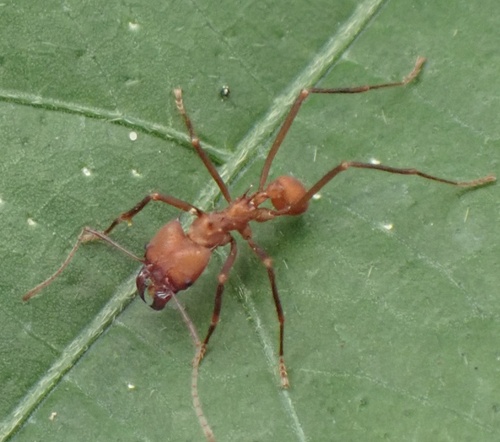

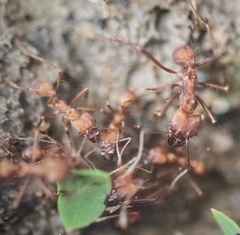
Colombian Leafcutter Ant
Atta colombica
- KingdomAnimalia (Animals)
- PhylumArthropoda (Arthropods)
- ClassInsecta (Insects)
- OrderHymenoptera (Ants, Bees, Wasps, and Sawflies)
- FamilyFormicidae (Ants)
- GenusAtta
- SpeciesAtta colombica (Colombian Leafcutter Ant)
In 3 days ~80% in a week >90%
47 Verified sightings at Tayrona National Natural Park From 2019 to 2026
218 In all 8 parks
July Best month
☀️ Diurnal When it's spotted
About the Colombian Leafcutter Ant
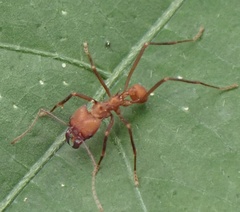
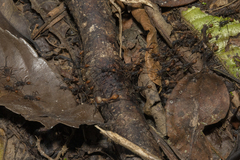
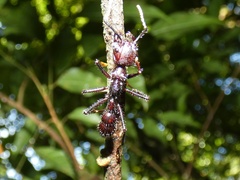
Atta colombica (often misspelled Atta columbica) is one of 47 species of leafcutter ants. This species is part of the Attini tribe (the fungus-growing ants). Workers of this species are maroon in colour, and are entirely matte, with no shiny spots.
This species ranges from Guatemala to Colombia, and can also be found in Costa Rica and Panama. A. colombica produces visible refuse dumps of spent fungus on the surface. These dumps often take the form of large, conical mounds, and are located to the side of the main soil mounds. Lines of workers carry the spent fungus from the nest to the dumps. They deposit the grayish-white pellets at the peak of the mounds, which produces the conical shape. This behaviour is different from A. cephalotes, which deposit their refuse in subterranean dumps.
The number of workers in a colony is estimated to be 1.0-2.5 million. A colony of A. colombica harvests, on average, 85–470 kg (187–1,036 lb) of plant biomass per year (dry weight), meaning they harvest a leaf area of about 835–4,550 m2 (8,990–48,980 ft2) annually.
The average number of different active males in each colony is believed... Wikipedia →
Recent sightings of Colombian Leafcutter Ant in Tayrona National Natural Park
LIVEiNaturalistGlobal Distribution
Parks Where Found
| # | Park | Country | Daily sighting probability |
|---|---|---|---|
| 1 | Tayrona National Natural Park | 🇨🇴 Colombia | |
| 2 | Piedras Blancas National Park | 🇨🇷 Costa Rica | |
| 3 | Soberanía National Park | 🇵🇦 Panama | |
| 4 | Carara National Park | 🇨🇷 Costa Rica | |
| 5 | Manuel Antonio National Park | 🇨🇷 Costa Rica | |
| 6 | Corcovado National Park | 🇨🇷 Costa Rica | |
| 7 | Arenal Volcano National Park | 🇨🇷 Costa Rica | |
| 8 | Parque Natural Metropolitano | 🇵🇦 Panama |
Cities Where Found
| # | City | Country | Daily sighting probability |
|---|---|---|---|
| 1 | Panama City | 🇵🇦 Panama |
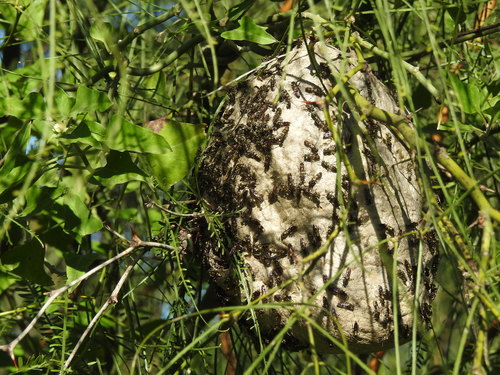
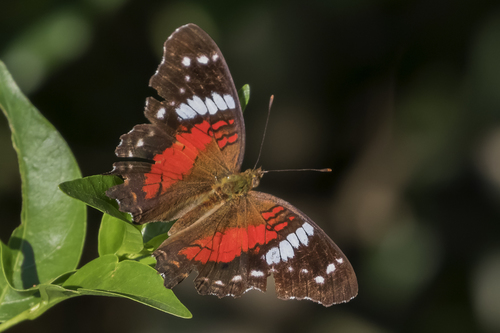
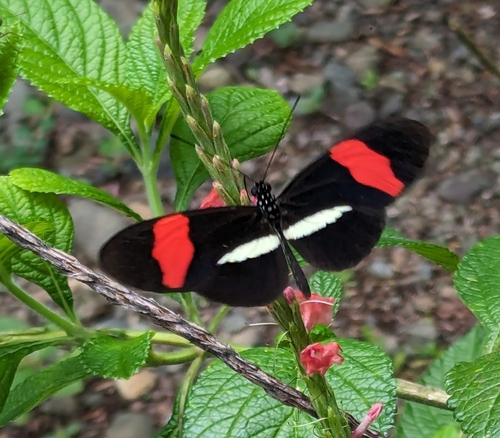
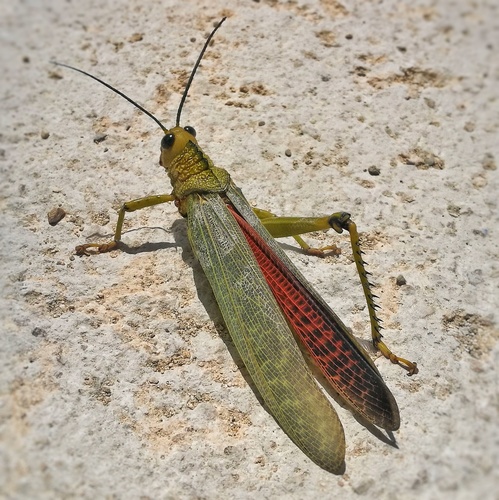
Closest Relatives at Tayrona National Natural Park
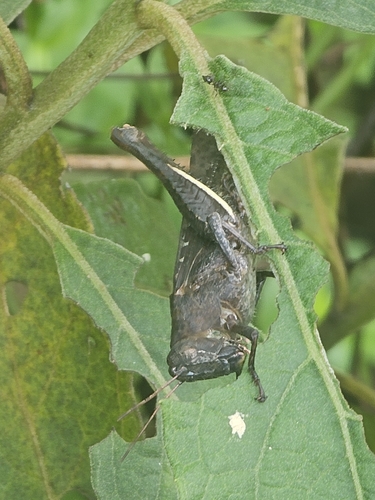

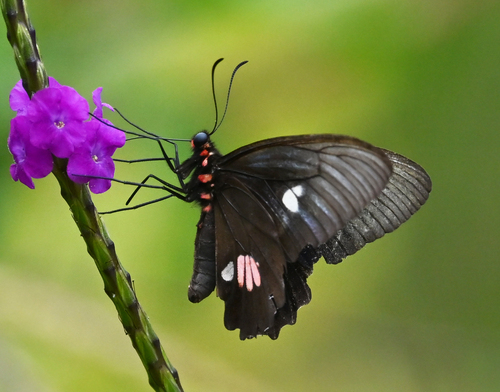
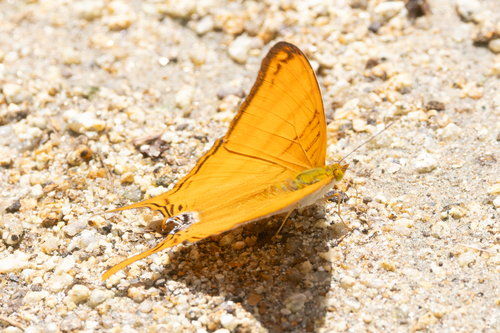

Before you go
What are the chances of seeing a Colombian Leafcutter Ant in Tayrona National Natural Park?
Likely
About 40% of wildlife watchers report a Colombian Leafcutter Ant sighting in Tayrona National Natural Park on a given day, based on 47 verified sightings from GBIF citizen-science data from 2019 to 2026. It is the most-seen of the 32 insects we can rate there. Over three days the chance rises to about 80%, and over a week to over 90%, if each day is a fresh chance.
When is the best time to see a Colombian Leafcutter Ant in Tayrona National Natural Park?
July
In that month about 60% of wildlife watchers report a Colombian Leafcutter Ant in Tayrona National Natural Park on a given day, against under 5% in October, the lowest month.
What time of day is best to see a Colombian Leafcutter Ant?
Between 10 am and 1 pm
Across all the parks we cover, that three-hour window holds the most Colombian Leafcutter Ant sightings with a recorded time, and about 9 in 10 of them come between 6 am and 6 pm: it is a daytime animal.
Is Tayrona National Natural Park the best place to see a Colombian Leafcutter Ant?
Yes
Of the 8 parks where we can rate Colombian Leafcutter Ant sightings, Tayrona National Natural Park has the highest daily chance: about 40%. Next come Piedras Blancas National Park (Costa Rica, about 20%) and Soberanía National Park (Panama, about 20%).
Which relatives of the Colombian Leafcutter Ant live in Tayrona National Natural Park?
Same family: Formicidae
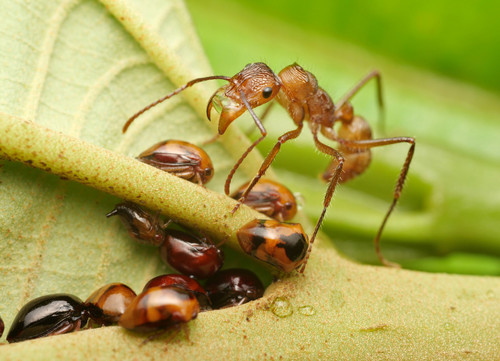
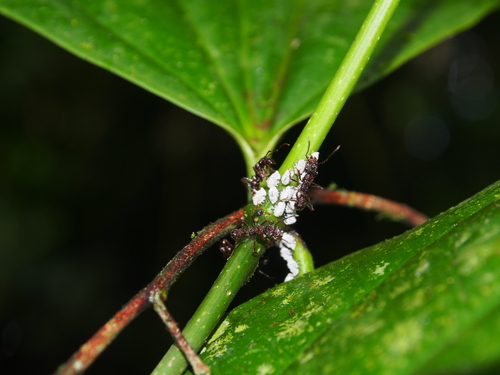
The closest relatives of the Colombian Leafcutter Ant that you can see in Tayrona National Natural Park (family Formicidae, Ants) are Ectatomma tuberculatum (about 20%) and Ectatomma ruidum (about 10%), with each one's daily chance of a sighting.
Where does the Colombian Leafcutter Ant sighting chance come from?
GBIF citizen-science records
It is estimated from how often the Colombian Leafcutter Ant is recorded against all the insects logged in Tayrona National Natural Park (47 verified sightings from 2019 to 2026), calibrated against known sighting rates. Figures are rounded to the nearest 10% because citizen-science data supports honest approximations, not decimals, and months with records from fewer than five people show "—". How it works.
