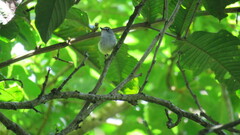

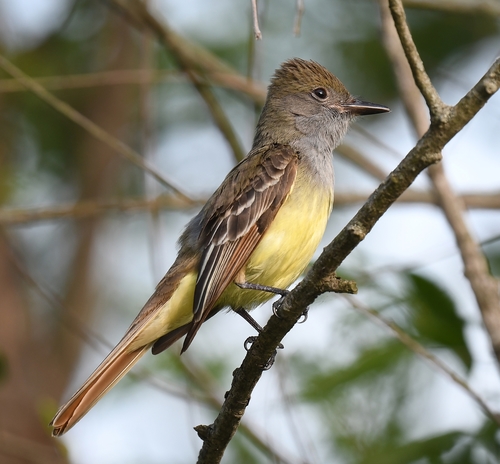
Black-capped Pygmy-Tyrant

Black-capped Pygmy-Tyrant

Myiornis atricapillus

Silhouette: Emily Willoughby · PhyloPic

LCLeast ConcernNTVUENCR
Daily sighting probability <5% · Rare
at Tortuguero National Park

In 3 days ~10%

64 Verified sightings at Tortuguero National Park From 2019 to 2026
2,159 In all 13 parks
May Best month
☀️ Diurnal When it's spotted

About the Black-capped Pygmy-Tyrant

The black-capped pygmy tyrant (Myiornis atricapillus) is a species of bird in the family Tyrannidae, the tyrant flycatchers. It is found in Colombia, Costa Rica, Ecuador, and Panama. The black-capped pygmy tyrant was originally described in 1875 as Orchilus atricapillus. At various times since it was described it has been placed in genus Perissotriccus and treated as a subspecies of the short-tailed pygmy tyrant (Myiornis ecaudatus). The black-capped and short-tailed pygmy tyrants apparently form a superspecies. Several authors have suggested that genus Myiornis should be merged into genus Hemitriccus.

The black-capped pygmy tyrant is monotypic. The black-capped pygmy tyrant is 6 to 8 cm (2.4 to 3.1 in) long; three individuals weighed 5.5 to 6 g (0.19 to 0.21 oz). It is the smallest passerine in Central America and among the smallest on Earth. Adult males have a black crown that fades to slate gray at its rear and on the nape. They have white lores that continue to a white eye-ring and a black spot by the eye on an otherwise slate gray face. Their back, rump, and uppertail coverts are bright olive green. Their greater and median wing... Wikipedia →

Sounds

Call0:48

Colombia · 2024

© David Monroy Rengifo · XC918388 · CC BY-NC-SA 4.0

Recording0:18

Costa Rica · 2022

© Johan Chaves · XC762293 · CC BY-NC-SA 4.0

Song0:29

Costa Rica · 2022

© Brendan Sloan · XC745059 · CC BY-NC-ND 4.0

Global Distribution

Parks Where Found

# Park Country Daily sighting probability
1 Utría National Natural Park 🇨🇴 Colombia
~20%
2 San Lorenzo Protected Forest 🇵🇦 Panama
~10%
3 Soberanía National Park 🇵🇦 Panama
~10%
4 Darién National Park 🇵🇦 Panama
~10%
5 Gandoca-Manzanillo Wildlife Refuge 🇨🇷 Costa Rica
~10%
6 Cahuita National Park 🇨🇷 Costa Rica
~10%
7 Bastimentos Island National Marine Park 🇵🇦 Panama
~10%
8 La Amistad International Park (Panama) 🇵🇦 Panama
<5%
9 Farallones de Cali National Natural Park 🇨🇴 Colombia
<5%
10 Tortuguero National Park 🇨🇷 Costa Rica
<5%
11 Braulio Carrillo National Park 🇨🇷 Costa Rica
<5%
12 Tenorio Volcano National Park 🇨🇷 Costa Rica
<5%
13 Arenal Volcano National Park 🇨🇷 Costa Rica
<5%

Before you go

What are the chances of seeing a Black-capped Pygmy-Tyrant in Tortuguero National Park?

Rare

Under 5% of wildlife watchers report a Black-capped Pygmy-Tyrant sighting in Tortuguero National Park on a given day, based on 64 verified sightings from GBIF citizen-science data from 2019 to 2026. It is the 196th most-seen of the 348 birds we can rate there. Over three days the chance rises to about 10%, if each day is a fresh chance.

When is the best time to see a Black-capped Pygmy-Tyrant in Tortuguero National Park?

May and June

In those months about 10% of wildlife watchers report a Black-capped Pygmy-Tyrant in Tortuguero National Park on a given day, against under 5% in July to April, the lowest months.

What time of day is best to see a Black-capped Pygmy-Tyrant?

Between 8 and 11 am

Across all the parks we cover, that three-hour window holds the most Black-capped Pygmy-Tyrant sightings with a recorded time, and about 9 in 10 of them come between 6 am and 6 pm: it is a daytime animal.

Which relatives of the Black-capped Pygmy-Tyrant live in Tortuguero National Park?

Same family: Tyrannidae

The closest relatives of the Black-capped Pygmy-Tyrant that you can see in Tortuguero National Park (family Tyrannidae, Tyrant Flycatchers) are Great Kiskadee (about 70%), Tropical Kingbird (about 50%) and Social Flycatcher (about 50%), with each one's daily chance of a sighting.

Where does the Black-capped Pygmy-Tyrant sighting chance come from?

GBIF citizen-science records

It is estimated from how often the Black-capped Pygmy-Tyrant is recorded against all the birds logged in Tortuguero National Park (64 verified sightings from 2019 to 2026), calibrated against known sighting rates. Figures are rounded to the nearest 10% because citizen-science data supports honest approximations, not decimals, and months with records from fewer than five people show "—". How it works.

← Back to Tortuguero National Park