About the Oak Eggar
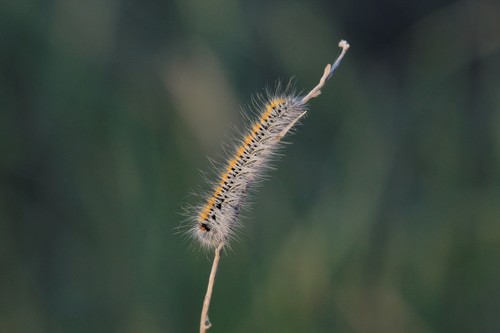
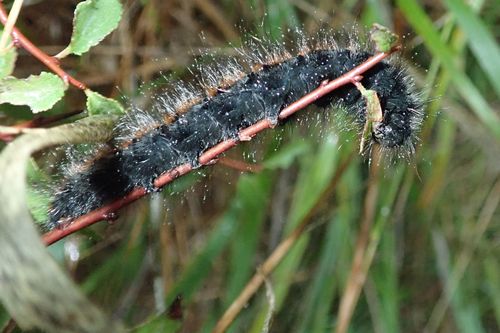
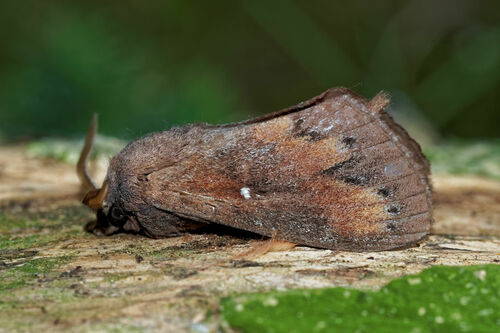
The oak eggar (Lasiocampa quercus) is a common moth of the family Lasiocampidae found in Europe and northern and western parts of Asia. It feeds on a variety of plant species (mainly heather and bilberry), and may develop over two years in higher latitudes, where it may be known as the northern eggar. Its specific name quercus refers to the fact that its cocoon generally resembles an acorn, not that its primary food source is oak.
The oak eggar's habitat is wide-ranging, including scrub, heath, moor, downland, hedges and sea cliffs, reflecting the larva's very varied range of food plants. The moth's wingspan is about 45 mm (male) to 75 mm (female), the female being larger and paler than the male. It is Britain's largest day-flying moth.
The oak eggar is on the wing for about two months between May and September, depending on the latitude. In more northerly latitudes, development can span two years, with larvae overwintering the first year, and the pupae in the second year. In northern areas it is known as the northern eggar; this was formerly thought to be a separate species, but is generally assumed to be a subspecies Lasiocampa quercus callunae... Wikipedia →