About the Ruddy Mongoose
The ruddy mongoose (Urva smithii) is a species of mongoose native to the forests of India and Sri Lanka. It is classified as least concern in the IUCN Red List. In 1837, British zoologist John Edward Gray proposed the scientific name Herpestes smithii for a zoological specimen in the collection of the British Natural History Museum. Different species names were proposed by various biologists over the years for the ruddy mongooses. In 2009, the Asian mongooses were classified under a new genus, Urva. Three different sub-species have been recognized: smithii, thysanurus, and zeylanius.
The ruddy mongoose is found in forests and shrub lands in India and Sri Lanka. It is mainly a forest dweller and prefers more secluded areas. It has also been recorded to forage in secluded paddy fields in the region. It is classified as least concern in the IUCN Red List.
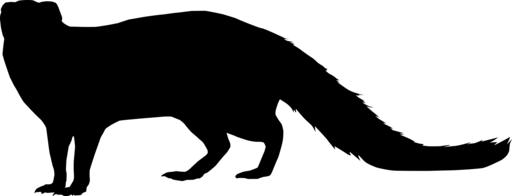
The ruddy mongoose is a large mongoose with a greyish-brown fur. It has an average head to body length of 40–45 cm (16–18 in) and a 36 cm (14 in) long tail. The long tail features a darker tasseled tip, which is usually curved upward, and is visible from a distance.
��2... Wikipedia →