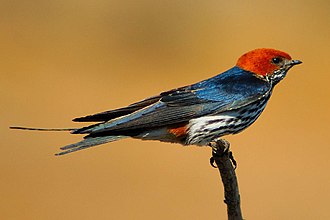
Kurrichane Thrush

Kurrichane Thrush

Turdus libonyana

Silhouette: Sharon Wegner-Larsen · PhyloPic

LCLeast ConcernNTVUENCR
Daily sighting probability ~40% · Likely
at uMkhuze Game Reserve

In 3 days ~80% in a week >90%

250 Verified sightings at uMkhuze Game Reserve From 2019 to 2026
2,987 In all 16 parks
October Best month
☀️ Diurnal When it's spotted

About the Kurrichane Thrush

The Kurrichane thrush (Turdus libonyana) is a species of bird in the thrush family Turdidae. The species is found from central through to southern Africa. Its natural habitat is dry savanna and woodland, predominantly miombo woodland.

The Kurrichane thrush was described in 1836 by the zoologist Andrew Smith, on the basis of a specimen collected in the Transvaal in South Africa. It was originally assigned to the defunct genus Merula. The species is a sister species to the Comoro thrush.

The specific epithet of the Kurrichane thrush, libonyana, is derived from the Tswana name for the red-billed buffalo weaver, Lebonyana. It was given by mistake to this species, possibly because it also has a reddish bill. Its common name is derived from a corruption of Kaditshwene (rendered as 'Kurrichane'), a former town in northern South Africa where the original specimen was collected.

It is found in Angola, Botswana, Burundi, Democratic Republic of the Congo, Eswatini, Lesotho, Malawi, Mozambique, Namibia, South Africa, Tanzania, Zambia, and Zimbabwe. The Kurrichane thrush is 21 to 23 cm (8.3–9.1 in) long and weighs around... Wikipedia →

Sounds

Call1:15

Botswana · 2023

© Marc Anderson · XC1004838 · CC BY-NC-ND 4.0

Song0:26

Zimbabwe · 2024

© Dries Van de Loock · XC963078 · CC BY-NC-ND 4.0

Alarm call0:09

South Africa · 1968

© Nature sounds by Simply Birding · XC646385 · CC BY-NC-ND 4.0

Global Distribution

Parks Where Found

# Park Country Daily sighting probability
1 uMkhuze Game Reserve 🇿🇦 South Africa
~40%
2 Gonarezhou National Park 🇿🇼 Zimbabwe
~30%
3 Pilanesberg National Park 🇿🇦 South Africa
~30%
4 Kruger National Park 🇿🇦 South Africa
~20%
5 Mikumi National Park 🇹🇿 Tanzania
~20%
6 Lower Zambezi National Park 🇿🇲 Zambia
~20%
7 Mana Pools National Park 🇿🇼 Zimbabwe
~20%
8 Gorongosa National Park 🇲🇿 Mozambique
~10%
9 Hwange National Park 🇿🇼 Zimbabwe
~10%
10 Hluhluwe-Imfolozi Park 🇿🇦 South Africa
~10%
11 Moremi Game Reserve 🇧🇼 Botswana
~10%
12 Liwonde National Park 🇲🇼 Malawi
~10%
13 Chobe National Park 🇧🇼 Botswana
~10%
14 Kafue National Park 🇿🇲 Zambia
<5%
15 iSimangaliso Wetland Park 🇿🇦 South Africa
<5%
16 South Luangwa National Park 🇿🇲 Zambia
<5%

Cities Where Found

# City Country Daily sighting probability
1 Harare 🇿🇼 Zimbabwe
~50%
2 Pretoria 🇿🇦 South Africa
~20%
3 Durban 🇿🇦 South Africa
~10%
4 Maputo 🇲🇿 Mozambique
~10%
5 Lusaka 🇿🇲 Zambia
~10%
6 Lilongwe 🇲🇼 Malawi
~10%
7 Johannesburg 🇿🇦 South Africa
<5%

Before you go

What are the chances of seeing a Kurrichane Thrush in uMkhuze Game Reserve?

Likely

About 40% of wildlife watchers report a Kurrichane Thrush sighting in uMkhuze Game Reserve on a given day, based on 250 verified sightings from GBIF citizen-science data from 2019 to 2026. It is the 42nd most-seen of the 283 birds we can rate there. Over three days the chance rises to about 80%, and over a week to over 90%, if each day is a fresh chance.

When is the best time to see a Kurrichane Thrush in uMkhuze Game Reserve?

October

In that month about 70% of wildlife watchers report a Kurrichane Thrush in uMkhuze Game Reserve on a given day, against about 20% in September, the lowest month.

What time of day is best to see a Kurrichane Thrush?

Between 2 and 5 pm

Across all the parks we cover, that three-hour window holds the most Kurrichane Thrush sightings with a recorded time, and about 9 in 10 of them come between 6 am and 6 pm: it is a daytime animal.

Is uMkhuze Game Reserve the best place to see a Kurrichane Thrush?

Yes

Of the 16 parks where we can rate Kurrichane Thrush sightings, uMkhuze Game Reserve has the highest daily chance: about 40%. Next come Gonarezhou National Park (Zimbabwe, about 30%) and Pilanesberg National Park (South Africa, about 30%). All parks ranked.

Where does the Kurrichane Thrush sighting chance come from?

GBIF citizen-science records

It is estimated from how often the Kurrichane Thrush is recorded against all the birds logged in uMkhuze Game Reserve (250 verified sightings from 2019 to 2026), calibrated against known sighting rates. Figures are rounded to the nearest 10% because citizen-science data supports honest approximations, not decimals, and months with records from fewer than five people show "—". How it works.

← Back to uMkhuze Game Reserve