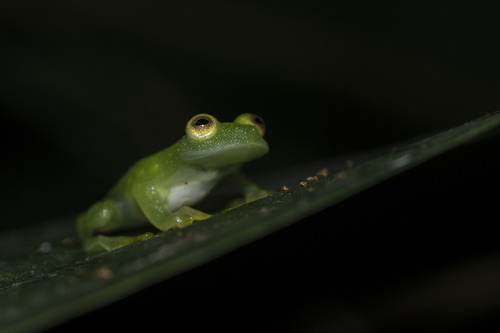
Kokoe Poison Frog

Kokoe Poison Frog

Phyllobates aurotaenia

Silhouette: Andy Wilson · PhyloPic

LCLeast ConcernNTVUENCR
Daily sighting probability ~50% · Likely
at Utría National Natural Park

In 3 days ~90% in a week >90%

15 Verified sightings at Utría National Natural Park From 2019 to 2026
15 In 1 park
February Best month
☀️ Diurnal When it's spotted

About the Kokoe Poison Frog

Phyllobates aurotaenia is a member of the frog family Dendrobatidae, which are found in the tropical environments of Central and South America. First described by zoologist George Albert Boulenger in 1913, P. aurotaenia is known for being the third most poisonous frog in the world. It is the smallest of the poison dart frogs in the Phyllobates genus and is endemic to the Pacific coast of Colombia.

Wild specimens store batrachotoxin in glands in their skin, which can be fatal to humans in doses as small as 100 μg. The unique lethality of their poison is a trait often exploited by certain Native American peoples of Colombia for hunting.

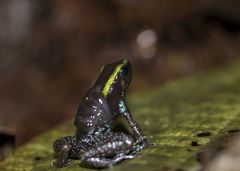
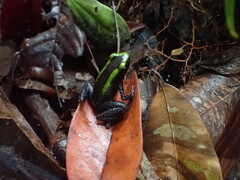
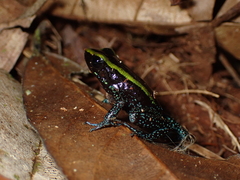
The members of this species are characterized by: black dorsums, sometimes covered by orange suffusions; green, yellow, orange, or brownish gold dorsolateral stripes; and black abdomens with blue or green dots. The name Phyllobates aurotaenia is currently applied to two forms: a smaller, large-stripe form and a larger, small-stripe form. These forms are separated by a ravine yet retain the ability to interbreed.

The number and range of P. aurotaenia is declining, primarily due to loss of habitat, and is currently classified as Least Concern by the IUCN... Wikipedia →

Global Distribution

Parks Where Found

# Park Country Daily sighting probability
1 Utría National Natural Park 🇨🇴 Colombia
~50%

More parks will be added in future updates.

Before you go

What are the chances of seeing a Kokoe Poison Frog in Utría National Natural Park?

Likely

About 50% of wildlife watchers report a Kokoe Poison Frog sighting in Utría National Natural Park on a given day, based on 15 verified sightings from GBIF citizen-science data from 2019 to 2026. It is the 3rd most-seen of the 9 amphibians we can rate there. Over three days the chance rises to about 90%, and over a week to over 90%, if each day is a fresh chance.

When is the best time to see a Kokoe Poison Frog in Utría National Natural Park?

February

In that month about 80% of wildlife watchers report a Kokoe Poison Frog in Utría National Natural Park on a given day, against about 10% in January, the lowest month. That is one of Utría National Natural Park's driest months, with about 270 mm of rain against 710 mm in October. May has too few records to rate.

What time of day is best to see a Kokoe Poison Frog?

Between 9 am and noon

Across all the parks we cover, that three-hour window holds the most Kokoe Poison Frog sightings with a recorded time, and about 9 in 10 of them come between 6 am and 6 pm: it is a daytime animal.

Where else can you see a Kokoe Poison Frog?

Only Utría National Natural Park, in our data

Utría National Natural Park is the only park on Wallace's Line with enough records to rate Kokoe Poison Frog sightings: about 50% of wildlife watchers there report one on a given day.

Where does the Kokoe Poison Frog sighting chance come from?

GBIF citizen-science records

It is estimated from how often the Kokoe Poison Frog is recorded against all the amphibians logged in Utría National Natural Park (15 verified sightings from 2019 to 2026), calibrated against known sighting rates. Figures are rounded to the nearest 10% because citizen-science data supports honest approximations, not decimals, and months with records from fewer than five people show "—". How it works.

← Back to Utría National Natural Park