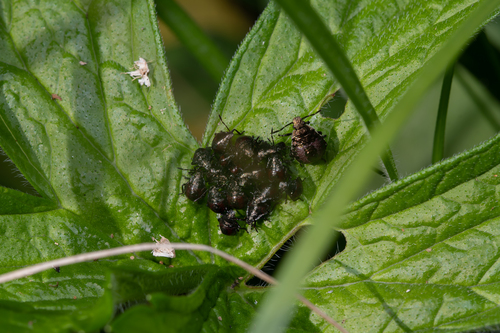
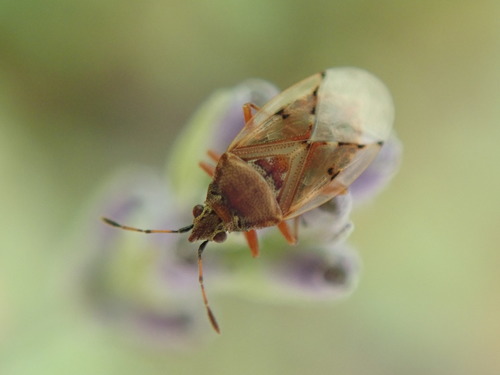
Mottled Stink Bug

Mottled Stink Bug

Rhaphigaster nebulosa

Daily sighting probability <5% · Rare
at Wadden Sea National Park

In 3 days ~10% in a week ~30%

14 Verified sightings at Wadden Sea National Park From 2019 to 2026
158 In all 7 parks
December Best month
☀️ Diurnal When it's spotted

About the Mottled Stink Bug

Rhaphigaster nebulosa, common name mottled shieldbug, is a species of stink bug that belongs to the family Pentatomidae. It is native to Europe. This species is distributed throughout the Palearctic region, more commonly in the southern than in the northern parts of Central Europe (Austria, Croatia, France, Germany, Greece, Hungary, Italy, Luxembourg, Serbia, Slovenia, Spain, Switzerland, Turkey, United Kingdom), and is not known to occur in the United States.

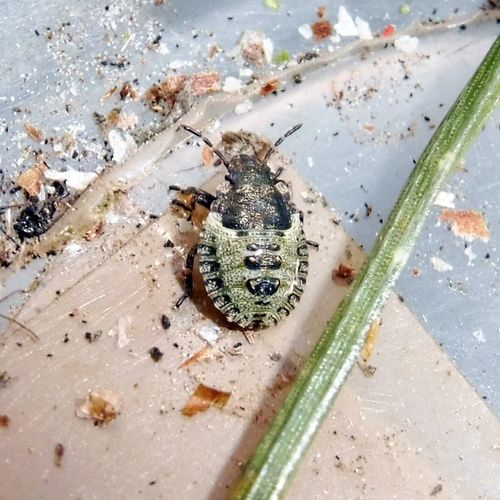
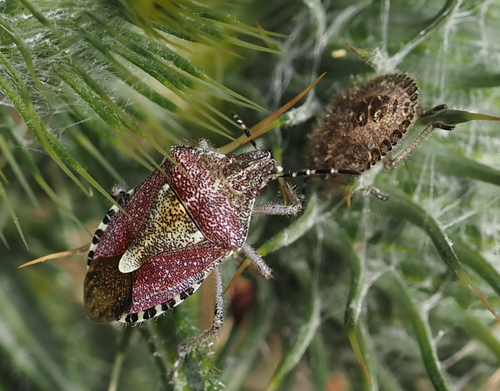
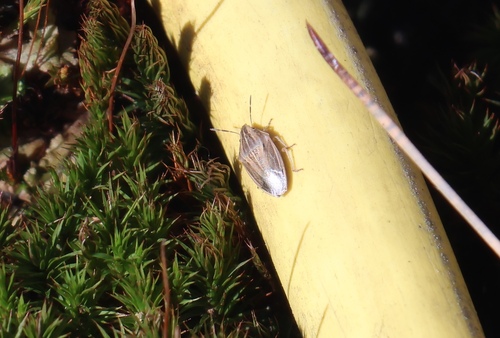
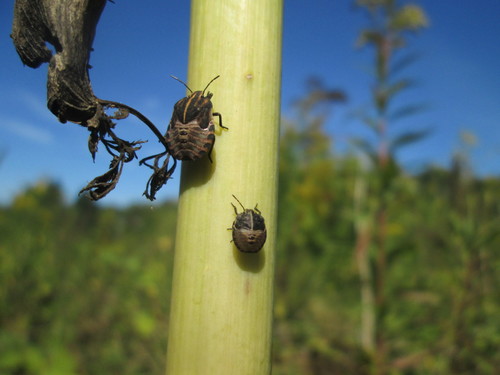
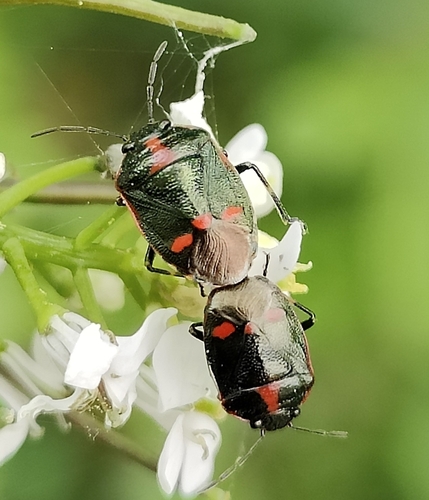
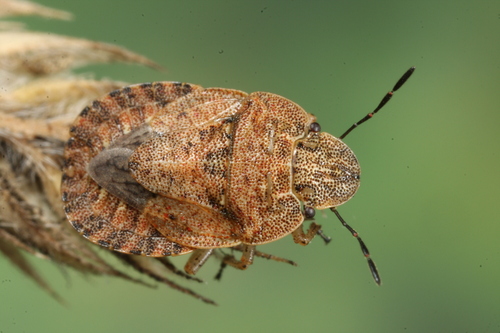
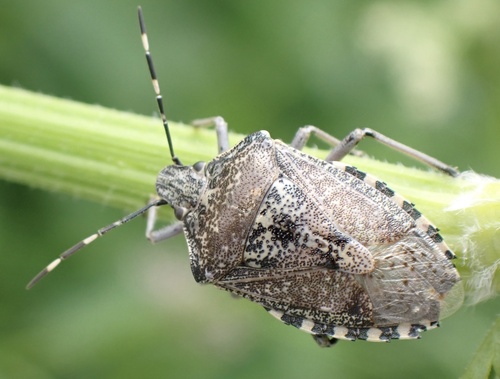
Mottled shieldbugs prefer warm deciduous forests, parks and gardens. Rhaphigaster nebulosa can reach a length of 14–16 millimetres (0.55–0.63 in). These large shieldbugs are hairless and coloured dirty yellowish-grey to brown with irregularly-distributed fovea on the top side of its body. The membrane of the forewings is often speckled dark brown, although these speckles are quite variable in extent. The lateral edge (connexivum) of the abdomen has black and yellow markings. The antennae are ringed with black and yellow markings on the 3rd to 5th segments. The underside of the body is light coloured and shows dark spots. On its underside, between the hips (on the 1st sternite... Wikipedia →
Global Distribution

Parks Where Found

# Park Country Daily sighting probability
1 Sierra Nevada National Park 🇪🇸 Spain
~20%
2 Cévennes National Park 🇫🇷 France
~10%
3 Bavarian Forest National Park 🇩🇪 Germany
~10%
4 Fertő-Hanság National Park 🇭🇺 Hungary
~10%
5 Pyrénées National Park 🇫🇷 France
~10%
6 Sierra de Guadarrama National Park 🇪🇸 Spain
~10%
7 Wadden Sea National Park 🇩🇪 Germany
<5%

Cities Where Found

# City Country Daily sighting probability
1 Hamburg 🇩🇪 Germany
~20%
2 Istanbul 🇹🇷 Turkey
~10%
3 Budapest 🇭🇺 Hungary
~10%
4 Lyon 🇫🇷 France
~10%
5 Warsaw 🇵🇱 Poland
~10%
6 Amsterdam 🇳🇱 Netherlands
~10%
7 Paris 🇫🇷 France
~10%
8 Prague 🇨🇿 Czechia
~10%
9 Izmir 🇹🇷 Turkey
~10%
10 Berlin 🇩🇪 Germany
~10%

Before you go

What are the chances of seeing a Mottled Stink Bug in Wadden Sea National Park?

Rare

Under 5% of wildlife watchers report a Mottled Stink Bug sighting in Wadden Sea National Park on a given day, based on 14 verified sightings from GBIF citizen-science data from 2019 to 2026. It is the 361st most-seen of the 818 insects we can rate there. Over three days the chance rises to about 10%, and over a week to about 30%, if each day is a fresh chance.

When is the best time to see a Mottled Stink Bug in Wadden Sea National Park?

April–May, September and December

In those months about 10% of wildlife watchers report a Mottled Stink Bug in Wadden Sea National Park on a given day, against under 5% in January–March, June–August and October–November, the lowest months.

What time of day is best to see a Mottled Stink Bug?

Between 1 and 4 pm

Across all the parks we cover, that three-hour window holds the most Mottled Stink Bug sightings with a recorded time, and about 8 in 10 of them come between 6 am and 6 pm: it is a daytime animal.

Which relatives of the Mottled Stink Bug live in Wadden Sea National Park?

Same family: Pentatomidae

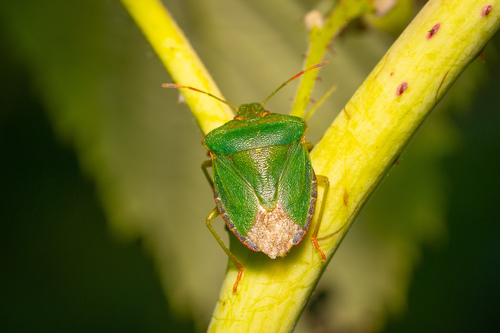
The closest relatives of the Mottled Stink Bug that you can see in Wadden Sea National Park (family Pentatomidae, Stink Bugs) are Green Shield Bug (about 10%), Forest Bug (about 10%) and Sloe Bug (about 10%), with each one's daily chance of a sighting.

Where does the Mottled Stink Bug sighting chance come from?

GBIF citizen-science records

It is estimated from how often the Mottled Stink Bug is recorded against all the insects logged in Wadden Sea National Park (14 verified sightings from 2019 to 2026), calibrated against known sighting rates. Figures are rounded to the nearest 10% because citizen-science data supports honest approximations, not decimals, and months with records from fewer than five people show "—". How it works.

← Back to Wadden Sea National Park