



Completed
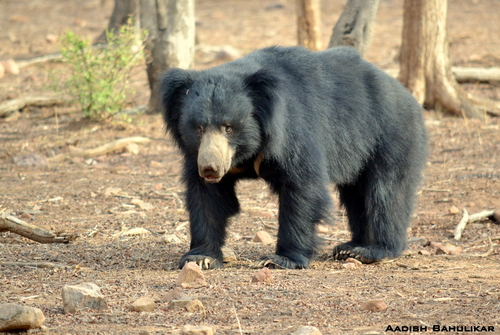


Sloth Bear
Melursus ursinus
Silhouette: Tracy A. Heath · PhyloPic
- KingdomAnimalia (Animals)
- PhylumChordata (Chordates)
- ClassMammalia (Mammals)
- OrderCarnivora (Carnivorans)
- FamilyUrsidae (Bears)
- GenusMelursus (Sloth Bears)
- SpeciesMelursus ursinus (Sloth Bear)
In 3 days ~80% in a week >90%
64 Verified sightings at Yala National Park From 2019 to 2026
291 In all 8 parks
June Best month
🌅 Crepuscular When it's spotted
About the Sloth Bear
The sloth bear (Melursus ursinus), also known as the Indian bear, is a myrmecophagous bear species native to the Indian subcontinent. It feeds on fruits, ants and termites. It is listed as vulnerable on the IUCN Red List, mainly because of habitat loss and degradation. It is the only species in the genus Melursus.
It has also been called "labiated bear" because of its long lower lip and palate used for sucking up insects. It has long, shaggy fur, a mane around the face, and long, sickle-shaped claws. It is lankier than brown and Asian black bears.
It shares features of insectivorous mammals and evolved during the Pleistocene from the ancestral ursine bear through divergent evolution. Sloth bears breed during spring and early summer and give birth near the beginning of winter. When their territories are encroached upon by humans, they sometimes attack them. Historically, humans have drastically reduced these bears' habitat and diminished their population by hunting them for food and products such as their bacula and claws. Sloth bears have been tamed and used as performing animals and as pets.
George Shaw in 1791 named the species Bradypus ursinus. In 1793, Meyer named... Wikipedia →
Recent sightings of Sloth Bear in Yala National Park
LIVEiNaturalistGlobal Distribution
Parks Where Found
| # | Park | Country | Daily sighting probability |
|---|---|---|---|
| 1 | Wilpattu National Park | 🇱🇰 Sri Lanka | |
| 2 | Yala National Park | 🇱🇰 Sri Lanka | |
| 3 | Chitwan National Park | 🇳🇵 Nepal | |
| 4 | Ranthambore National Park | 🇮🇳 India | |
| 5 | Kanha National Park | 🇮🇳 India | |
| 6 | Satpura National Park | 🇮🇳 India | |
| 7 | Bandhavgarh National Park | 🇮🇳 India | |
| 8 | Bandipur National Park | 🇮🇳 India |
Zoos & Centres Where Found
Closest Relatives at Yala National Park





Before you go
What are the chances of seeing a Sloth Bear in Yala National Park?
Likely
About 50% of wildlife watchers report a Sloth Bear sighting in Yala National Park on a given day, based on 64 verified sightings from GBIF citizen-science data from 2019 to 2026. It is the 12th most-seen of the 16 mammals we can rate there. Over three days the chance rises to about 80%, and over a week to over 90%, if each day is a fresh chance.
When is the best time to see a Sloth Bear in Yala National Park?
June and July
In those months about 70% of wildlife watchers report a Sloth Bear in Yala National Park on a given day, against about 10% in September, the lowest month. Those are among Yala National Park's driest months, with about 40 mm of rain a month against 340 mm in November.
What time of day is best to see a Sloth Bear?
Between 11 am and 2 pm
Across all the parks we cover, that three-hour window holds the most Sloth Bear sightings with a recorded time, and about 6 in 10 of them come between 6 am and 6 pm: it is most active around dawn and dusk.
Is Yala National Park the best place to see a Sloth Bear?
2nd of 8
Of the 8 parks where we can rate Sloth Bear sightings, Yala National Park ranks 2nd at about 50%. The best odds are in Wilpattu National Park (Sri Lanka, about 80%). All parks ranked.
Which relatives of the Sloth Bear live in Yala National Park?
Same order: Carnivora
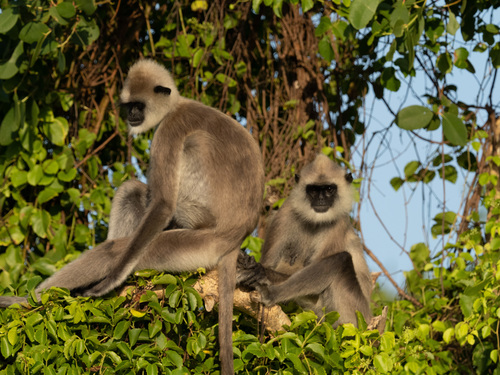
The closest relatives of the Sloth Bear that you can see in Yala National Park (order Carnivora, Carnivorans) are Ruddy Mongoose (about 80%), Leopard (about 80%) and Asian Jackal (about 60%), with each one's daily chance of a sighting.
Where does the Sloth Bear sighting chance come from?
GBIF citizen-science records
It is estimated from how often the Sloth Bear is recorded against all the mammals logged in Yala National Park (64 verified sightings from 2019 to 2026), calibrated against known sighting rates. Figures are rounded to the nearest 10% because citizen-science data supports honest approximations, not decimals, and months with records from fewer than five people show "—". How it works.
