
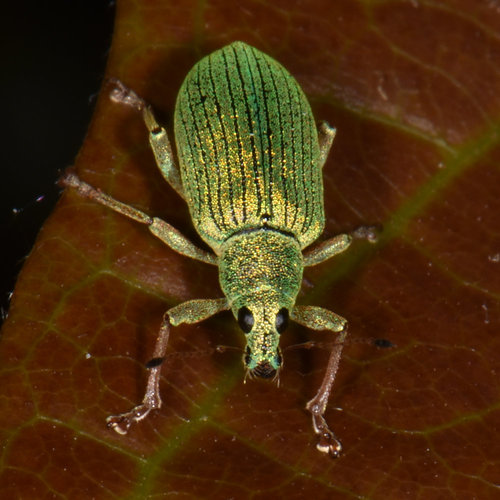
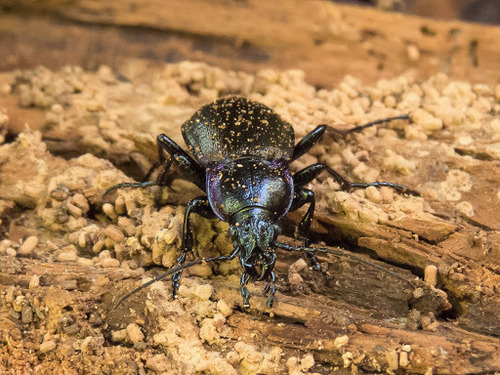

Tomentose Burying Beetle

Tomentose Burying Beetle

Nicrophorus tomentosus

Daily sighting probability ~10% · With luck
at Acadia National Park

In 3 days ~10% in a week ~30%

7 Verified sightings at Acadia National Park From 2019 to 2026
44 In all 3 parks
October Best month
☀️ Diurnal When it's spotted

About the Tomentose Burying Beetle

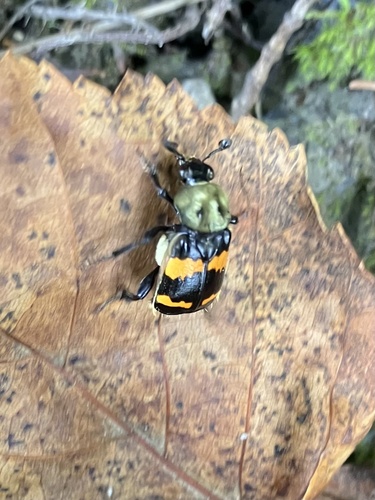
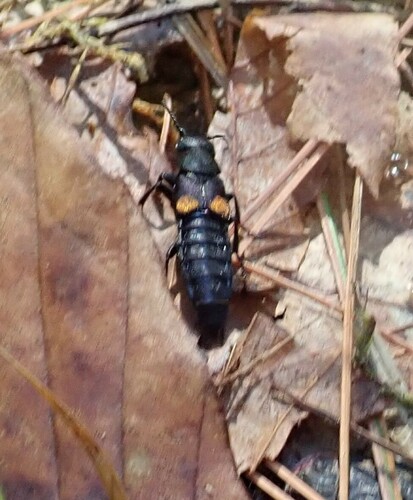
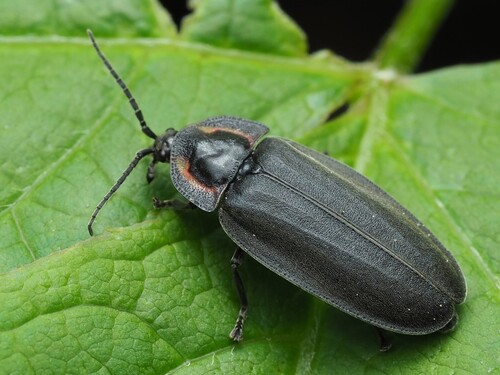
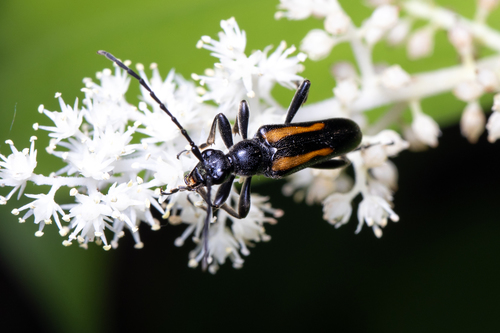
Nicrophorus tomentosus (gold-necked carrion beetle or tomentose burying beetle) is a species of burying beetle that was described by Friedrich Weber in 1801. The beetle belongs to the family Silphidae which are carrion beetles. The beetles have sensitive antennae that contain olfactory organs. Thus, the beetle can locate dead animals (carcass), and then as the name suggests, can bury them. However, unlike other burying beetles, N. tomentosus does not completely bury these brood carcasses. They instead dig a shallow hole under the carcass and cover it with leaf litter. Recognition of these beetles can be distinguished by its black color with orange markings on the wing covers (elytra).

The genus name, Nicrophorus, means “death carrier”; tomentosus means "covered in short hair", referring to the pronotum. There are several characteristics that differentiate Silphidae from other families. One characteristic is that N. tomentosus is about 11.2–19.0 millimeters in length. It also has a pair of striations on its fifth abdominal tergum. They also have a very large scutellum which can sometimes be as wide as its head. The segments of its antennae are all... Wikipedia →

Global Distribution

Parks Where Found

# Park Country Daily sighting probability
1 Shenandoah National Park 🇺🇸 United States
~10%
2 Great Smoky Mountains National Park 🇺🇸 United States
~10%
3 Acadia National Park 🇺🇸 United States
~10%

Cities Where Found

# City Country Daily sighting probability
1 Montreal 🇨🇦 Canada
<5%
2 Minneapolis [Saint Paul] 🇺🇸 United States
<5%
3 Boston 🇺🇸 United States
<5%
4 Toronto 🇨🇦 Canada
<5%
5 Philadelphia 🇺🇸 United States
<5%
6 New York City 🇺🇸 United States
<5%
7 Denver 🇺🇸 United States
<5%
8 Chicago 🇺🇸 United States
<5%
9 Washington 🇺🇸 United States
<5%

Before you go

What are the chances of seeing a Tomentose Burying Beetle in Acadia National Park?

With luck

About 10% of wildlife watchers report a Tomentose Burying Beetle sighting in Acadia National Park on a given day, based on 7 verified sightings from GBIF citizen-science data from 2019 to 2026. It is the 270th most-seen of the 405 insects we can rate there. Over three days the chance rises to about 10%, and over a week to about 30%, if each day is a fresh chance.

When is the best time to see a Tomentose Burying Beetle in Acadia National Park?

August to October

In those months about 10% of wildlife watchers report a Tomentose Burying Beetle in Acadia National Park on a given day, against under 5% in November to July, the lowest months.

What time of day is best to see a Tomentose Burying Beetle?

Between 11 am and 2 pm

Across all the parks we cover, that three-hour window holds the most Tomentose Burying Beetle sightings with a recorded time, and nearly all of them come between 6 am and 6 pm: it is a daytime animal.

Is Acadia National Park the best place to see a Tomentose Burying Beetle?

Among the best

Of the 3 parks where we can rate Tomentose Burying Beetle sightings, Acadia National Park ranks 3rd at about 10%, level with the leaders once rounded. The best odds are in Shenandoah National Park (United States, about 10%) and Great Smoky Mountains National Park (United States, about 10%).

Where does the Tomentose Burying Beetle sighting chance come from?

GBIF citizen-science records

It is estimated from how often the Tomentose Burying Beetle is recorded against all the insects logged in Acadia National Park (7 verified sightings from 2019 to 2026), calibrated against known sighting rates. Figures are rounded to the nearest 10% because citizen-science data supports honest approximations, not decimals, and months with records from fewer than five people show "—". How it works.

← Back to Acadia National Park