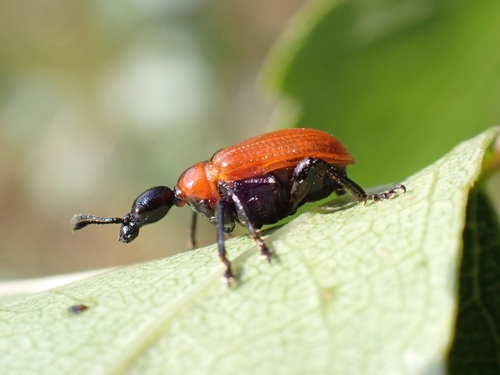
Hazel Leaf-Roller Weevil

Hazel Leaf-Roller Weevil

Apoderus coryli

Daily sighting probability ~10% · With luck
at Białowieża National Park

In 3 days ~30% in a week ~60%

6 Verified sightings at Białowieża National Park From 2019 to 2026
52 In all 5 parks
May Best month
☀️ Diurnal When it's spotted

About the Hazel Leaf-Roller Weevil

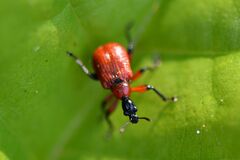
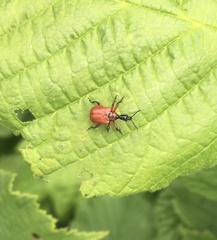
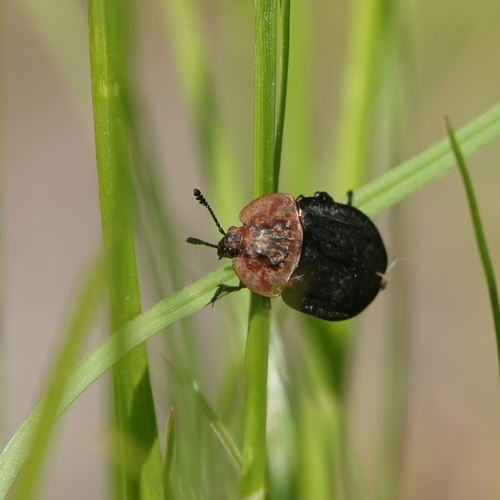
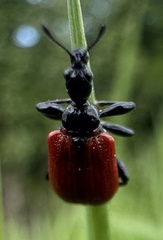
Apoderus coryli, the hazel-leaf roller weevil, is a species of leaf-rolling beetles belonging to the family Attelabidae subfamily Attelabinae. Because of the trunk-like elongated head, it is often mistakenly attributed to the weevil family Curculionidae.

This species is widespread in most of Europe (Albania, Austria, Belarus, Belgium, Bulgaria, Croatia, Czech Republic, Denmark, Estonia, Finland, France, Germany, Greece, Hungary, Italy, Luxembourg, Slovakia, United Kingdom), in the eastern Palearctic realm (China and Japan), and in the Near East.

Apoderus coryli prefers deciduous forests, especially at forest edges, but also parks and gardens where the host plant, Corylus avellana, occurs. Apoderus coryli can reach a length of 6–8 millimetres (0.24–0.31 in). These primitive weevils have a red shiny bell-shaped pronotum, a shiny black or dark brown head with protruding eyes, a distinct neck and short and rounded elytra. Their straight antennae are inserted near the base of the rostrum. The prothorax is much narrower than the base of the elytra on the abdomen. The scutellum is broad, triangular to trapezoidal and without stripes. The... Wikipedia →
Global Distribution

Parks Where Found

# Park Country Daily sighting probability
1 Białowieża National Park 🇵🇱 Poland
~10%
2 Snowdonia National Park 🇬🇧 United Kingdom
~10%
3 Bavarian Forest National Park 🇩🇪 Germany
~10%
4 Pyrénées National Park 🇫🇷 France
~10%
5 Cévennes National Park 🇫🇷 France
<5%

Cities Where Found

# City Country Daily sighting probability
1 Hamburg 🇩🇪 Germany
~10%
2 Birmingham 🇬🇧 United Kingdom
<5%
3 Kyiv 🇺🇦 Ukraine
<5%
4 Vienna 🇦🇹 Austria
<5%

Before you go

What are the chances of seeing a Hazel Leaf-Roller Weevil in Białowieża National Park?

With luck

About 10% of wildlife watchers report a Hazel Leaf-Roller Weevil sighting in Białowieża National Park on a given day, based on 6 verified sightings from GBIF citizen-science data from 2019 to 2026. It is the 111th most-seen of the 158 insects we can rate there. Over three days the chance rises to about 30%, and over a week to about 60%, if each day is a fresh chance.

When is the best time to see a Hazel Leaf-Roller Weevil in Białowieża National Park?

May and June

In those months about 20% of wildlife watchers report a Hazel Leaf-Roller Weevil in Białowieża National Park on a given day, against under 5% in August to April, the lowest months.

What time of day is best to see a Hazel Leaf-Roller Weevil?

Between 10 am and 1 pm

Across all the parks we cover, that three-hour window holds the most Hazel Leaf-Roller Weevil sightings with a recorded time, and about 9 in 10 of them come between 6 am and 6 pm: it is a daytime animal.

Is Białowieża National Park the best place to see a Hazel Leaf-Roller Weevil?

Yes

Of the 5 parks where we can rate Hazel Leaf-Roller Weevil sightings, Białowieża National Park has the highest daily chance: about 10%. Next come Snowdonia National Park (United Kingdom, about 10%) and Bavarian Forest National Park (Germany, about 10%).

Which relatives of the Hazel Leaf-Roller Weevil live in Białowieża National Park?

Same order: Coleoptera

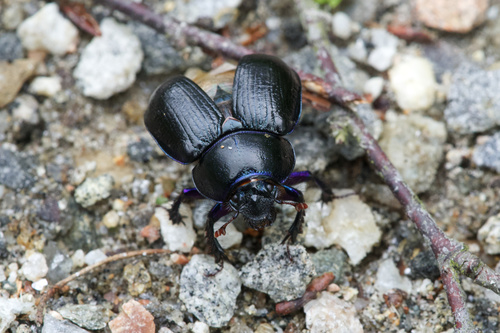
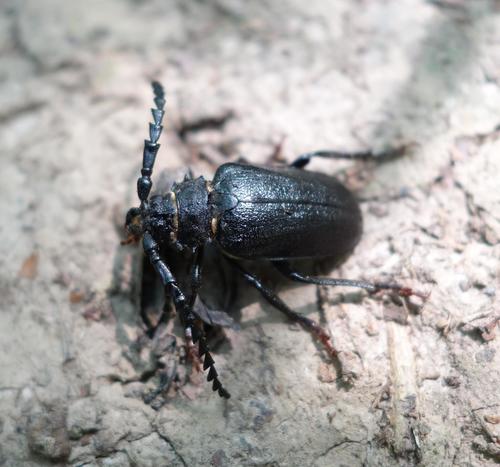
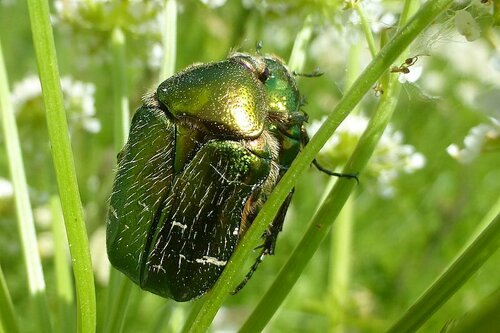
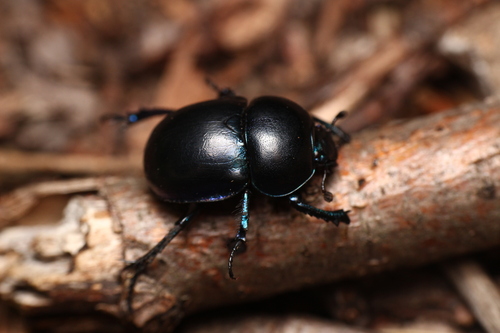
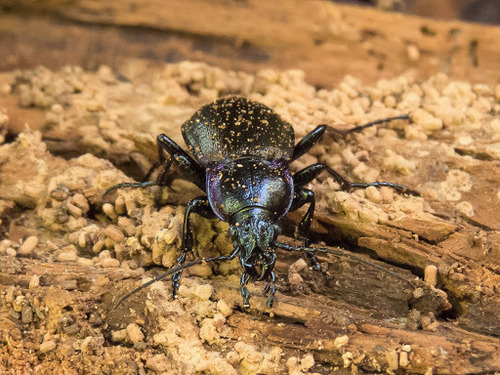
The closest relatives of the Hazel Leaf-Roller Weevil that you can see in Białowieża National Park (order Coleoptera, Beetles) are Woodland Dor Beetle (about 50%), The Tanner (about 40%) and European Rose Chafer (about 30%), with each one's daily chance of a sighting.

Where does the Hazel Leaf-Roller Weevil sighting chance come from?

GBIF citizen-science records

It is estimated from how often the Hazel Leaf-Roller Weevil is recorded against all the insects logged in Białowieża National Park (6 verified sightings from 2019 to 2026), calibrated against known sighting rates. Figures are rounded to the nearest 10% because citizen-science data supports honest approximations, not decimals, and months with records from fewer than five people show "—". How it works.

← Back to Białowieża National Park