
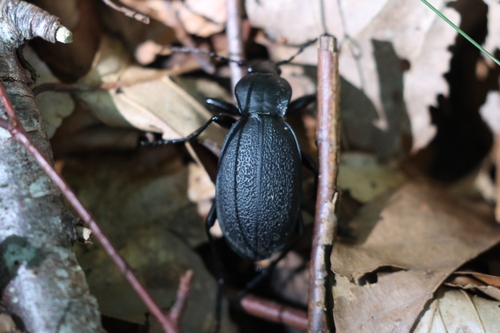

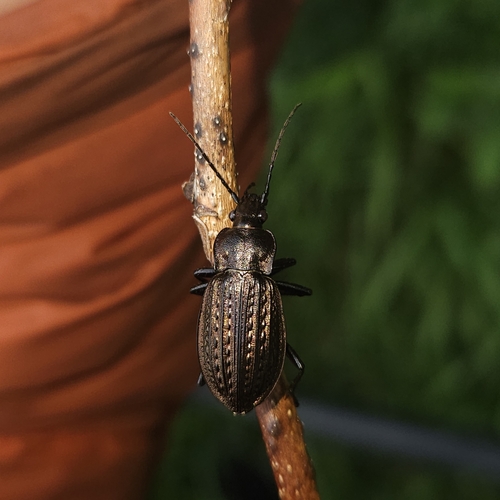
Woodland Dor Beetle

Woodland Dor Beetle

Anoplotrupes stercorosus

Daily sighting probability ~50% · Likely
at Białowieża National Park

In 3 days ~90% in a week >90%

117 Verified sightings at Białowieża National Park From 2019 to 2026
1,096 In all 19 parks
November Best month
☀️ Diurnal When it's spotted

About the Woodland Dor Beetle

Anoplotrupes stercorosus, the dor beetle, is a species of earth-boring dung beetle belonging to the family Geotrupidae, subfamily Geotrupinae. Varieties or forms that have been recognized at times include the following: A. stercorosus var. viridis (Dalla Torre, 1879)

This beetle is present throughout most of Europe and in Asia. It is also found in other regions of the world where cattle have been introduced, such as Australia. These beetles inhabit fresh areas of broadleaf forests, mainly beech forests; moist mixed forest; and fresh coniferous forests.

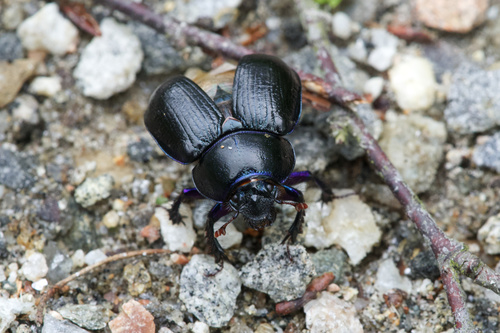
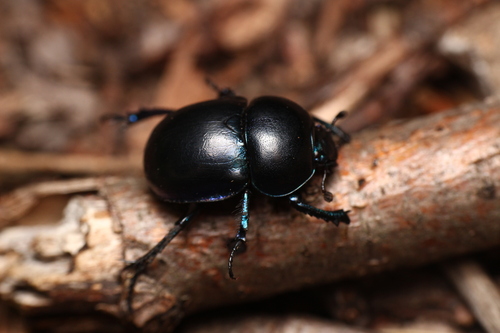
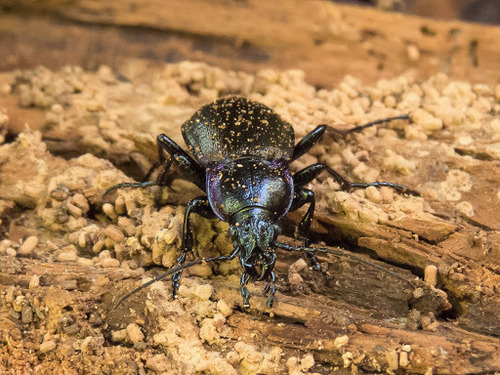
The adults of A. stercorosus grow up to 12–19 millimetres (0.47–0.75 in) long and therefore they do not reach the length of the very similar common dung beetle (Geotrupes stercorarius). The body colour is blue-black, while the underside is usually metallic blue. The elytra... Wikipedia →

Global Distribution

Parks Where Found

# Park Country Daily sighting probability
1 Białowieża National Park 🇵🇱 Poland
~50%
2 Cairngorms National Park 🇬🇧 United Kingdom
~40%
3 Gauja National Park 🇱🇻 Latvia
~40%
4 Ordesa y Monte Perdido National Park 🇪🇸 Spain
~30%
5 Snowdonia National Park 🇬🇧 United Kingdom
~30%
6 Tatra National Park 🇸🇰 Slovakia
~30%
7 Aigüestortes National Park 🇪🇸 Spain
~30%
8 Bavarian Forest National Park 🇩🇪 Germany
~30%
9 Triglav National Park 🇸🇮 Slovenia
~30%
10 Pyrénées National Park 🇫🇷 France
~20%
11 Plitvice Lakes National Park 🇭🇷 Croatia
~20%
12 Picos de Europa National Park 🇪🇸 Spain
~20%
13 Hohe Tauern National Park 🇦🇹 Austria
~20%
14 Cévennes National Park 🇫🇷 France
~20%
15 Biebrza National Park 🇵🇱 Poland
~20%
16 Ecrins National Park 🇫🇷 France
~10%
17 Mercantour National Park 🇫🇷 France
~10%
18 Wadden Sea National Park 🇩🇪 Germany
<5%
19 Sierra de Guadarrama National Park 🇪🇸 Spain
<5%

Cities Where Found

# City Country Daily sighting probability
1 Kyiv 🇺🇦 Ukraine
~10%
2 Helsinki 🇫🇮 Finland
~10%
3 Warsaw 🇵🇱 Poland
~10%
4 Stockholm 🇸🇪 Sweden
~10%
5 Essen 🇩🇪 Germany
~10%
6 Prague 🇨🇿 Czechia
~10%
7 Munich 🇩🇪 Germany
~10%
8 Novosibirsk 🇷🇺 Russia
~10%
9 Cologne 🇩🇪 Germany
~10%
10 Berlin 🇩🇪 Germany
~10%

Before you go

What are the chances of seeing a Woodland Dor Beetle in Białowieża National Park?

Likely

About 50% of wildlife watchers report a Woodland Dor Beetle sighting in Białowieża National Park on a given day, based on 117 verified sightings from GBIF citizen-science data from 2019 to 2026. It is the most-seen of the 158 insects we can rate there. Over three days the chance rises to about 90%, and over a week to over 90%, if each day is a fresh chance.

When is the best time to see a Woodland Dor Beetle in Białowieża National Park?

November

In that month about 80% of wildlife watchers report a Woodland Dor Beetle in Białowieża National Park on a given day, against about 10% in December to February, the lowest months.

What time of day is best to see a Woodland Dor Beetle?

Between 1 and 4 pm

Across all the parks we cover, that three-hour window holds the most Woodland Dor Beetle sightings with a recorded time, and about 9 in 10 of them come between 6 am and 6 pm: it is a daytime animal.

Is Białowieża National Park the best place to see a Woodland Dor Beetle?

Yes

Of the 19 parks where we can rate Woodland Dor Beetle sightings, Białowieża National Park has the highest daily chance: about 50%. Next come Cairngorms National Park (United Kingdom, about 40%) and Gauja National Park (Latvia, about 40%). All parks ranked.

Where does the Woodland Dor Beetle sighting chance come from?

GBIF citizen-science records

It is estimated from how often the Woodland Dor Beetle is recorded against all the insects logged in Białowieża National Park (117 verified sightings from 2019 to 2026), calibrated against known sighting rates. Figures are rounded to the nearest 10% because citizen-science data supports honest approximations, not decimals, and months with records from fewer than five people show "—". How it works.

← Back to Białowieża National Park