


Completed
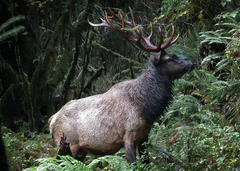
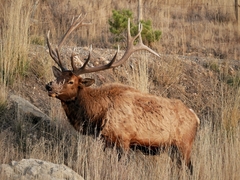
Elk (wapiti)
Cervus canadensis
- KingdomAnimalia (Animals)
- PhylumChordata (Chordates)
- ClassMammalia (Mammals)
- OrderArtiodactyla (Even-toed Ungulates and Cetaceans)
- FamilyCervidae (Deer)
- GenusCervus (Typical Old World Deer and Elk)
- SpeciesCervus canadensis (Elk (wapiti))
In 3 days ~20% in a week ~40%
10 Verified sightings at Big Bend National Park From 2019 to 2026
14,065 In all 16 parks
January Best month
☀️ Diurnal When it's spotted



Completed
About the Elk (wapiti)
The elk (pl.: elk or elks; Cervus canadensis) or wapiti (pronounced ) is the second largest species within the deer family, Cervidae, and one of the largest terrestrial mammals in its native range of North America and Central and East Asia. The word "elk" originally referred to the European variety of the moose, Alces alces, but was transferred to Cervus canadensis by North American colonists.
The name "wapiti" is derived from a Shawnee and Cree word meaning "white rump", after the distinctive light fur around the tail region which the animals may fluff-up or raise to signal their agitation or distress to one another, when fleeing perceived threats, or among males courting females and sparring for dominance. A similar trait is seen in other artiodactyl species, like the bighorn sheep, pronghorn and the white-tailed deer, to varying degrees.
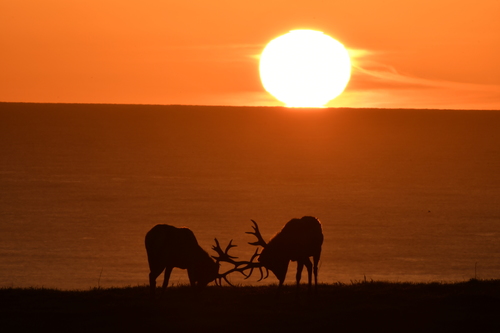
Elk dwell in open forest and forest-edge habitats, grazing on grasses and sedges and browsing higher-growing plants, leaves, twigs and bark. Male elk have large, blood- and nerve-filled antlers, which they routinely shed each year as the weather warms. Males also engage in ritualized mating behaviors during the mating season, including posturing to attract females, antler-wrestling (sparring), and bugling, a loud series of throaty whistles, bellows, screams, and other vocalizations that establish dominance over other males and aim to attract females.
Elk were long believed to belong to a subspecies of the European red deer (Cervus elaphus), but evidence from many mitochondrial DNA genetic studies, beginning in 1998, shows that the two are distinct species. The elk's wider rump-patch and paler-hued antlers are key morphological differences that distinguish C. canadensis from C. elaphus. Although it is currently only native to North America, and Central, East and North Asia, elk once had a much wider distribution in the past; prehistoric populations were present across Eurasia and into Western Europe during the Late Pleistocene, surviving into the early Holocene in Southern Sweden and the Alps. The now-extinct North American Merriam's elk subspecies (Cervus canadensis merriami) once ranged south into Mexico. Wikipedia →
Sounds
Call0:17
Mongolia · 2022
© Stanislas Wroza · XC766198 · CC BY-NC-SA 4.0
Recording4:41
Hungary · 2024
© kuplungos · iNaturalist · CC BY-NC 4.0
Recording0:12
United States · 2024
© Whitney Brook Matson · iNaturalist · CC BY 4.0
Recent sightings of Elk (wapiti) in Big Bend National Park
LIVEiNaturalistGlobal Distribution
Parks Where Found
| # | Park | Country | Daily sighting probability |
|---|---|---|---|
| 1 | Redwood National Park | 🇺🇸 United States | |
| 2 | Grand Canyon National Park | 🇺🇸 United States | |
| 3 | Rocky Mountain National Park | 🇺🇸 United States | |
| 4 | Jasper National Park | 🇨🇦 Canada | |
| 5 | Yellowstone National Park | 🇺🇸 United States | |
| 6 | Great Smoky Mountains National Park | 🇺🇸 United States | |
| 7 | Grand Teton National Park | 🇺🇸 United States | |
| 8 | Elk Island National Park | 🇨🇦 Canada | |
| 9 | Banff National Park | 🇨🇦 Canada | |
| 10 | Olympic National Park | 🇺🇸 United States | |
| 11 | Pacific Rim National Park Reserve | 🇨🇦 Canada | |
| 12 | Glacier National Park | 🇺🇸 United States | |
| 13 | Riding Mountain National Park | 🇨🇦 Canada | |
| 14 | Great Bear Rainforest | 🇨🇦 Canada | |
| 15 | Zion National Park | 🇺🇸 United States | |
| 16 | Big Bend National Park | 🇺🇸 United States |
Cities Where Found
| # | City | Country | Daily sighting probability |
|---|---|---|---|
| 1 | Denver | 🇺🇸 United States | |
| 2 | Salt Lake City | 🇺🇸 United States |
Zoos & Centres Where Found
Closest Relatives at Big Bend National Park






Before you go
What are the chances of seeing an Elk (wapiti) in Big Bend National Park?
With luck
About 10% of wildlife watchers report an Elk (wapiti) sighting in Big Bend National Park on a given day, based on 10 verified sightings from GBIF citizen-science data from 2019 to 2026. It is the 21st most-seen of the 21 mammals we can rate there. Over three days the chance rises to about 20%, and over a week to about 40%, if each day is a fresh chance.
When is the best time to see an Elk (wapiti) in Big Bend National Park?
January
In that month about 20% of wildlife watchers report an Elk (wapiti) in Big Bend National Park on a given day, against under 5% in April, July–August and November–December, the lowest months. That is one of Big Bend National Park's driest months, with about 10 mm of rain against 50 mm in September.
What time of day is best to see an Elk (wapiti)?
Between 4 and 7 pm
Across all the parks we cover, that three-hour window holds the most Elk (wapiti) sightings with a recorded time, and about 8 in 10 of them come between 6 am and 6 pm: it is a daytime animal.
Is Big Bend National Park the best place to see an Elk (wapiti)?
16th of 16
Of the 16 parks where we can rate Elk (wapiti) sightings, Big Bend National Park ranks 16th at about 10%. The best odds are in Redwood National Park (United States, about 90%), Grand Canyon National Park (United States, about 90%) and Rocky Mountain National Park (United States, about 90%). All parks ranked.
Which relatives of the Elk (wapiti) live in Big Bend National Park?
Same family: Cervidae
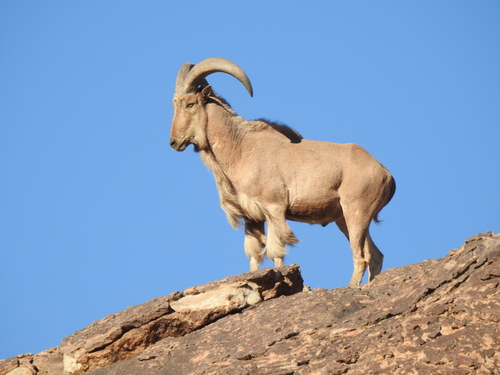
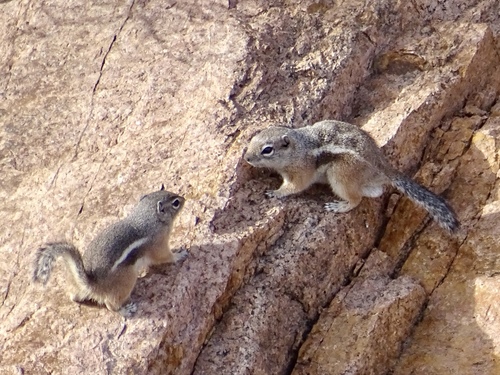
The closest relatives of the Elk (wapiti) that you can see in Big Bend National Park (family Cervidae, Deer) are White-tailed Deer (about 60%) and Mule Deer (about 20%), with each one's daily chance of a sighting.
Where does the Elk (wapiti) sighting chance come from?
GBIF citizen-science records
It is estimated from how often the Elk (wapiti) is recorded against all the mammals logged in Big Bend National Park (10 verified sightings from 2019 to 2026), calibrated against known sighting rates. Figures are rounded to the nearest 10% because citizen-science data supports honest approximations, not decimals, and months with records from fewer than five people show "—". How it works.
