


Completed


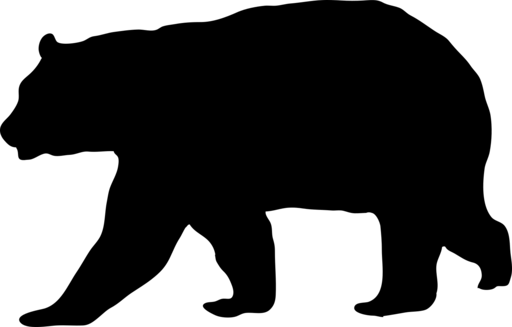
American Black Bear
Ursus americanus
Silhouette: Tracy A. Heath · PhyloPic
- KingdomAnimalia (Animals)
- PhylumChordata (Chordates)
- ClassMammalia (Mammals)
- OrderCarnivora (Carnivorans)
- FamilyUrsidae (Bears)
- GenusUrsus (Holarctic Bears)
- SpeciesUrsus americanus (American Black Bear)
In 3 days ~70% in a week ~90%
66 Verified sightings at Big Cypress National Preserve From 2019 to 2026
8,596 In all 31 parks
August Best month
☀️🌙 Day & Night When it's spotted

Completed
About the American Black Bear
The American black bear (Ursus americanus), or simply black bear, is a species of medium-sized bear which is endemic to North America. It is the continent's smallest and most widely distributed bear species. It is an omnivore, with a diet varying greatly depending on season and location. It primarily inhabits forested regions, but may venture beyond forest boundaries in search of food. Individuals are occasionally drawn to human settlements due to the availability of easily accessible food sources.
The International Union for Conservation of Nature (IUCN) lists the American black bear as a least-concern species because of its widespread distribution and a large population, estimated to be twice that of all other bear species combined. Along with the brown bear (Ursus arctos), it is one of the two modern bear species not considered by the IUCN to be globally threatened with extinction.
The American black bear is not closely related to the brown bear or polar bear, though all three species are found in North America; genetic studies reveal that they split from a common ancestor 5.05 million years ago (mya). American and Asian black bears are considered sister taxa and are... Wikipedia →
Sounds
Recording0:08
United States · 2025
© Carl D. Martland · iNaturalist · CC BY-NC 4.0
Recording0:15
2026
© jenkinst · iNaturalist · CC BY-NC 4.0
Recording0:19
United States · 2026
© moczzz · iNaturalist · CC BY-NC 4.0
Recent sightings of American Black Bear in Big Cypress National Preserve
LIVEiNaturalistGlobal Distribution
Parks Where Found
Cities Where Found
| # | City | Country | Daily sighting probability |
|---|---|---|---|
| 1 | Anchorage | 🇺🇸 United States | |
| 2 | Vancouver | 🇨🇦 Canada | |
| 3 | Orlando | 🇺🇸 United States | |
| 4 | Denver | 🇺🇸 United States | |
| 5 | Los Angeles | 🇺🇸 United States | |
| 6 | Seattle | 🇺🇸 United States | |
| 7 | Washington | 🇺🇸 United States |
Zoos & Centres Where Found
Closest Relatives at Big Cypress National Preserve




Before you go
What are the chances of seeing an American Black Bear in Big Cypress National Preserve?
Possible
About 30% of wildlife watchers report an American Black Bear sighting in Big Cypress National Preserve on a given day, based on 66 verified sightings from GBIF citizen-science data from 2019 to 2026. It is the 2nd most-seen of the 14 mammals we can rate there. Over three days the chance rises to about 70%, and over a week to about 90%, if each day is a fresh chance.
When is the best time to see an American Black Bear in Big Cypress National Preserve?
June and August
In those months about 50% of wildlife watchers report an American Black Bear in Big Cypress National Preserve on a given day, against about 20% in February–March and December, the lowest months. Those are among Big Cypress National Preserve's wettest months, with about 230 mm of rain a month against 40 mm in March.
What time of day is best to see an American Black Bear?
Between 1 and 4 pm
Across all the parks we cover, that three-hour window holds the most American Black Bear sightings with a recorded time, and about 7 in 10 of them come between 6 am and 6 pm: it is seen both by day and at night.
Is Big Cypress National Preserve the best place to see an American Black Bear?
21st of 31
Of the 31 parks where we can rate American Black Bear sightings, Big Cypress National Preserve ranks 21st at about 30%. The best odds are in Great Smoky Mountains National Park (United States, about 80%), Sequoia and Kings Canyon National Parks (United States, about 80%) and Wood Buffalo National Park (Canada, about 80%). All parks ranked.
Which relatives of the American Black Bear live in Big Cypress National Preserve?
Same order: Carnivora
The closest relatives of the American Black Bear that you can see in Big Cypress National Preserve (order Carnivora, Carnivorans) are Mountain Lion (about 20%), Common Raccoon (about 20%) and Bobcat (about 20%), with each one's daily chance of a sighting.
Where does the American Black Bear sighting chance come from?
GBIF citizen-science records
It is estimated from how often the American Black Bear is recorded against all the mammals logged in Big Cypress National Preserve (66 verified sightings from 2019 to 2026), calibrated against known sighting rates. Figures are rounded to the nearest 10% because citizen-science data supports honest approximations, not decimals, and months with records from fewer than five people show "—". How it works.
