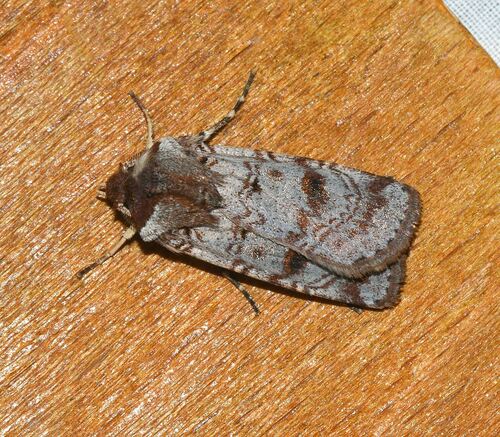
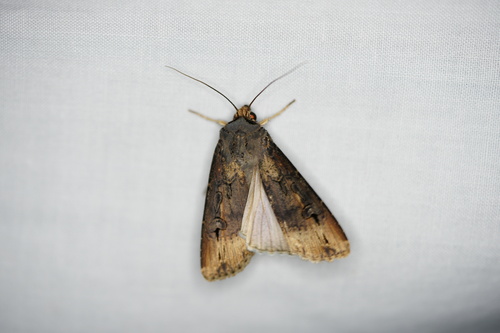
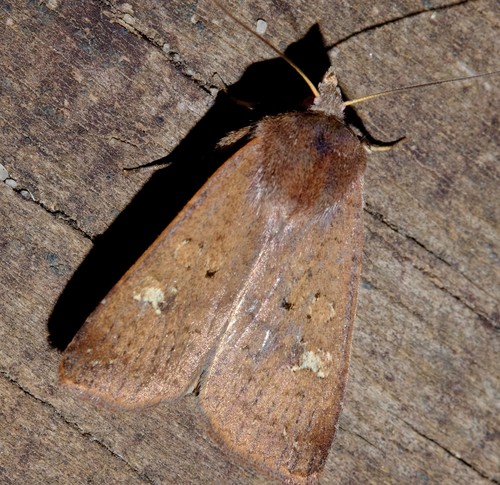
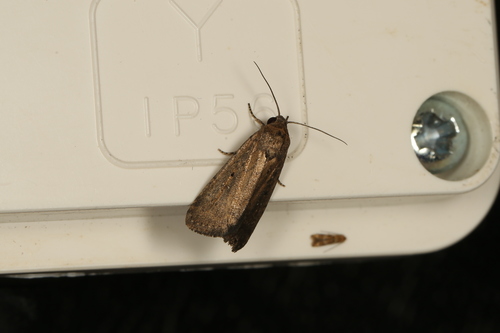
Green Garden Looper

Green Garden Looper

Chrysodeixis eriosoma

Daily sighting probability <5% · Rare
at Blue Mountains National Park

In 3 days ~10% in a week ~20%

5 Verified sightings at Blue Mountains National Park From 2019 to 2026
15 In all 2 parks
July Best month
☀️🌙 Day & Night When it's spotted

About the Green Garden Looper

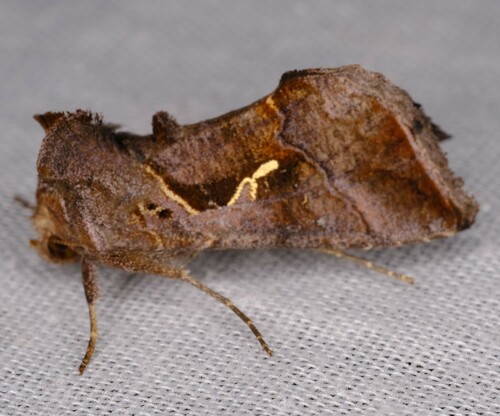
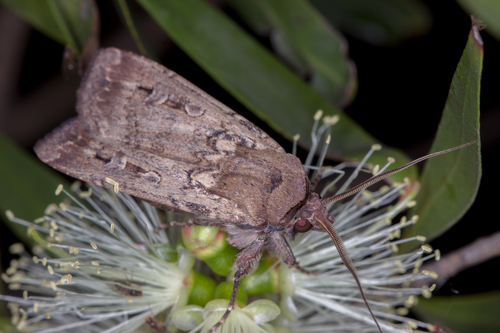
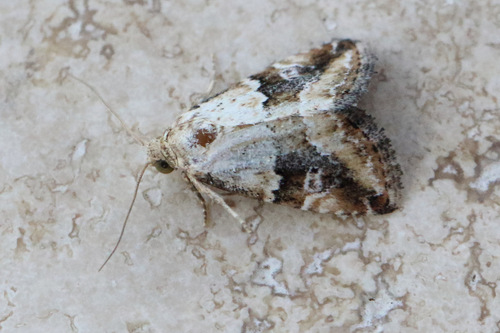
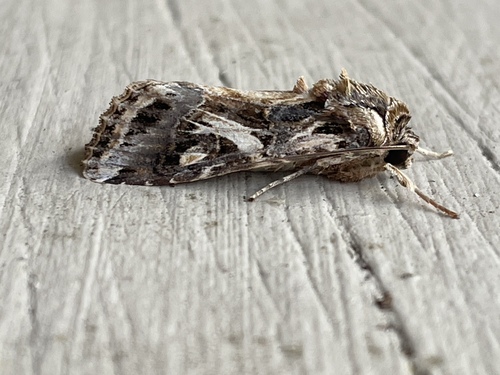
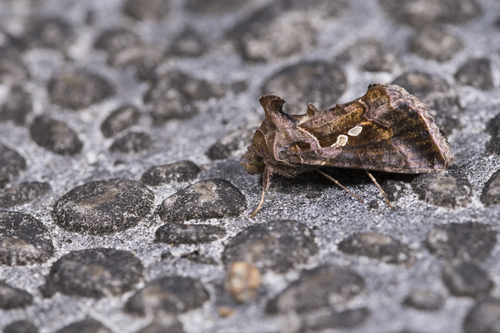
Chrysodeixis eriosoma, the green garden looper, known in New Zealand as the Silver Y, is a moth of the family Noctuidae. Mostly cosmopolitan in distribution, it is a pest in Japan, China, India, Sri Lanka, the Malay Peninsula and Australasia. It is present in Hawaii and recorded as an incursion in mainland North America and Russia. It is morphologically identical to Chrysodeixis chalcites and the two may be sibling species.

Chrysodeixis eriosoma has a wingspan of 42 mm. Some specimens are much darker than others. Chrysodeixis eriosoma differs from C. signata in the head, thorax, and forewing having a reddish tinge; abdomen with the lateral and anal tufts often black in the male. Forewing with much more gilding on the basal, medial, and outer areas; the antemedial line more oblique, the postmedial more oblique and sinuous; the Y mark large, prominent, and golden, the arms often filled in with golden and occasionally joined to the tail.

Chrysodeixis eriosoma and Chrysodeixis chalcites moths cannot be separated morphologically, and they may be sibling species. However, they may be distinguished based on DNA sequencing, pheromones, or geographic origin as... Wikipedia →
Global Distribution

Parks Where Found

# Park Country Daily sighting probability
1 Daintree National Park 🇦🇺 Australia
~10%
2 Blue Mountains National Park 🇦🇺 Australia
<5%

Cities Where Found

# City Country Daily sighting probability
1 Auckland 🇳🇿 New Zealand
~10%
2 Tuen Mun 🇨🇳 China
<5%
3 Perth 🇦🇺 Australia
<5%
4 Melbourne 🇦🇺 Australia
<5%
5 Hong Kong 🇨🇳 China
<5%
6 Sydney 🇦🇺 Australia
<5%
7 Brisbane 🇦🇺 Australia
<5%
8 Tokyo 🇯🇵 Japan
<5%

Before you go

What are the chances of seeing a Green Garden Looper in Blue Mountains National Park?

Rare

Under 5% of wildlife watchers report a Green Garden Looper sighting in Blue Mountains National Park on a given day, based on 5 verified sightings from GBIF citizen-science data from 2019 to 2026. It is the 681st most-seen of the 789 insects we can rate there. Over three days the chance rises to about 10%, and over a week to about 20%, if each day is a fresh chance.

When is the best time to see a Green Garden Looper in Blue Mountains National Park?

February, July and November

In those months about 10% of wildlife watchers report a Green Garden Looper in Blue Mountains National Park on a given day, against under 5% in March–June, August–October and December–January, the lowest months.

What time of day is best to see a Green Garden Looper?

Between 8 and 11 pm

Across all the parks we cover, that three-hour window holds the most Green Garden Looper sightings with a recorded time, and about 7 in 10 of them come between 6 pm and 6 am: it is seen both by day and at night.

Is Blue Mountains National Park the best place to see a Green Garden Looper?

2nd of 2

Of the 2 parks where we can rate Green Garden Looper sightings, Blue Mountains National Park ranks 2nd at under 5%. The best odds are in Daintree National Park (Australia, about 10%).

Where does the Green Garden Looper sighting chance come from?

GBIF citizen-science records

It is estimated from how often the Green Garden Looper is recorded against all the insects logged in Blue Mountains National Park (5 verified sightings from 2019 to 2026), calibrated against known sighting rates. Figures are rounded to the nearest 10% because citizen-science data supports honest approximations, not decimals, and months with records from fewer than five people show "—". How it works.

← Back to Blue Mountains National Park