
Highlands Copperhead

Highlands Copperhead

Austrelaps ramsayi

Silhouette: SeismicShrimp · PhyloPic

LCLeast ConcernNTVUENCR Endemic
Daily sighting probability ~30% · Possible
at Blue Mountains National Park

In 3 days ~70% in a week ~90%

125 Verified sightings at Blue Mountains National Park From 2019 to 2026
261 In all 2 parks
November Best month
☀️ Diurnal When it's spotted

About the Highlands Copperhead

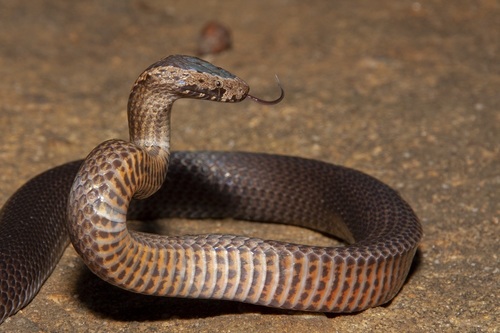
The highland copperhead (Austrelaps ramsayi), also known as Ramsay's copperhead, is a species of venomous snake in the family Elapidae endemic to Australia. Gerard Krefft described the highland copperhead in 1864 as Hoplocephalus ramsayi from a specimen collected in Braidwood, New South Wales. The specific name, ramsayi, is in honour of Edward Pierson Ramsay, who was an Australian ornithologist, herpetologist, and who collected the holotype specimen.

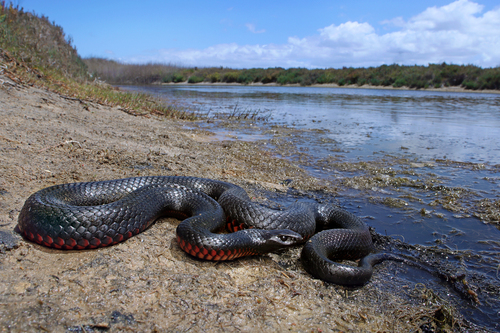
Austrelaps ramsayi has an average total length (including tail) of 130 cm (51 inches). Variable in colour, ranging from pale to dark grey, through reddish-brown or chocolate brown to almost black above but always low gloss or matt sheen; noticeably enlarged lateral scales may be cream, yellow or reddish-brown (typically yellow paraventral scales bordered above by reddish-brown); while the supralabial (upper lip) scales are strongly barred, the pale, triangular lower front corner of each labial strongly contrasting with the remainder of the scale, which is dark brown. Belly cream to pale yellow or sometimes leaden-coloured.

The highlands copperhead inhabits the Alpine regions... Wikipedia →

Global Distribution

Parks Where Found

# Park Country Daily sighting probability
1 Kosciuszko National Park 🇦🇺 Australia
~60%
2 Blue Mountains National Park 🇦🇺 Australia
~30%

Closest Relatives at Blue Mountains National Park

Before you go

What are the chances of seeing a Highlands Copperhead in Blue Mountains National Park?

Possible

About 30% of wildlife watchers report a Highlands Copperhead sighting in Blue Mountains National Park on a given day, based on 125 verified sightings from GBIF citizen-science data from 2019 to 2026. It is the 6th most-seen of the 44 reptiles we can rate there. Over three days the chance rises to about 70%, and over a week to about 90%, if each day is a fresh chance.

When is the best time to see a Highlands Copperhead in Blue Mountains National Park?

February, September and November–December

In those months about 40% of wildlife watchers report a Highlands Copperhead in Blue Mountains National Park on a given day, against under 5% in June, the lowest month.

What time of day is best to see a Highlands Copperhead?

Between noon and 3 pm

Across all the parks we cover, that three-hour window holds the most Highlands Copperhead sightings with a recorded time, and about 9 in 10 of them come between 6 am and 6 pm: it is a daytime animal.

Is Blue Mountains National Park the best place to see a Highlands Copperhead?

2nd of 2

Of the 2 parks where we can rate Highlands Copperhead sightings, Blue Mountains National Park ranks 2nd at about 30%. The best odds are in Kosciuszko National Park (Australia, about 60%).

Which relatives of the Highlands Copperhead live in Blue Mountains National Park?

Same family: Elapidae

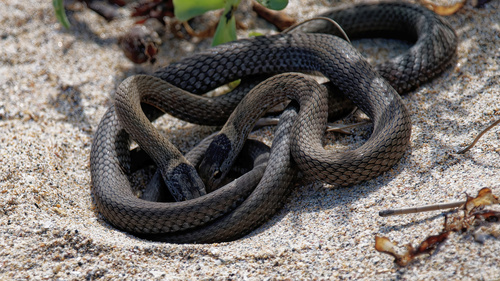
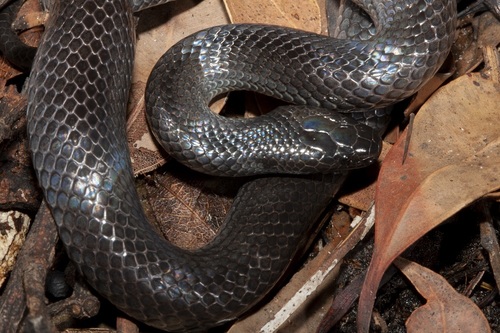
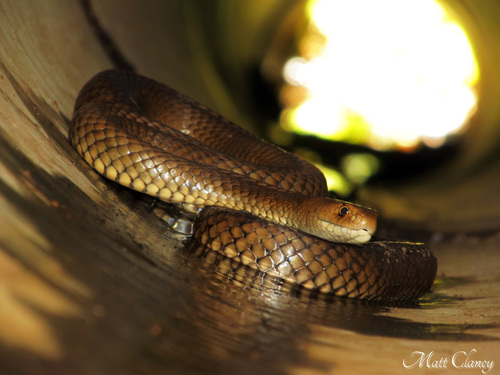
The closest relatives of the Highlands Copperhead that you can see in Blue Mountains National Park (family Elapidae, Elapid Snakes) are Red-bellied Black Snake (about 30%), Eastern Tiger Snake (about 20%) and Mustard-bellied Snake (about 20%), with each one's daily chance of a sighting.

Where does the Highlands Copperhead sighting chance come from?

GBIF citizen-science records

It is estimated from how often the Highlands Copperhead is recorded against all the reptiles logged in Blue Mountains National Park (125 verified sightings from 2019 to 2026), calibrated against known sighting rates. Figures are rounded to the nearest 10% because citizen-science data supports honest approximations, not decimals, and months with records from fewer than five people show "—". How it works.

← Back to Blue Mountains National Park