Golden Crowned Snake

Golden Crowned Snake

Cacophis squamulosus

Silhouette: SeismicShrimp · PhyloPic

LCLeast ConcernNTVUENCR Endemic
Daily sighting probability ~10% · With luck
at Blue Mountains National Park

In 3 days ~30% in a week ~50%

17 Verified sightings at Blue Mountains National Park From 2019 to 2026
83 In all 4 parks
February Best month
☀️🌙 Day & Night When it's spotted

About the Golden Crowned Snake

The golden-crowned snake (Cacophis squamulosus) is a small species of venomous snake in the family Elapidae. The species is endemic to Australia. Like other Cacophis species, the golden-crowned snake is a forest specialist, particularly rainforest. It prefers deeper forested areas, particularly rainforest on mountain slopes, however it can show up in suburbs near waterways and moist environments with ground cover and shelter.

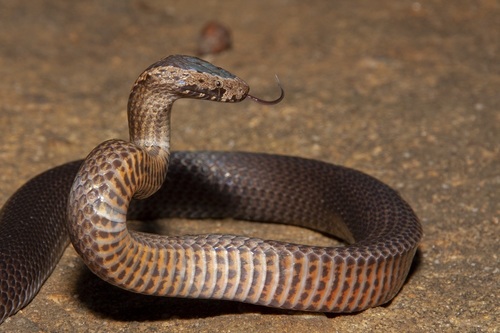
Cacophis squamulosus is only mildly venomous; however, it will bluff and mock bite if threatened, rearing into an S-shape to display the bright orange ventral pigmentation. Bites from larger individuals may present a health risk; however, it is more likely to attempt to intimidate those it feels threatened by.

The diet of the golden-crowned snake consists mostly of skinks and other small lizards which they hunt at night; they may also take frogs and tadpoles. Cacophis squamulosus is localised to eastern Australia, from Canberra, ACT, to Cairns, QLD.

The average total length (including tail) of C. squamulosus is 50 cm (20 in), but it may reach 98 cm (39 in), making it the largest of... Wikipedia →
Global Distribution

Parks Where Found

# Park Country Daily sighting probability
1 Lamington National Park 🇦🇺 Australia
~20%
2 Royal National Park 🇦🇺 Australia
~20%
3 Springbrook National Park 🇦🇺 Australia
~20%
4 Blue Mountains National Park 🇦🇺 Australia
~10%

Cities Where Found

# City Country Daily sighting probability
1 Sydney 🇦🇺 Australia
~10%
2 Brisbane 🇦🇺 Australia
~10%

Closest Relatives at Blue Mountains National Park

Before you go

What are the chances of seeing a Golden Crowned Snake in Blue Mountains National Park?

With luck

About 10% of wildlife watchers report a Golden Crowned Snake sighting in Blue Mountains National Park on a given day, based on 17 verified sightings from GBIF citizen-science data from 2019 to 2026. It is the 32nd most-seen of the 44 reptiles we can rate there. Over three days the chance rises to about 30%, and over a week to about 50%, if each day is a fresh chance.

When is the best time to see a Golden Crowned Snake in Blue Mountains National Park?

February

In that month about 20% of wildlife watchers report a Golden Crowned Snake in Blue Mountains National Park on a given day, against under 5% in June–September and November, the lowest months.

What time of day is best to see a Golden Crowned Snake?

Between 7 and 10 pm

Across all the parks we cover, that three-hour window holds the most Golden Crowned Snake sightings with a recorded time, and about 6 in 10 of them come between 6 pm and 6 am: it is seen both by day and at night.

Is Blue Mountains National Park the best place to see a Golden Crowned Snake?

4th of 4

Of the 4 parks where we can rate Golden Crowned Snake sightings, Blue Mountains National Park ranks 4th at about 10%. The best odds are in Lamington National Park (Australia, about 20%), Royal National Park (Australia, about 20%) and Springbrook National Park (Australia, about 20%).

Which relatives of the Golden Crowned Snake live in Blue Mountains National Park?

Same family: Elapidae

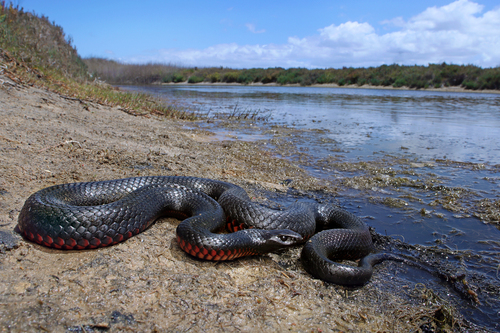
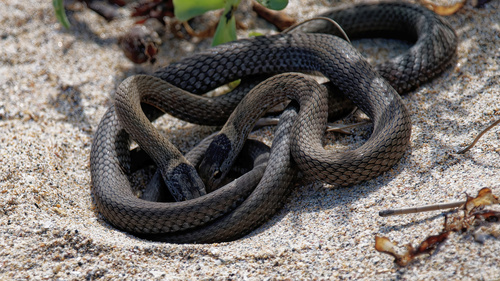
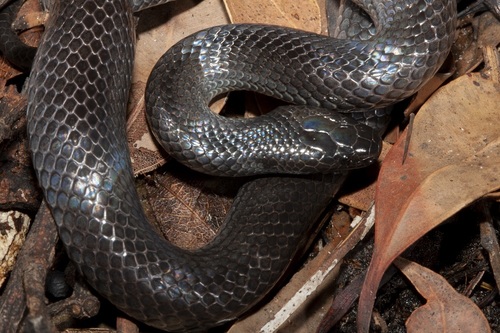
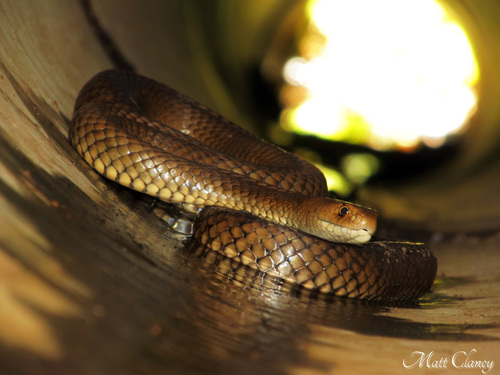
The closest relatives of the Golden Crowned Snake that you can see in Blue Mountains National Park (family Elapidae, Elapid Snakes) are Red-bellied Black Snake (about 30%), Highlands Copperhead (about 30%) and Eastern Tiger Snake (about 20%), with each one's daily chance of a sighting.

Where does the Golden Crowned Snake sighting chance come from?

GBIF citizen-science records

It is estimated from how often the Golden Crowned Snake is recorded against all the reptiles logged in Blue Mountains National Park (17 verified sightings from 2019 to 2026), calibrated against known sighting rates. Figures are rounded to the nearest 10% because citizen-science data supports honest approximations, not decimals, and months with records from fewer than five people show "—". How it works.

← Back to Blue Mountains National Park